Wealth
- Medium
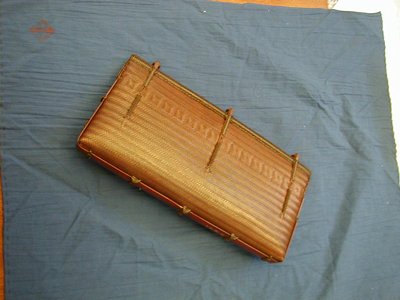
- Bamboo (madake), rattan, lacquer
- Dimensions
- 6 3/8 × 14 1/2 in. (16.19 × 36.83 cm)
- Genre
- Bamboo work
Tags
Japan
About
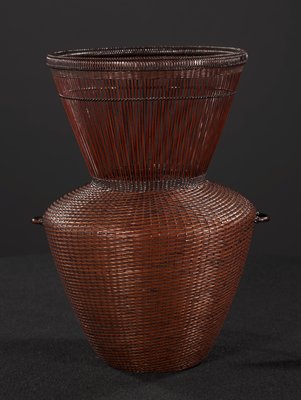
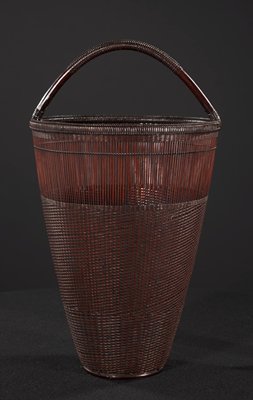
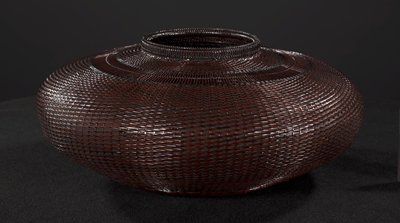
The work is an excellent example of a plaiting technique called senshū-ami, where literally a “group of one-thousand parallel lines” of bamboo are gathered and woven tightly together. Tanaba Chikuunsai II used this technique often. After weaving, the basket was dyed with vegetable dyes and then finished with lacquer. The original signed box that accompanies this piece bears an inscription, Tekisuikyo, which refers to the place where the family lived before and during World War II; thus indicating the date of this piece.