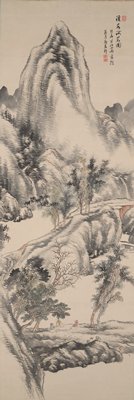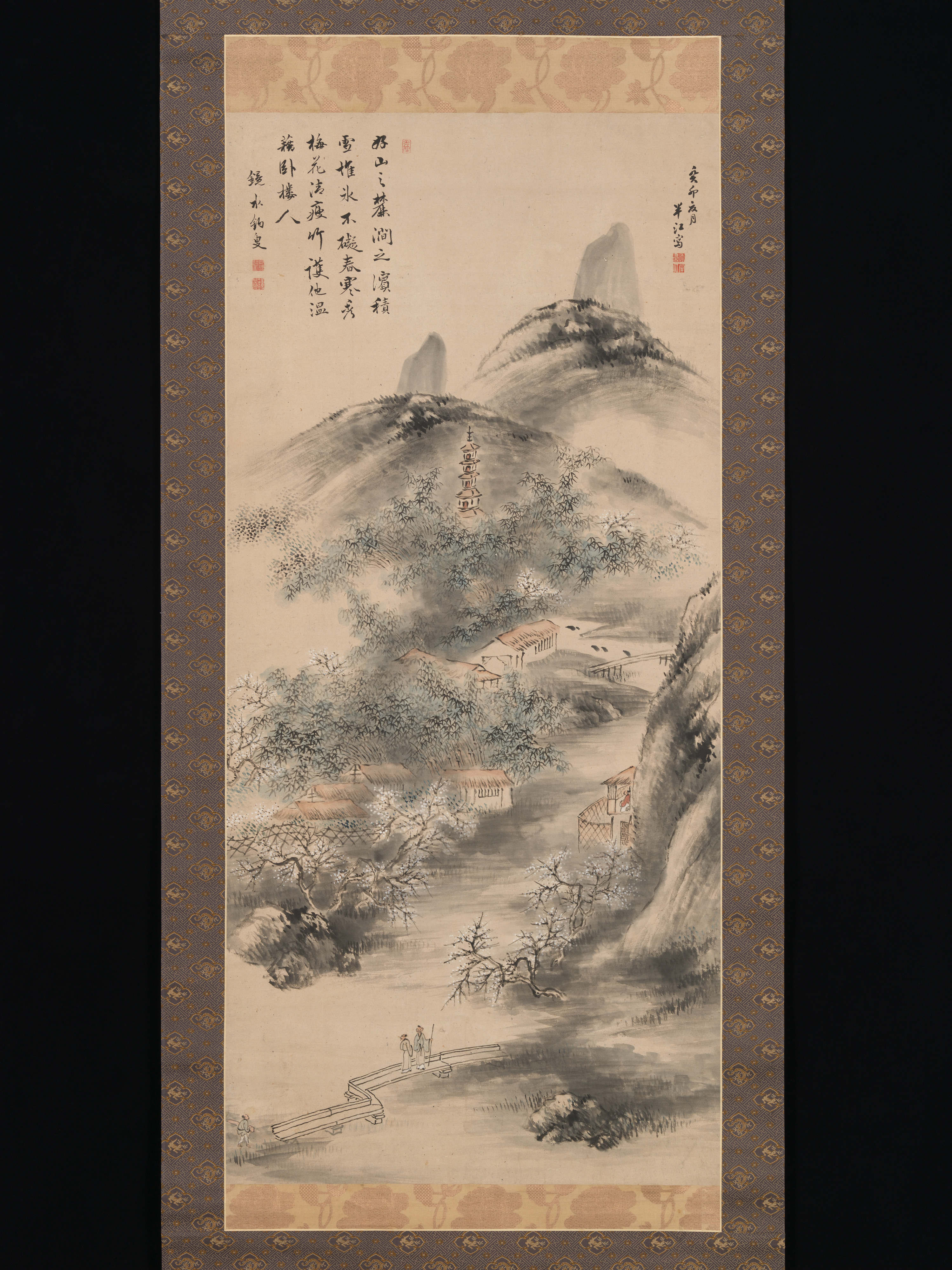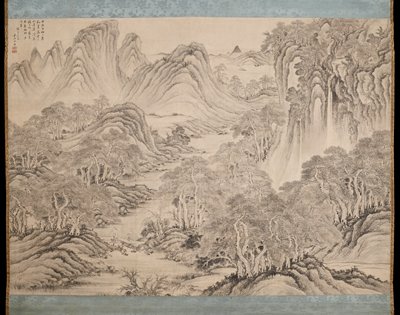
Landscape after the Four Wangs
Okada Hankō
1840
- Medium
- Hanging scroll, ink on paper
- Dimensions
- 51 1/8 × 70 1/2 in. (129.86 × 179.07 cm) (image) 80 1/4 × 72 in. (203.84 × 182.88 cm) (mount)
Tags
Japan
About
Okada Hankō’s monumental work is a tour de force in the spirit of the Four Wangs, a circle of conservative Chinese painters who created stylized interpretations of classic works. This painting follows orthodox principles of composition—the foreground, middle-ground, and background are distinct yet well-integrated—maintaining order in this otherwise fantastical, complex setting. The inscription reads: The water is gone from the stony river that has a disorderly look. The leaves are gone from the mountain that has a wonderful scene. The thoroughly wet old man on the bridge, where will he go? There is a western village where an unsettled game of Go is waiting for him. Tenth month, 1840 (translated by Masato Nishimura)