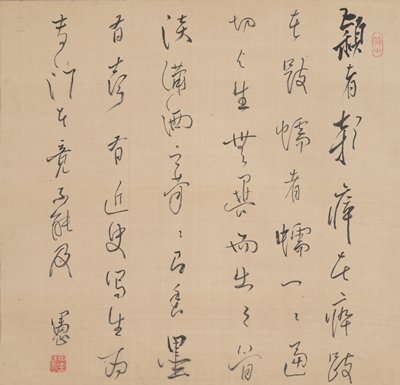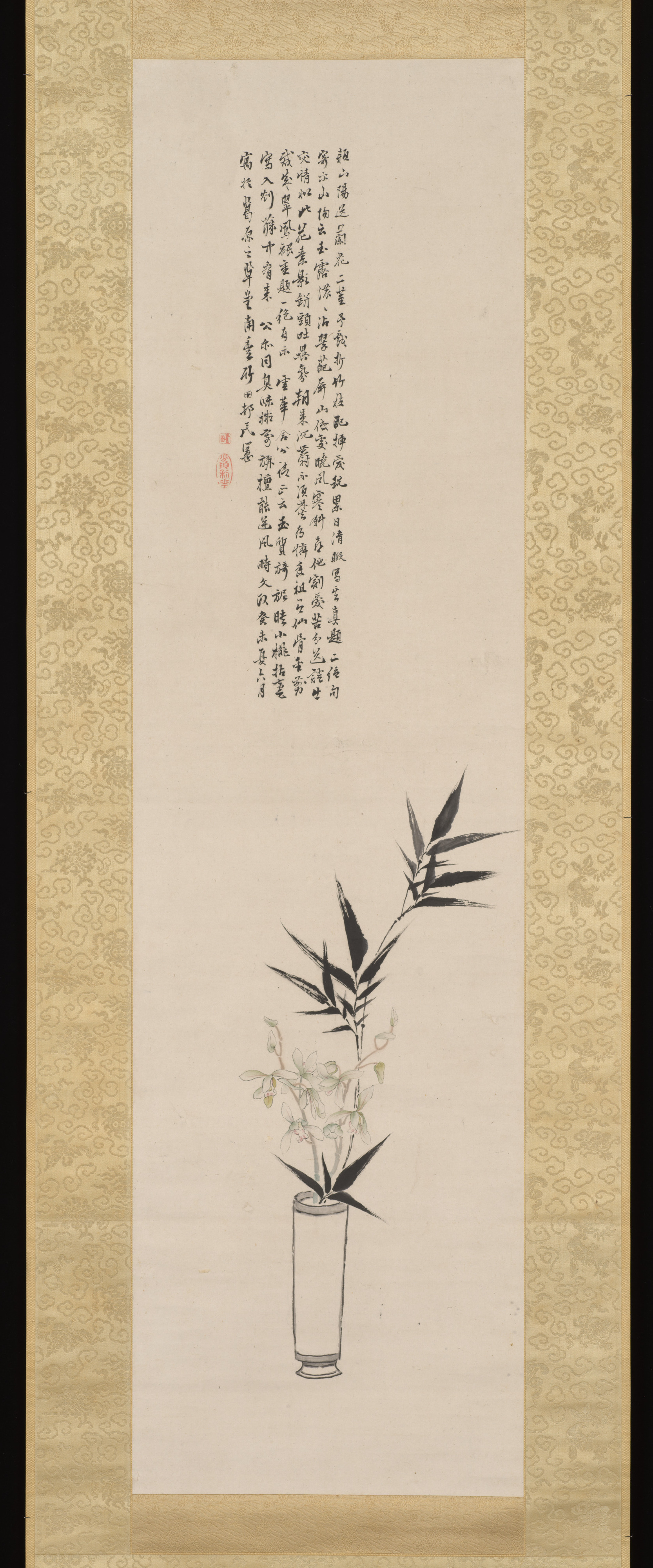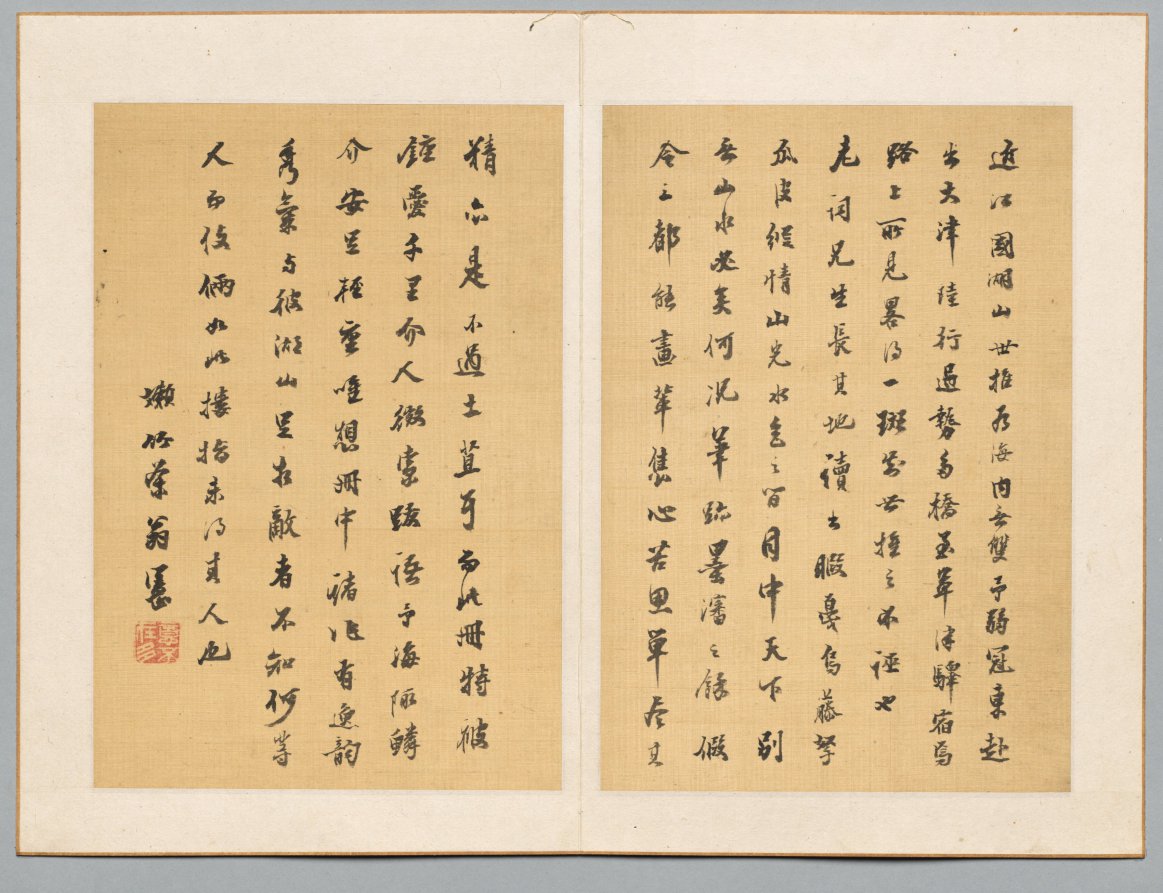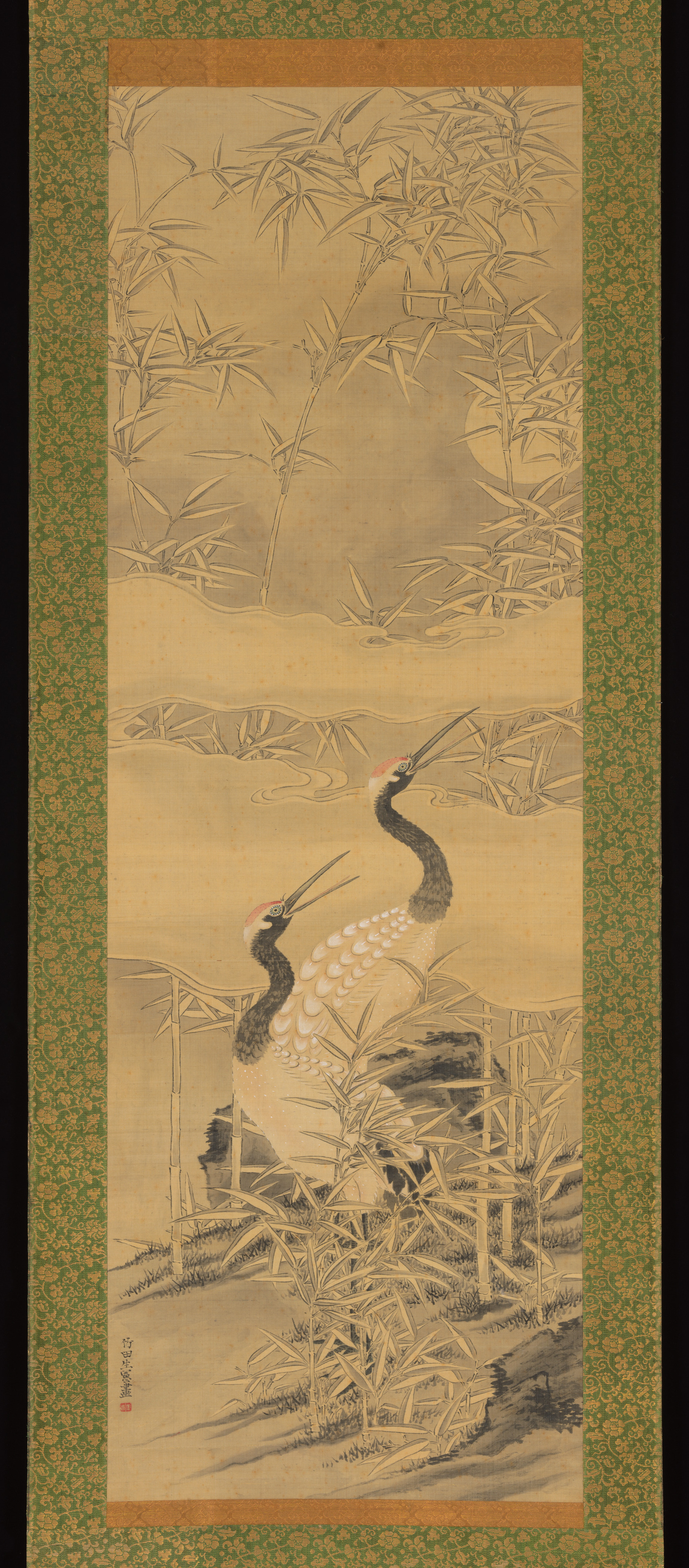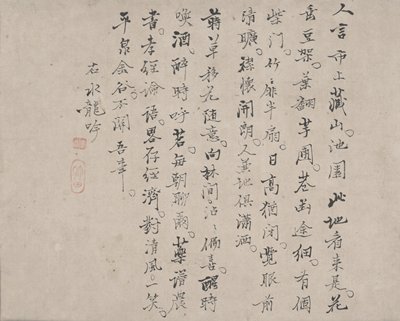
Draft in Regular Script
- Medium
- Hanging scroll, ink on paper
- Dimensions
- 7 13/16 × 9 3/4 in. (19.84 × 24.77 cm) (image) 37 5/8 × 11 3/8 in. (95.57 × 28.89 cm) (mount, without roller)
- Genre
- Calligraphy
Tags
Japan
About
Carefully rendered in standard script, this draft of an essay discusses Tanomura’s yearning for a life away from the urban setting, like that of Chinese hermits. He came from a family of physicians who had served the lord of Oka domain (modern-day Ōita prefecture on the island of Kyūshū), but he eventually abandoned the hereditary occupation to pursue life as a scholar and painter. This work includes punctuation marks, which is often omitted in other calligraphic works in this gallery: small circles function as commas or periods. 人言市上藏山。池園此地看來是。花 垂豆架。葉翻芋圃。巷幽途細。有個 柴門。竹扉半扇。日高猶閉。覺眼前 清曠。襟懐開朗。人兼地俱瀟酒 蒔草移花隨意。向林間。沾々偏喜。醒時 喚酒。醉時呼茗。每朝聊爾。藥譜農 書。孝經論語。略存經濟。對清風。一笑。 平泉金谷。不關吾事 右水龍吟 People say there is a mountain hidden in the urban hustle and bustle. It looks like this pond garden is the place. Flowers draping down on the bean stands; leaves flipping over yam fields. The alley is tranquil and the trail narrow. There is a wooden gate with a half bamboo door. The door remains closed when the sun is high. A crisp and transparent feeling unfolds before my eye, and my chest clears up. This place and I are both free of care. Seasonal grasses and transplanted flowers freely thrive. Toward the woods, I am delighted. Calling for wine when awake and requesting tea when tipsy. Every day I discuss medicinal albums, agricultural books, the Classic of Filial Pity, and the Analects; sometimes on governance and statecraft. A smile at the brisk breeze. Pingquan and Jingu [symbols of secular wealth and power] are not relevant to me. The right composed by Suiryūgin