![Chang'an [left of a pair]](https://1.api.artsmia.org/117747.jpg)
Chang'an [left of a pair]
- Medium
- Six-panel folding screen, one of a pair, ink on paper
- Dimensions
- 53 7/8 × 120 3/8 in. (136.84 × 305.75 cm) (image) 67 1/4 × 135 1/16 × 5/8 in. (170.82 × 343.06 × 1.59 cm) (mount)
- Genre
- Calligraphy
Tags
Japan
About
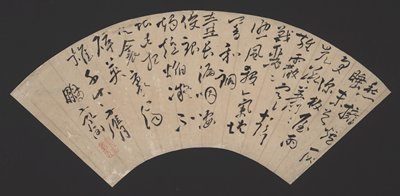
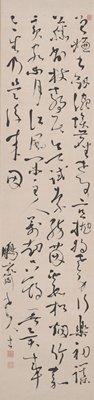
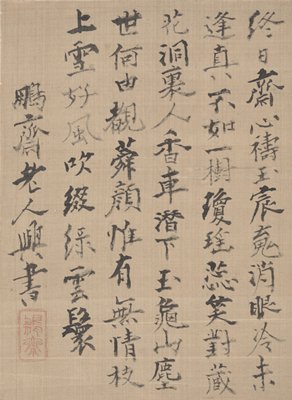
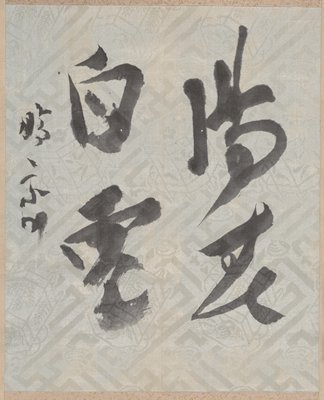
This pair of screens features the calligraphy of Kameda Bōsai, a Confucian scholar celebrated for his dynamic, vibrant handwriting. (Confucianism is an ancient philosophy and code of ethics that underpins the culture of China and its neighbors.) As a scholar, Bōsai was familiar with classical Chinese literature and culture and was a skilled calligrapher, painter, and poet in his own right. In this pair of screens he used the expressive “running” style of calligraphy, in which characters are abbreviated and multiple characters occasionally run together. The text is a transcription of a Chinese ballad (qilu) called “Chang’an, Ancient Theme” (“Chang’an guyi”) by Lu Zhaolin (c. 634–684). The city of Chang’an, today known as Xi’an, was significant to the Japanese—two of Japan’s early imperial capitals, Heijō and Heian (now the cities of Nara and Kyoto, respectively), were designed after this ancient Chinese capital city.

![Chang'an [right of a pair]](https://1.api.artsmia.org/117746.jpg)