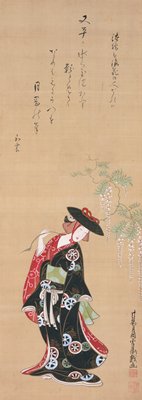
Wisteria Maiden
- Medium
- Hanging scroll (nikuhitsu), ink and color on silk
- Dimensions
- 32 3/4 × 11 11/16 in. (83.19 × 29.69 cm) (image) 63 × 15 15/16 in. (160.02 × 40.48 cm) (without rollers)
Tags
Japan
About
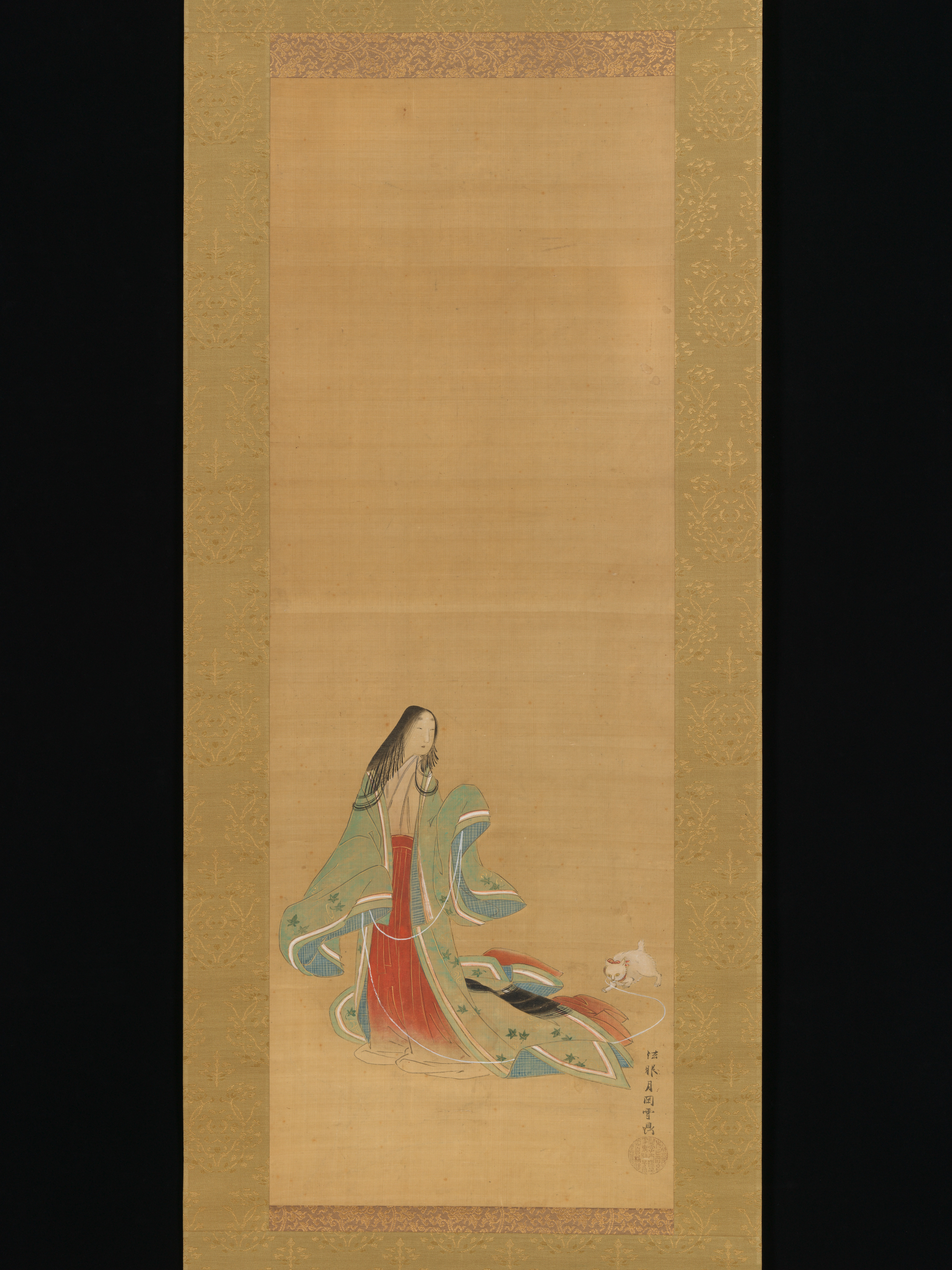
The Wisteria Maiden was a favorite subject of Ōtsue, folk paintings made in the town of Ōtsu. The paintings were believed to have auspicious properties; those hoping for a good match in marriage might buy a picture of the Maiden. The character later appeared in kabuki theater and was so popular that an entire play was eventually written around her. This classical depiction shows the Maiden as a beautiful young woman, or bijin, dancing with a wisteria branch over her shoulder. Settei, an Osaka artist, was famous for his delicately painted bijin and erotic imagery. The calligraphic inscription, by the Osaka kyōka poet Senkatei Karitsu (1748–1789), indicates that Settei painted the beauty in the spirit of Matabei’s brush, a reference to the legendary founder of Ōtsue and ukiyo-e.
![Carp Leaping Out of Water [right of a pair of Carps]](https://1.api.artsmia.org/118422.jpg)

![Swimming Carp [left of a pair of Carps]](https://1.api.artsmia.org/118423.jpg)