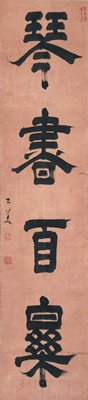
Qin and Calligraphy - 100 Delights
- Medium
- Hanging scroll, ink on paper
- Dimensions
- 31 1/2 × 6 15/16 in. (80.01 × 17.62 cm) (image) 57 9/16 × 7 13/16 in. (146.21 × 19.84 cm) (mount, without roller)
- Genre
- Calligraphy
Tags
Japan
About
The Chinese literati favored four accomplishments (Jap. kinki shoga) as elegant pastimes: playing the qin (seven-stringed lute), playing Chinese chess, practicing calligraphy, and painting. This theme was also taken on by Japanese literati artists, and the words kinki shoga were symbolically equated with the nature of a scholar. Yanagisawa Kien (1704–1758) was a calligrapher and painter who experimented with heterodox themes and styles. A pioneer of the Japanese literati movement, his works express an eccentric style found in Chinese Qing dynasty (1644–1912) individualists from around the same time. Instead of repeating the common formula of qin-chess-calligraphy-painting, he chooses to dismiss chess and painting and replace them with an expression of joy that the remaining two pastimes brought. His calligraphy, executed in clerical script, continues with the classical theme by articulating the feeling: “Qin, Calligraphy, and One-hundred Delights.” 琴書百樂