Candor
Hans Hofmann
1962
- Medium
- Oil on canvas
- Dimensions
- 48 × 36 × 1 1/2 in. (121.92 × 91.44 × 3.81 cm) (canvas) 49 × 36 3/4 × 2 in. (124.46 × 93.35 × 5.08 cm) (outer frame)
- Genre
- Paintings
Tags
United States
About
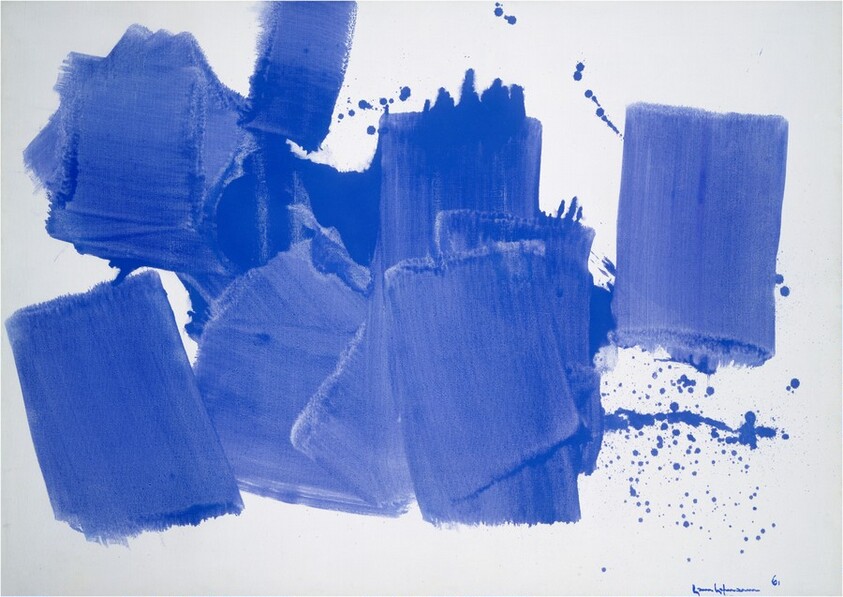
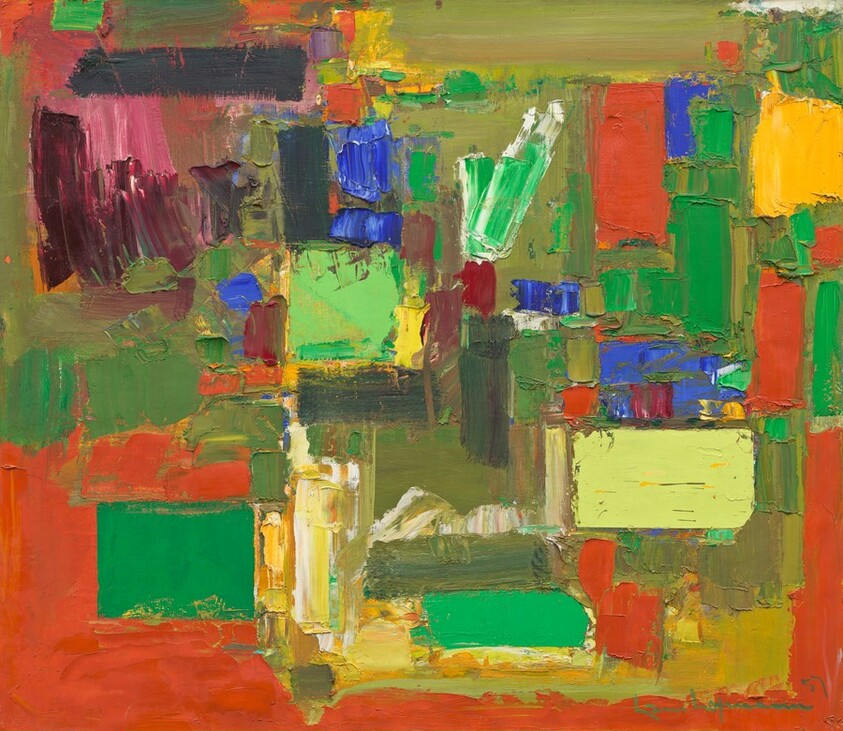
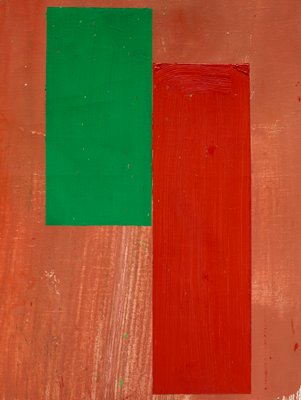
Hans Hofmann was a major figure of Abstract Ecpressionism as well as an influential teacher and mentor to younger artists. This canvas is a classic example of Abstract Expressionist painting in which figurative or narrative representation is superseded by an inquiry into the fundamental elements of painting: form, color, and gesture. Hofmann famously created the Push and Pull Theory, in which he rejected one-point perspective as the primary method of creating the illusion of space in a two-dimensional medium. Instead, Hofmann focused on the push and pull of color, light, and shape, and how the tension between contrasting elements can lead to a visual experience of depth and motion. In this technique, the eye is led around the painting rather than directed to one point. The single colored rectangles in Candor act as the principle spatial organizing tool on a loosely painted background--a signature of Hofmann's late work. The thick impastos of the rectangles contrast with the thin wash of the background, and the solid forms of the rectangles are complemented by the scattered drips of similarly toned paint in the periphery of the image. Candor is a carefully balanced composition that explores the relationship between form and color.