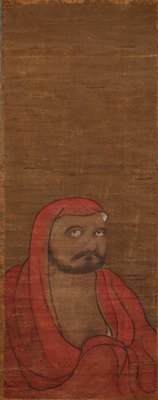
Bodhidharma, one of a pair
- Medium
- Ink and color on silk
- Dimensions
- 67 7/8 × 19 1/8 in. (172.4 × 48.58 cm) (without roller ends) 37 5/8 × 14 9/16 in. (95.57 × 36.99 cm) (image)
- Genre
- Paintings
Tags
China
About
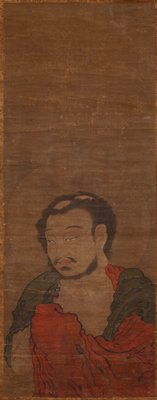
Sakyamuni and Bodhidharma are compelling examples of the Chinese figure-painting tradition as it evolved in the late Song dynasty in the hands of professional artists. They are attributed to Yan Hui, an artist widely admired during his lifetime for the breadth of his artistry, but especially for religious imagery. Both paintings also represent important iconographies within the Buddhist tradition, presently underrepresented in the museum’s collection. Yan Hui championed a style of figure painting that was visually bold as well as emotionally charged. In these two works he deftly conveys the personalities of the two sages: the gentle, introspective Sakyamuni, and the aggressive, outward character of Bodhidharma.