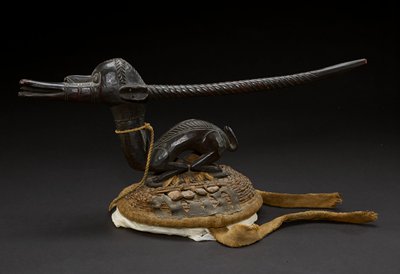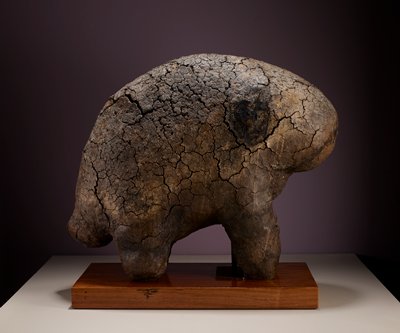
Kono altar
- Medium
- Wood, cloth, soil, beeswax, animal blood, unidentified materials
- Dimensions
- 16 3/4 x 21 1/2 x 7 5/8 in. (42.55 x 54.61 x 19.37 cm)
- Genre
- Ceremonial object
Tags
Mali
About
The key element of the shrine of the Kono association of the Bamana people was a portable altar, often zoomorphic in shape, called a boli. Its awesome power derived from the manner in which it was made: animal bones and horns, vegetable matter, woven cloth, pieces of metal, and a wide range of other substances and materials were packed around a wooden framework sheltering a cotton doll. Over time, the boli was ritualistically covered with beeswax, animal blood, millet porridge, and earth from termite mounds—accumulated layers that not only gave the boli its distinctively cracked appearance but also large quantities of potentially harmful vital energy.