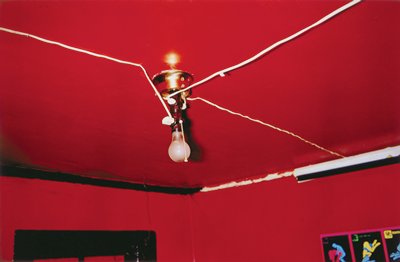
Untitled, Greenwood, Mississippi
- Medium
- Dye transfer print
- Dimensions
- 11 9/16 x 17 7/8 in. (29.37 x 45.4 cm) (image) 15 13/16 x 20 5/8 in. (40.16 x 52.39 cm) (sheet)
- Genre
- Photographs
Tags
United States
About
Bucking popular opinion, William Eggleston embraced color photography at a time when it was widely dismissed as too commercial. His subject matter matched his medium: the mundane details of daily life considered unworthy of art photography. Nonetheless, he captured the spirit of his native South with a bold command of color that paved the way for color photography’s acceptance. Eggleston was particularly devoted to the dye transfer process for its clear and vivid rendering of color and its permanence relative to the more fugitive chromogenic prints typically used for color photography. Of this picture Eggleston said, “When you look at the dye [transfer print] it is like red blood that’s wet on the wall. . . . A little red is usually enough, but to work with an entire red surface was a challenge.”
![[Branch Against Sky]](https://media.getty.edu/iiif/image/9bacf231-a66b-412a-a6b2-0848a8919e89/full/843,/0/default.jpg)
![[Palm leaves, Jamaica]](https://media.getty.edu/iiif/image/c4cbcb06-bddd-4668-a253-3399c8185852/full/843,/0/default.jpg)

![[Detail with succulent plant, Jamaica]](https://media.getty.edu/iiif/image/8097b95e-151c-4e67-9493-8a4b7f5c8762/full/843,/0/default.jpg)

![[Leaf Study]](https://media.getty.edu/iiif/image/5320c533-53e6-4c1a-8aea-807ed69eff5b/full/843,/0/default.jpg)
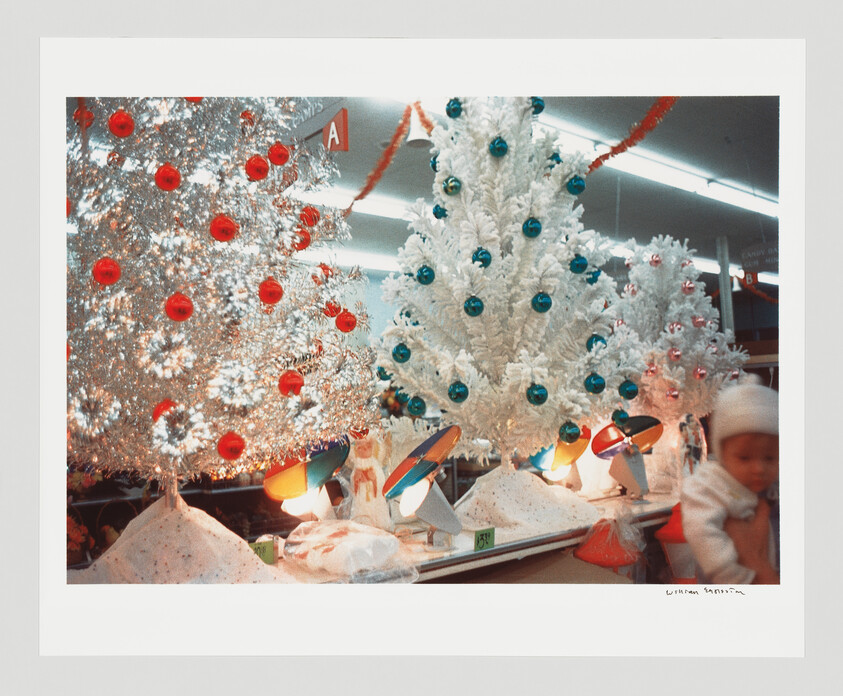
![[Blossoming Crape Myrtle]](https://media.getty.edu/iiif/image/ecb0659c-810f-4952-851b-cd20990c8371/full/843,/0/default.jpg)
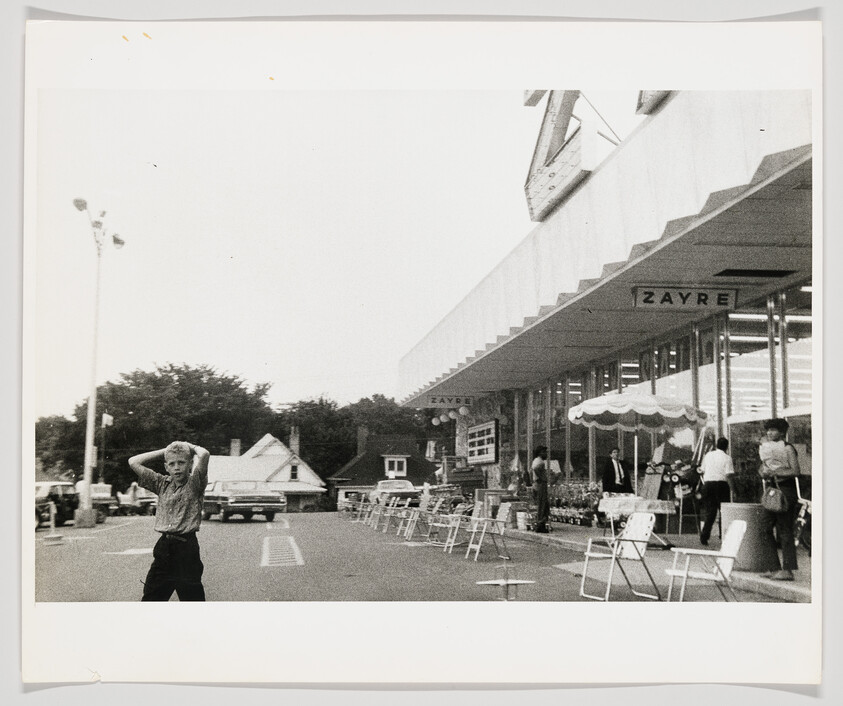
![[Stone Cross]](https://media.getty.edu/iiif/image/3edae0a1-e522-405b-a367-0469d0ed8053/full/843,/0/default.jpg)
![[Pink Flowers]](https://media.getty.edu/iiif/image/1861187d-23b4-4b59-89cb-73e1ecff3071/full/843,/0/default.jpg)
