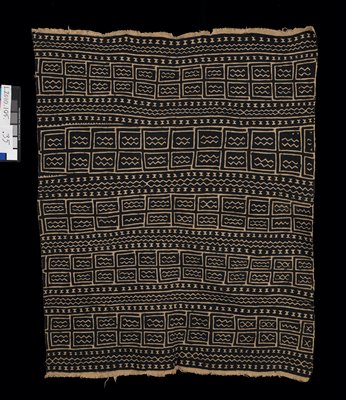
Skirt
Nianaba Diara
1980
- Medium
- Cotton; printed
- Dimensions
- 52 9/16 x 41 7/16 in. (133.51 x 105.25 cm)
- Genre
- Textiles
Tags
Mali
About
Bogolanfini, which translates as "mud cloth," is labor-intensive to produce. First, narrow strips of cotton cloth are pieced together to make a larger cloth. The whole cloth is then dyed yellow. Finally, women apply the mud to create the patterns. The mud comes from local rivers and is fermented, making it rich with iron salts. The iron oxide in the mud reacts with the tannic acid in the cloth to produce a black background. Traditionally bogolanfini was worn by hunters, pregnant or menstruating women, or anyone in danger of losing blood. As protective clothes they were meant to divert threatening evil spirits by trapping them in the meandering patterns. Today bogolanfini appears in a wide variety of social contexts, few of which relate to the traditional uses.