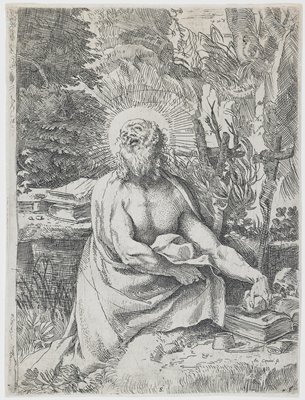
Saint Jerome in the Wilderness
- Medium
- Etching and engraving
- Dimensions
- 10 1/4 x 7 3/4 in. (26.04 x 19.69 cm)
- Genre
Tags
Italy
About
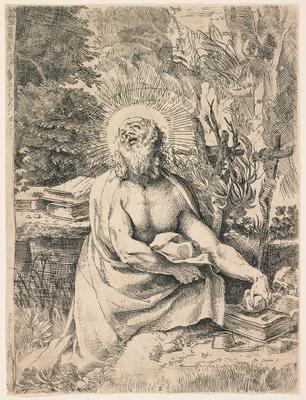
Saint Jerome (c. 347–420) was revered for his translation of the Bible from Hebrew and Greek into Latin, then a language in common use. Here we see Jerome surrounded by books, an ink pot, and quill pen that indicate his scholarly attainments. But he is not working in a hushed library. No, he’s out in the wilderness, flanked by a crucifix and a human skull, his chest bare and his hand grasping a rock with which he intends to beat himself. While a student, Jerome had engaged in mischief and licentiousness. When he converted to Christianity, he felt guilty and went into the wild to atone for his actions. Annibale conveyed Jerome’s emotional turmoil using quick, abrupt, slashing lines, but he also captured his redemption with stippling (dots) to suggest heavenly light bathing him in heavenly light.