
Untitled (Chair)
- Medium
- Light brown corrugated cardboard faced with tan paper; cut, folded, wrapped, and adhered; sewn and tied with white cotton string, blue cotton string, sisal twine; red-brown wash, red-brown wax crayon, soot, wood
- Dimensions
- 19 3/4 x 13 1/2 in. (50.17 x 34.29 cm)
About
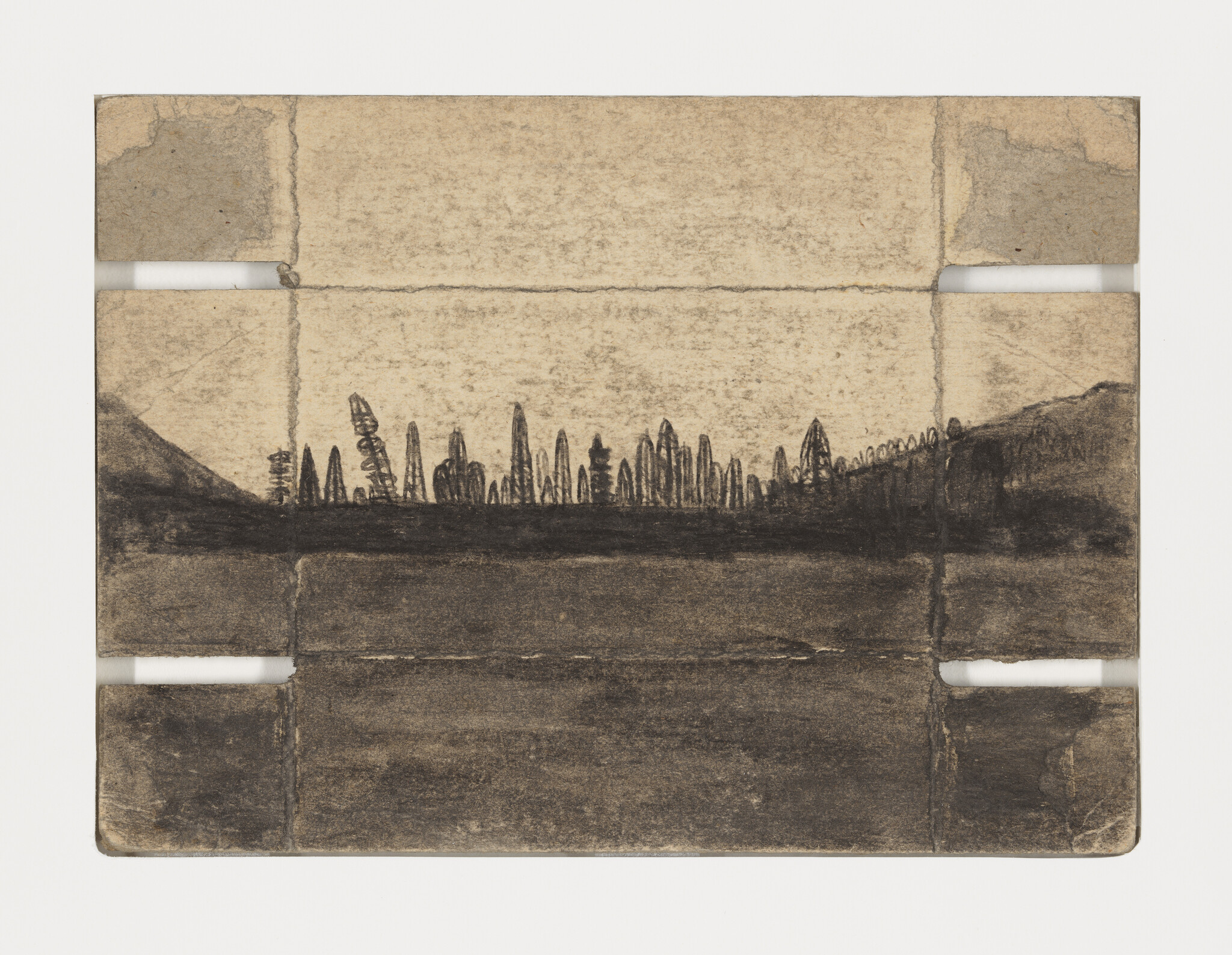
A self-taught artist who was born deaf, James Castle lived with his parents and other family members in a succession of homesteads in southwest Idaho. Castle’s art features highly detailed soot drawings and assemblages of found paper, string, and other discarded materials. Much of it depicts scenes and objects from his immediate environment, though he included doll-like figures known as “friends” and other imaginary subjects. For this found-material construction, Castle created a highly distinctive interpretation of a common wooden chair. It functions on two separate planes—symbolic and descriptive—mimicking the form and physical attributes of its model. Is this a chair, or is this an image of chair' It’s both—a hybrid that challenges our preconceived notion of “chairness.”




![Untitled (Patterned Figure) [recto]](https://api.nga.gov/iiif/2e1f9484-ba44-4532-81a4-1ddb2ad8eeeb/full/843,/0/default.jpg)
