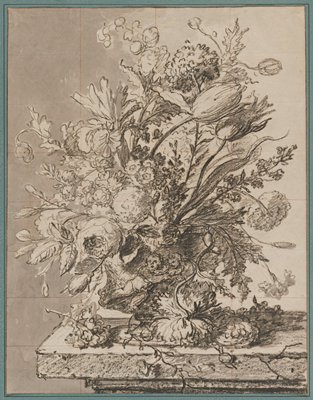
Bouquet of Flowers in a Terracotta Vase
Jan van Huysum
1723
- Medium
- Graphite, black chalk, gray wash, squared in red and black chalk, brown ink framing lines
- Dimensions
- 14 1/4 x 11 1/8 in. (36.2 x 28.2 cm) (sheet) 23 3/4 x 19 3/4 in. (60.33 x 50.17 cm) (outer frame)
- Genre
- Drawings
Tags
netherlands
About
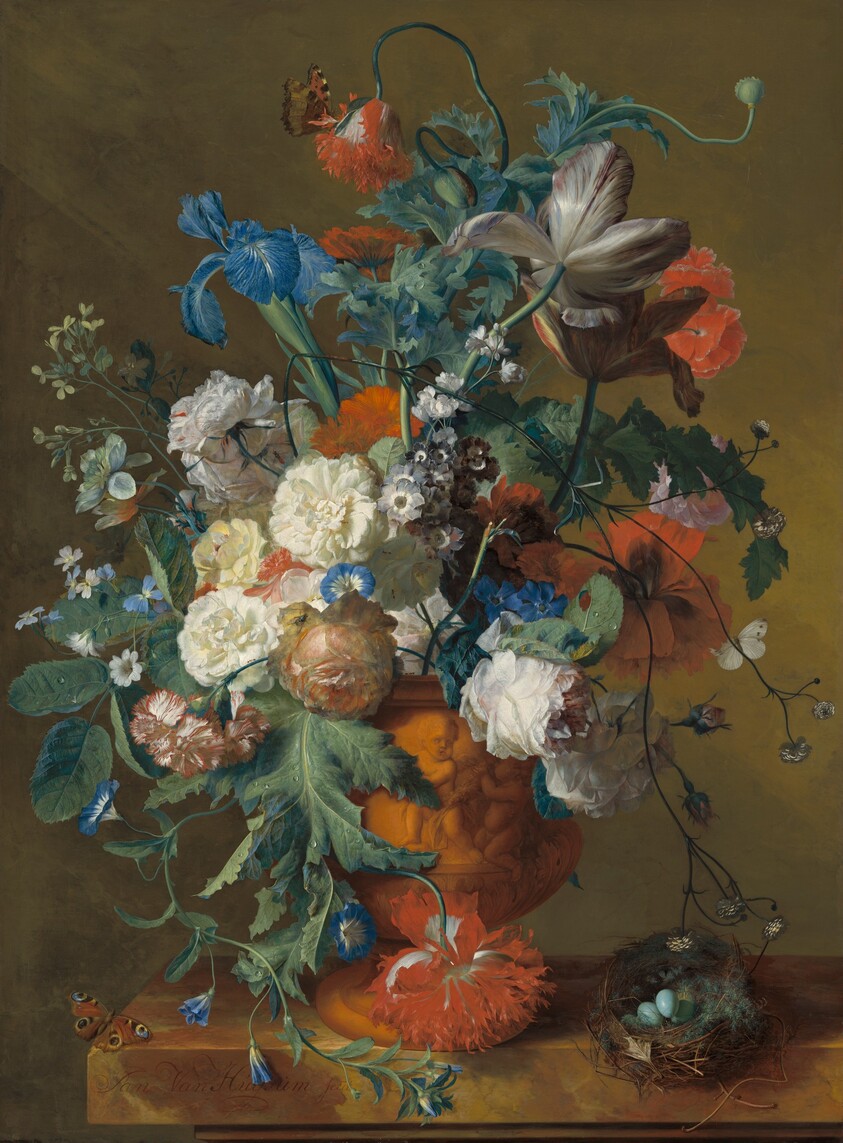
The foremost Dutch flower painter of the early 18th century, Jan van Huysum specialized in depicting elaborate floral arrangements that could never actually be seen, for they included blooms from different seasons. With drawings such as this, he conjured up arrangements resplendent with rhythmic flows and weaving lines and complex plays of light—in which brightly illuminated blooms in the back of the bouquet help to silhouette darker blooms near the front. Whereas drawing was a means of concocting fantasy bouquets, painting was the vehicle for van Huysum’s meticulous study of nature. He liked to paint individual blossoms directly from nature. The freedom and fire of his best drawings was sacrificed for painstakingly precise observation in paintings made over the course of months, or sometimes years, as he waited for the buds to bloom. The drawings sometimes correspond to known paintings, but never exactly. The real flowers from which he painted would naturally vary from those he envisioned on cold, dark nights.