Dressing Down
Yinka Shonibare
1997
- Medium
- Wax printed cotton textile, crinoline
- Dimensions
- 66 1/2 x 59 x 59 in. (168.91 x 149.86 x 149.86 cm)
- Genre
- Textiles
About
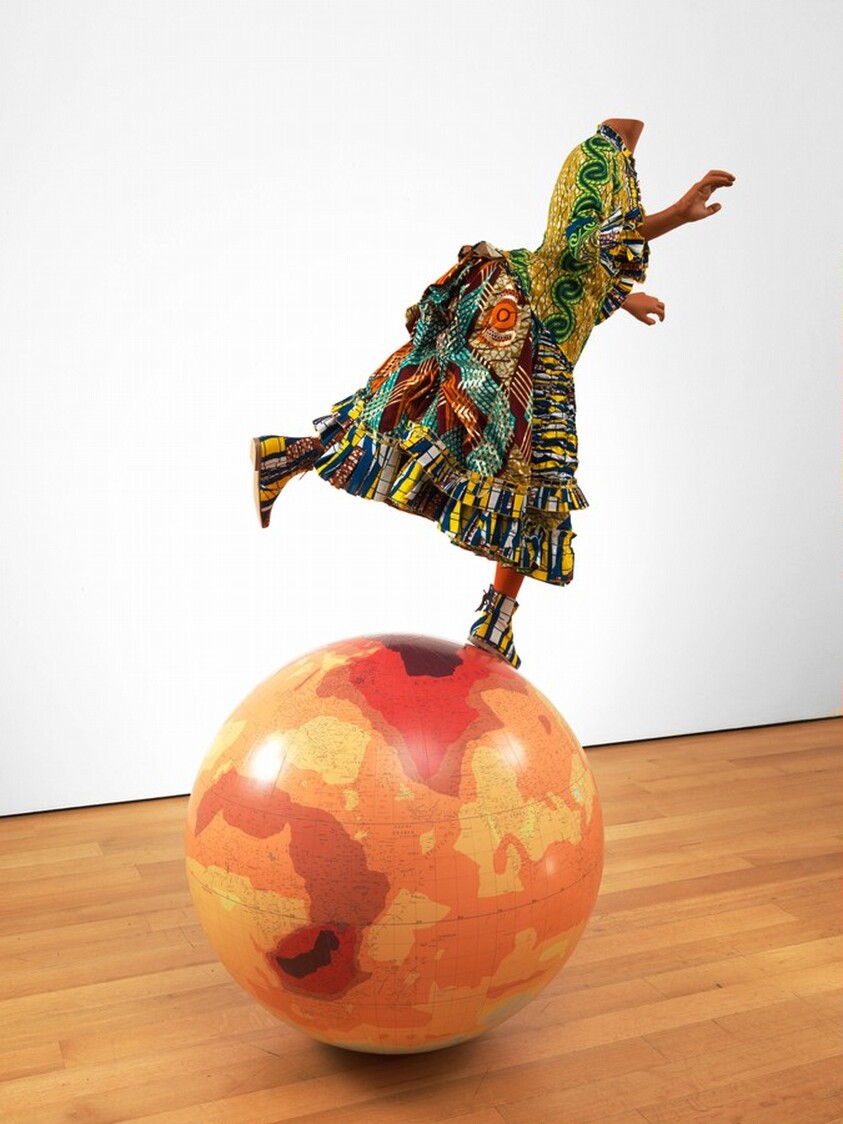
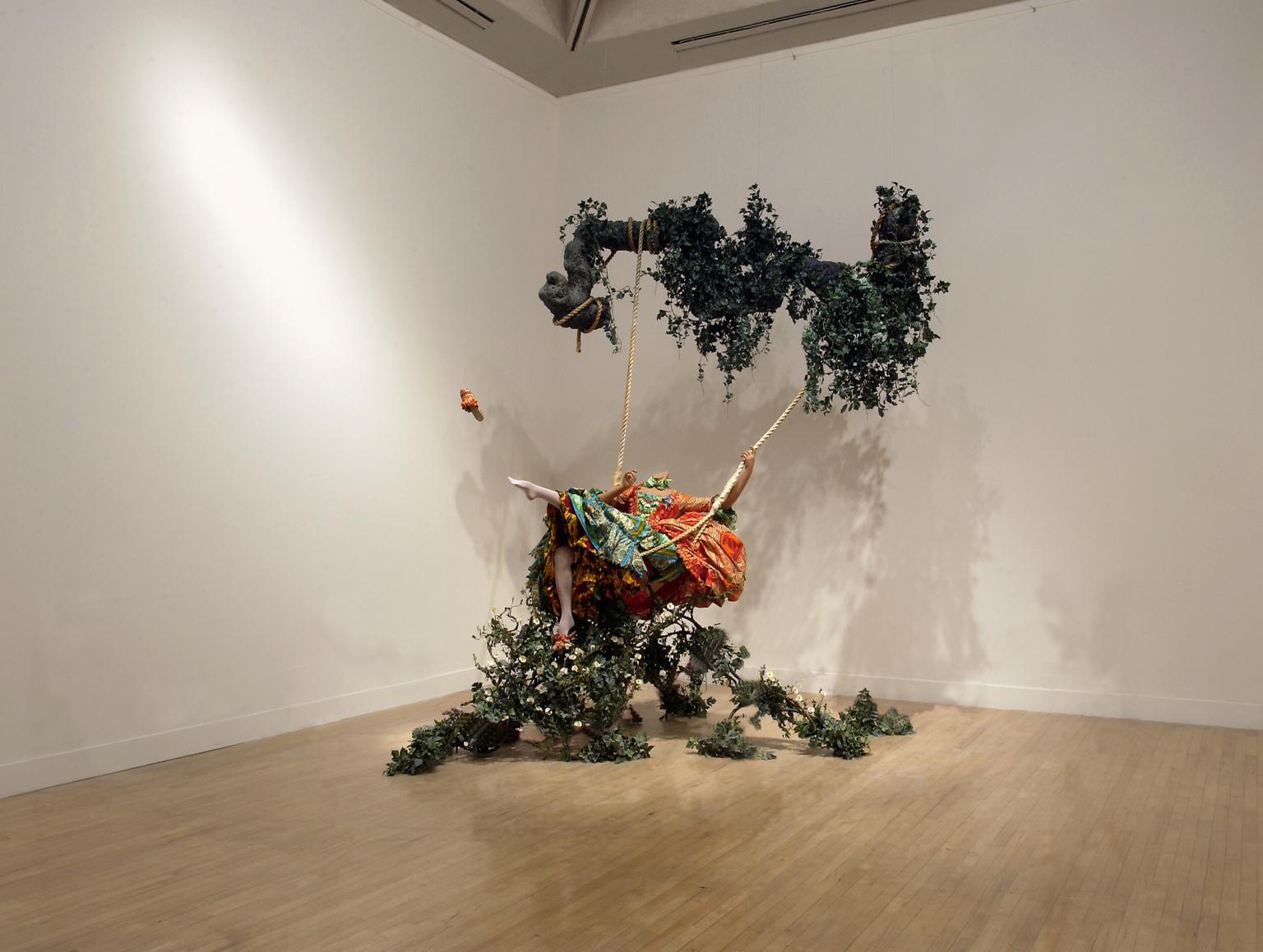
At first glance this fancy gown seems right at home in a dazzling room from a Paris town house. Look more closely, however, and you'll notice that the dress is not made of silk but rather a printed cotton fabric produced in Europe for the West African market. The artist uses this type of Dutch wax fabric, inspired by Indonesian batiks, to suggest the complex web of trade and exploitation that enabled Europeans to control most of the world's riches for the last 400 years. Dressing Down is an alluring critique of colonialism. Its placement in the Grand Salon raises the question, "whose resources and labor made all of this luxury possible'" Medallions on either side of the room say volumes about the owner's assumption of power and privilege, for they portray the continents of the globe as beautiful women, each identified by a headdress. Europe wears the helmet of Minerva, Greek goddess of wisdom; Asia wears a camel; the Americas are represented by a woman in a feathered headdress; and Africa wears a headdress in the form of an elephant. Other carved and gilded decorations of the Grand Salon refer to hunting, music and the theater, all pastimes of a "gentleman." Yinka Shonibare MBE has called himself a "postcolonial hybrid." Born in London in 1962 to Nigerian parents, the family moved back to Lagos when the artist was 3. He returned to London to attend the Byam Shaw School of Art in London, and now lives and works in London's East End. Shonibare was made a Member of the Order of the British Empire (MBE) in 2005; he has chosen to make this ironic title a part of his name, a "platform" from which to further explore the colonial legacy, class structure and social justice issues that remain in his country.