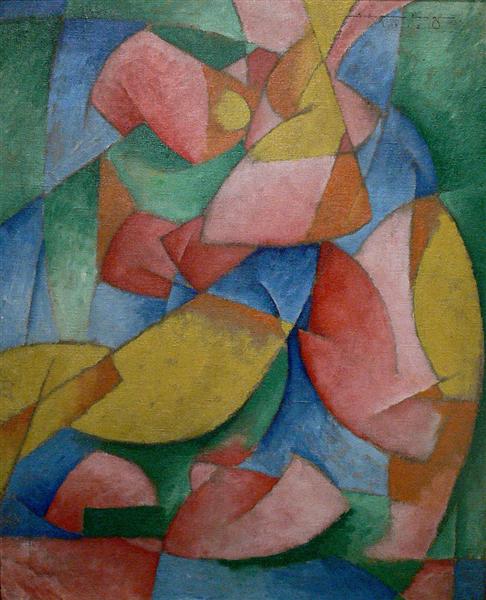
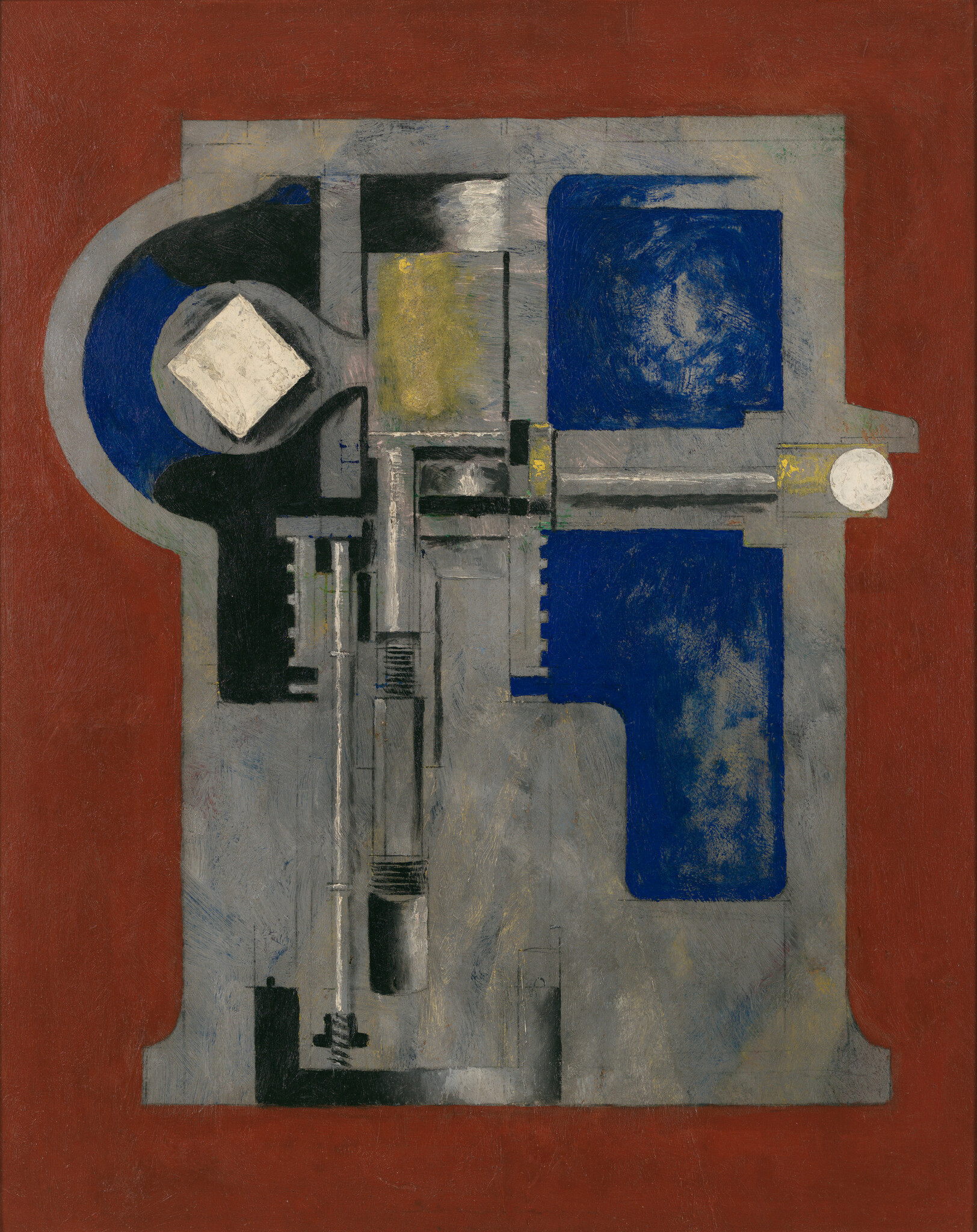
Figure A (Geometrical Patterns)
Morton Schamberg
1913
- Medium
- Oil on canvas
- Dimensions
- 39 1/8 x 33 in. (99.38 x 83.82 cm) (outer frame)
- Genre
- Paintings
Tags
United States
About
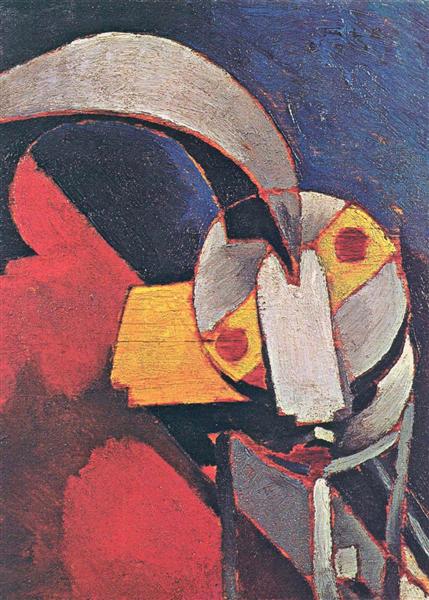
Despite his early death in the flu pandemic of 1918, Morton Schamberg made significant contributions to American modernism. The Armory Show of 1913 in New York City, which introduced European modernism to America, was a watershed moment in the artist's career. The high voltage color of Matisse's work, and the cubist experiments of Picasso and Braque that he saw there, revealed how a painting could be conceived as arbitrarily as an artist desired. Figure A is the first in a series of three large figures wherein Schamberg united the geometry of cubism with the color of fauvism-a combination that identifies him as an early advocate of Synchromism. The artist also incorporated a sense of movement to the composition in the upward sweep of the arm that, along with the torso, arcs with force to the right.