Legends of the New World
William Hunter
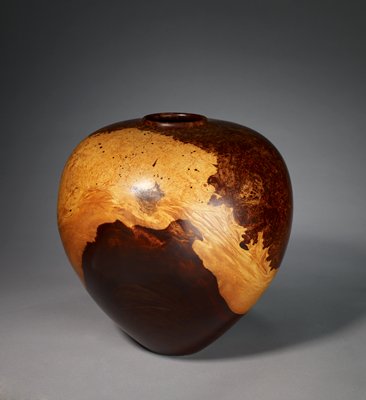
1989
- Medium
- Granadillo burl
- Dimensions
- 14 1/8 x 13 3/8 x 13 3/8 in. (35.88 x 33.97 x 33.97 cm)
- Genre
- Woodwork
Tags
United States
About
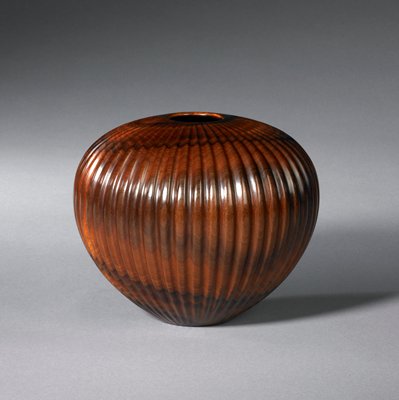
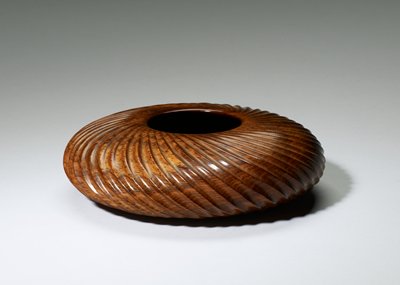
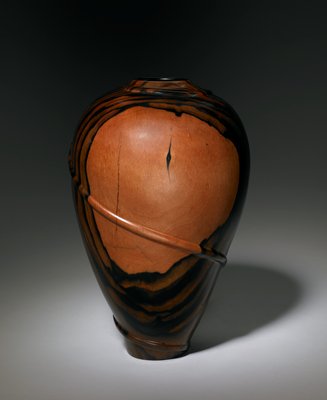
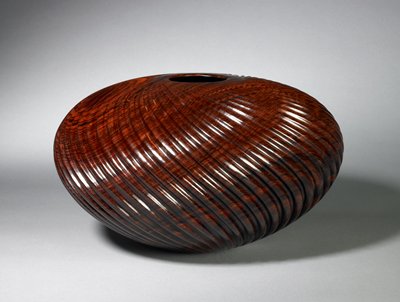
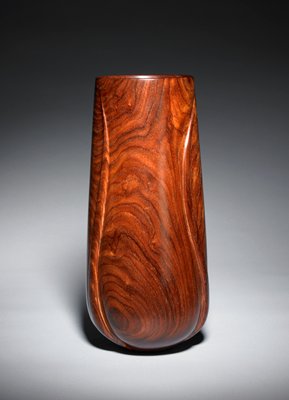
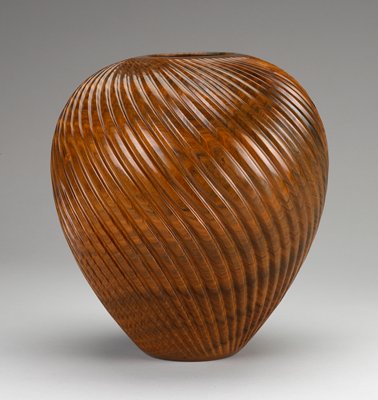
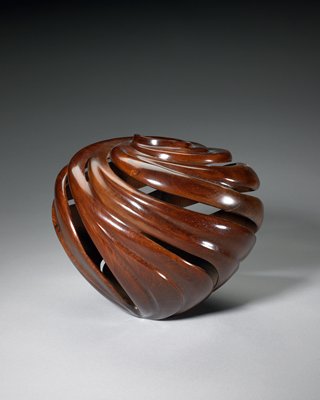
Among the second generation of studio craftsman working in wood, William Hunter has been a significant player in liberating the turned wood vessel from its functional role. Hunt uses exotic, densely grained hardwood--particularly cocobolo, also called retusa--which he then manipulates through a combination of innovative and labor-intensive carving and lathe-turning. Since 1979, the spiral form has dictated much of his work. Initially presented as an enclosed vessel defined by a series of solidly carved flutes, in 1989 Hunter started to open up his vessels by introducing voids. The resulting negative spaces inspired Hunter to name them his Phantom Vessel series. The next logical step occurred in the 1990s, when Hunter completely deconstructed his vessels into helixes, or arcs, thus bringing his exploration of the spiral in wood to a dramatic conclusion as purely abstract sculptures.