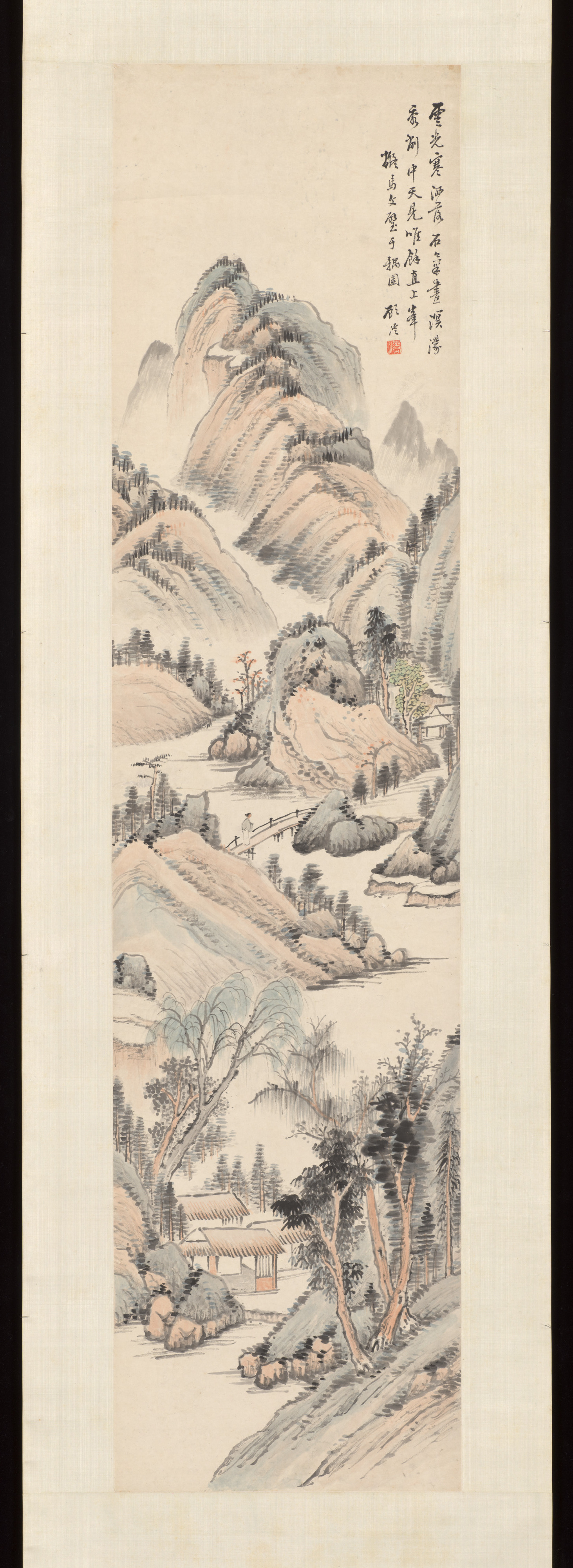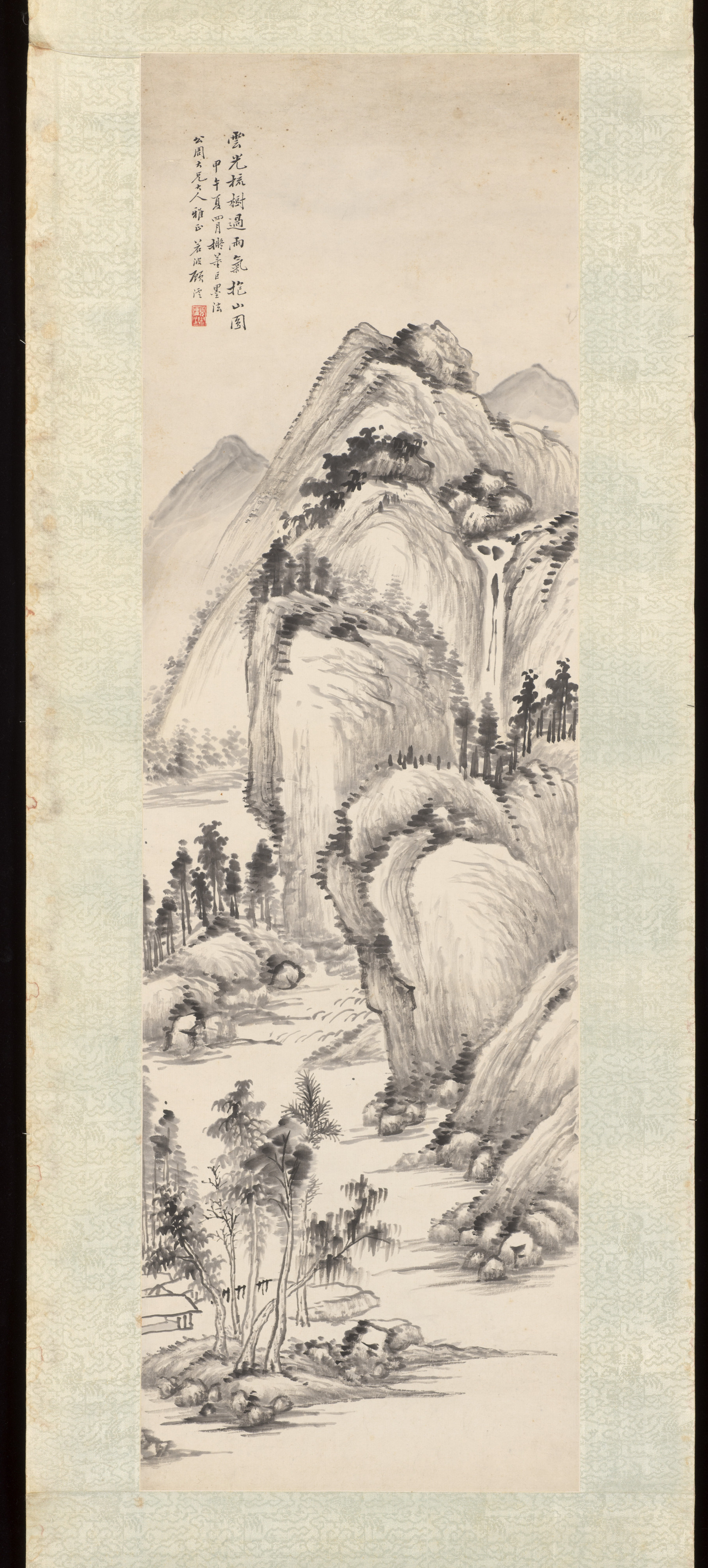
Landscape in the Manner of Wang Yuanqi
Gu Yun
1875
- Medium
- Light colors and ink on paper
- Dimensions
- 33 3/4 x 18 5/8 in. (85.73 x 47.31 cm) (image) 82 3/4 x 23 3/16 in. (210.19 x 58.9 cm) (overall, without roller)
- Genre
- Paintings
Tags
China
About
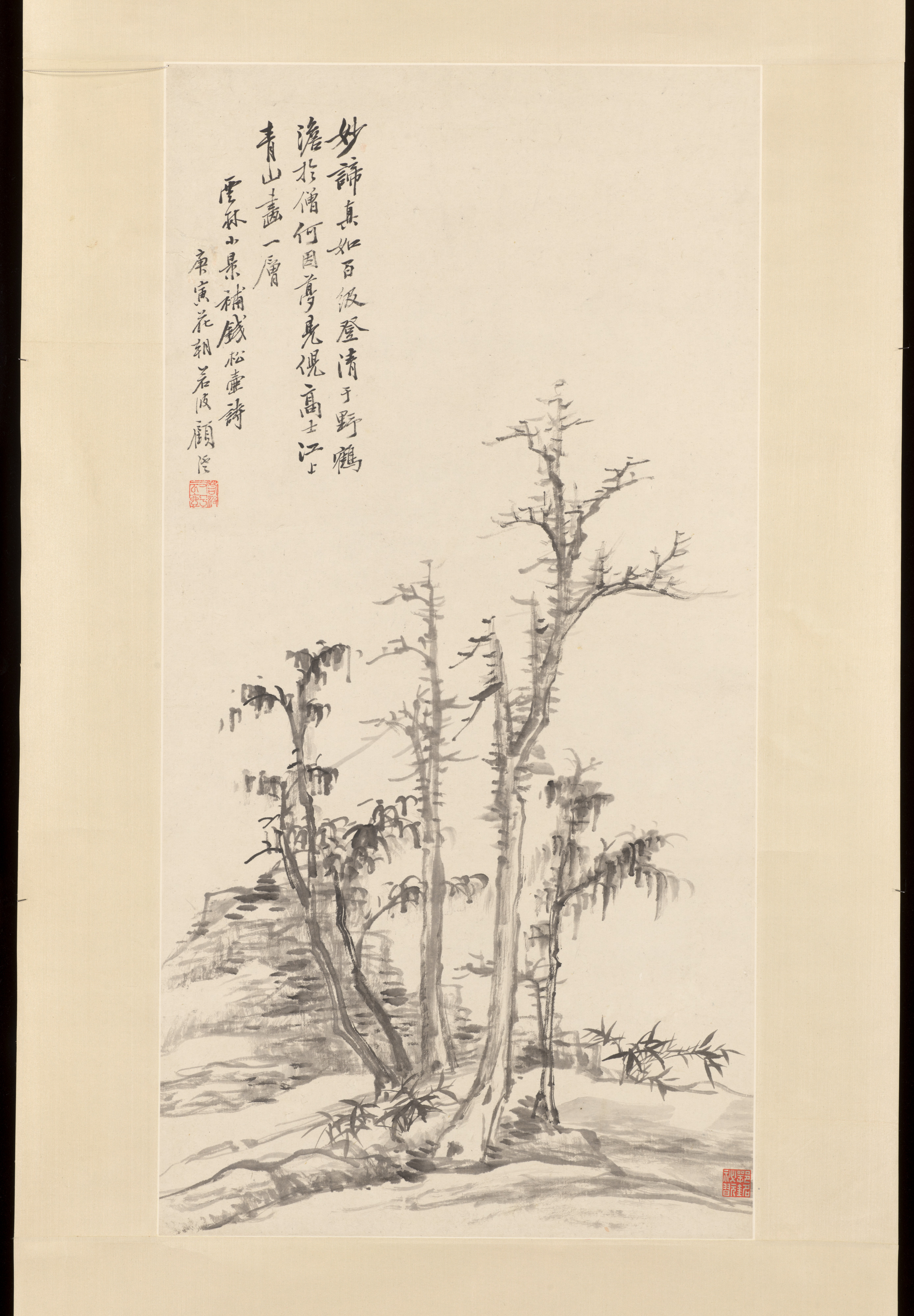
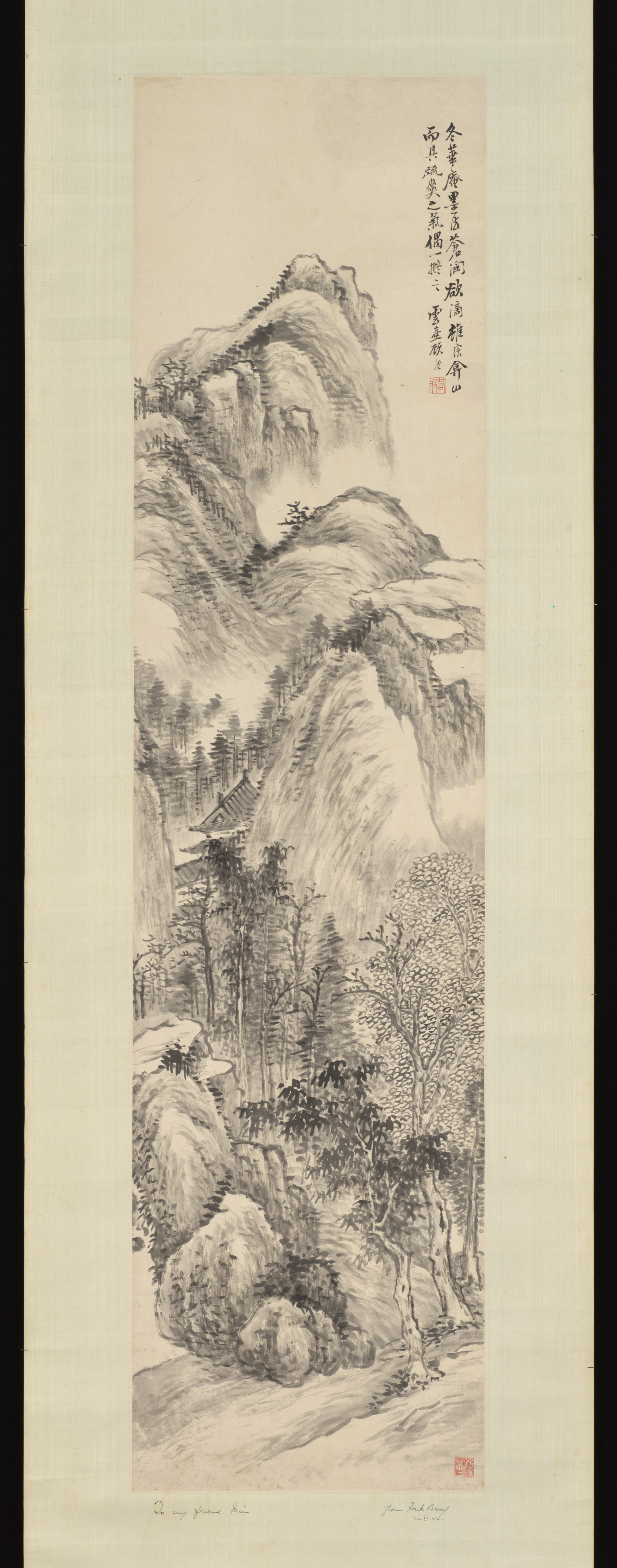
A respected literatus living in Suzhou during late Qing, Gu Yun was sent as an envoy to Japan in 1887. His painting generally followed in the manner of the Qing Orthodox School of ink landscape painting defined by the so-called four Wangs: Wang Shimin (1592-1680), Wang Jian (1598-1677), Wang Yuanqi (1642-1715), and Wang Hui (1632-1717). This new orthodoxy was based loosely on the painting styles of twelfth through fourteenth century masters as formulated in the theories of the great literatus, Dong Qichang (1555-1636). Dong's codification was perceived as the orthodox, politically safe lineage for literati painting during most of the Qing dynasty. This late nineteenth century work by Gu Yun in its light washes, clear composition, and horizontal strokes still reflects the basic values of the Orthodox tradition.