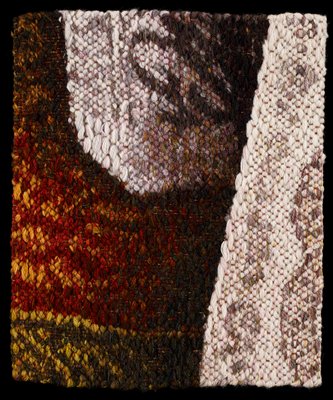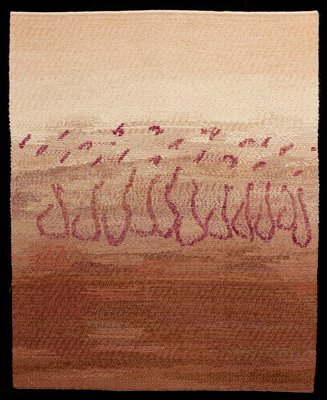
Theta
Helena Hernmarck
1987
- Medium
- Wool wefts, wool warp, rosepath with weft float patterning
- Dimensions
- 59 11/16 x 48 3/8 in. (151.61 x 122.87 cm)
- Genre
- Textiles
Tags
United States
About
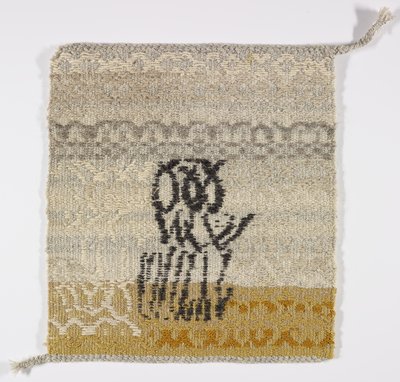
In Theta, Helena Hernmarck paid tribute to an old Scandinavian textile tradition yet created something totally new through her artistic experimentation. The abstract dots and squiggles in this tapestry emerged spontaneously in a preparatory design, which Hernmarck painted herself, making automatic gestures with her arm. Her methods were inspired by 1950s and 1960s artists like Jackson Pollock, who saw painting as a physical process, intimately connected to the body. She extended this idea to the weaving process as well: Hernmarck employed a centuries-old Scandinavian technique called “rosepath, ” which she learned while studying preindustrial textile art in Stockholm, Sweden, in the early 1960s. The rosepath technique produces textiles with regular geometric patterns. But Hernmarck improvised by manipulating threads manually, freeing the design from a predictable woven grid. The coexistence of tradition and innovation has been a persistent theme in Hernmarck’s work.