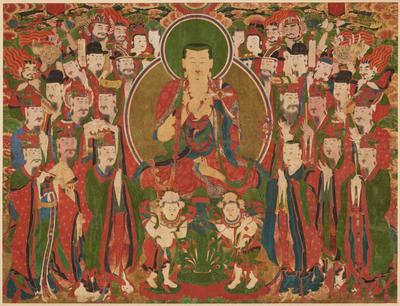
Ksitigarbha and the Ten Kings of Hell
- Medium
- Ink and color on silk
- Dimensions
- 62 x 80 x 7/8 in. (157.48 x 203.2 x 2.22 cm)
- Genre
- Paintings
Tags
Korea
About
In Korea, Buddhist monasteries stressed the communal nature of worship, with monks and laity chanting sutras and placing ceremonial offerings before religious images. As a result, large scale, brightly colored paintings became a common feature in worship halls during the Choson dynasty. This painting represents Ksitigarbha, a bodhisattva who is believed to intercede on behalf of people condemned to the torments of hell. As such, he is often pictured as in this painting, surrounded by the ten kings who reside over the various hells, and the grotesque creatures who carry out the kings' terrible punishments.