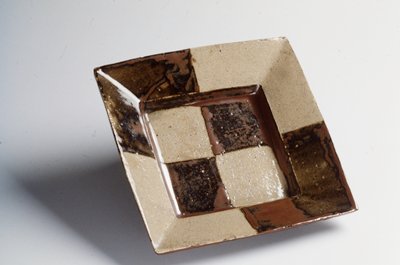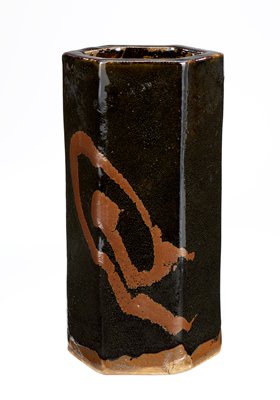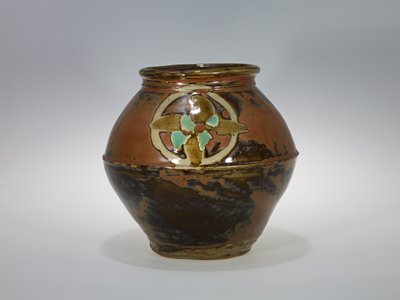
Vase
- Medium
- Glazed stoneware
- Dimensions
- 8 11/16 x 9 5/16 x 9 5/16 in. (22.07 x 23.65 x 23.65 cm)
- Genre
- Ceramics
Tags
Japan
About
Mingei The term mingei, which translates to “folk crafts, ” was coined in the 1920s by philosopher and art critic Yanagi Sōetsu (1889–1961). Yanagi, along with potters Tomimoto Kenkichi, Kawai Kanjirō, and Bernard Leach, promoted the reevaluation of crafts, including but not limited to textile, pottery, woodwork, lacquerware, metalwork, and basketry, especially those that had fallen outside of the category of fine arts. In the face of rapid industrialization, the preservation of traditional handmade crafts gained urgency. Yanagi set several conditions for what qualified as mingei. The object had to be practical, made by unnamed artists, created by hand, have regional characteristics, and be affordable.