Standing bodhisattva
- Medium
- Marble
- Dimensions
- 32 x 12 1/2 x 11 1/2 in. (81.28 x 31.75 x 29.21 cm)
- Genre
- Sculpture
Tags
China
About
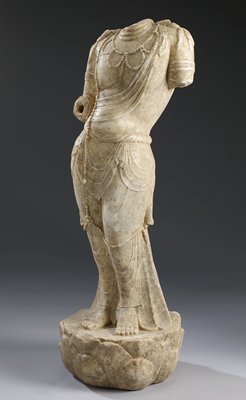
Although missing its head and arms, this work illustrates the graceful figural movement found in Tang dynasty sculpture as it had developed in the late 600s. It is a classic example of the type of realistic representation heavily influenced by the sculptural art of India during the Gupta period (320–647). The well-proportioned figure in languid pose is draped with light, nearly diaphanous multilayered robes, which extend from the left shoulder to the lotus pedestal. The statue is carved completely in the round and is adorned with a jeweled necklace and elaborate beads. The unprecedented interest in the human form seen here marks a departure from the rigid and symmetrical Buddhist sculpture of the preceding periods.