Tekka
Lucienne Day
1963
- Medium
- Cotton, screenprint
- Dimensions
- 119 x 50 in. (302.26 x 127 cm)
- Genre
- Textiles
Tags
England
About
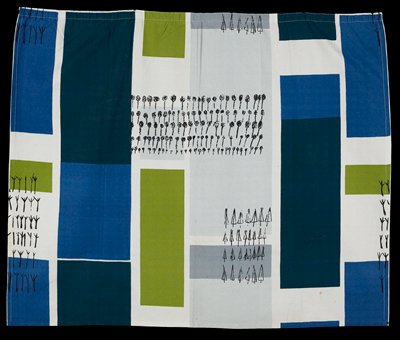
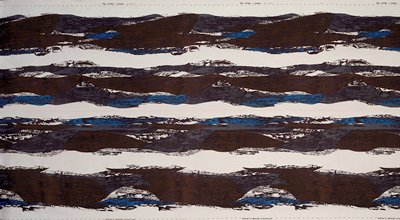
Already a distinguished textile designer in the 1950s, Day didn't have the pressures younger designers had to create trendy pieces; she took a more thoughtful approach to her designs. By the 1960s, Day's pieces had gradually become freer and bolder, in contrast to the controlled look of her previous designs. She had to challenge herself with the more unstructured designs, as these often took more time and precision to create, in order to preserve the spontaneous look. Tekka does just that, where it imitates the enlarged texture of tree bark while incorporating the carefully planned color way of green, blue and black; the piece is subtle yet attractive for the home. This understated call to nature shows Day's ability to experiment with new techniques and grow as a designer. The broken, textural effect is similar to that of Sunflower, but is a more timeless, consumer-oriented piece fitting in any context.