Relief (Series B)
- Medium
- Yellow spray paint on sheet aluminum
- Dimensions
- 100 x 49.8 x 14 cm (39 3/8 x 19 5/8 x 5 1/2 in.)
- Genre
- Sculpture
Tags
german
About
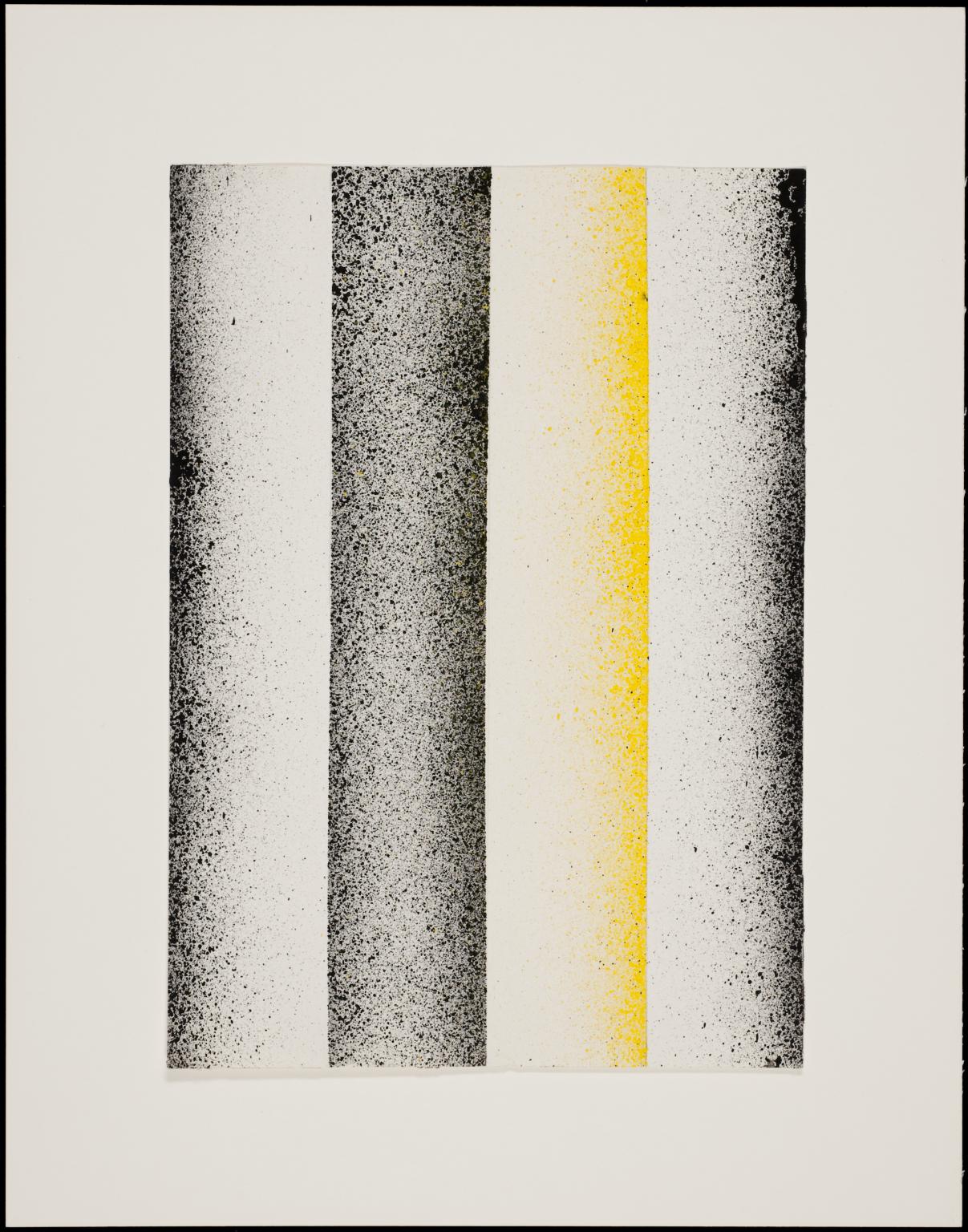
In the 1960s, a rich transatlantic dialogue informed the development of minimalist sculpture. Adapting the principles of seriality and repetition explored by American artists such as Donald Judd and Sol LeWitt, Posenenske responded to Germany’s postwar “economic miracle” and to the democratizing social movements of the 1960s. She made prototypes of sculptures to serve as the basis for authorized productions, to be industrially made at low cost at a later date. Posenenske envisioned her sculptures as modular objects that could be installed in multiple configurations. Series B consists of sheet aluminum folded and arched in convex and concave forms sprayed with standardized industrial colors. In 1968, with her reputation rising, Posenenske became disillusioned by the inevitability of commodification and stopped making art. “Art could not contribute to the solution of urgent social problems,” she declared. Instead, she pursued sociology and later became a union organizer.
![Square Tubes [Series D]](https://media.tate.org.uk/art/images/work/T/T12/T12772_10.jpg)
![Square Tubes [Series D]](https://media.tate.org.uk/art/images/work/T/T12/T12777_10.jpg)
![Square Tubes [Series D]](https://media.tate.org.uk/art/images/work/T/T12/T12778_10.jpg)
![Square Tubes [Series D]](https://media.tate.org.uk/art/images/work/T/T12/T12775_10.jpg)
![Square Tubes [Series D]](https://media.tate.org.uk/art/images/work/T/T12/T12774_10.jpg)
