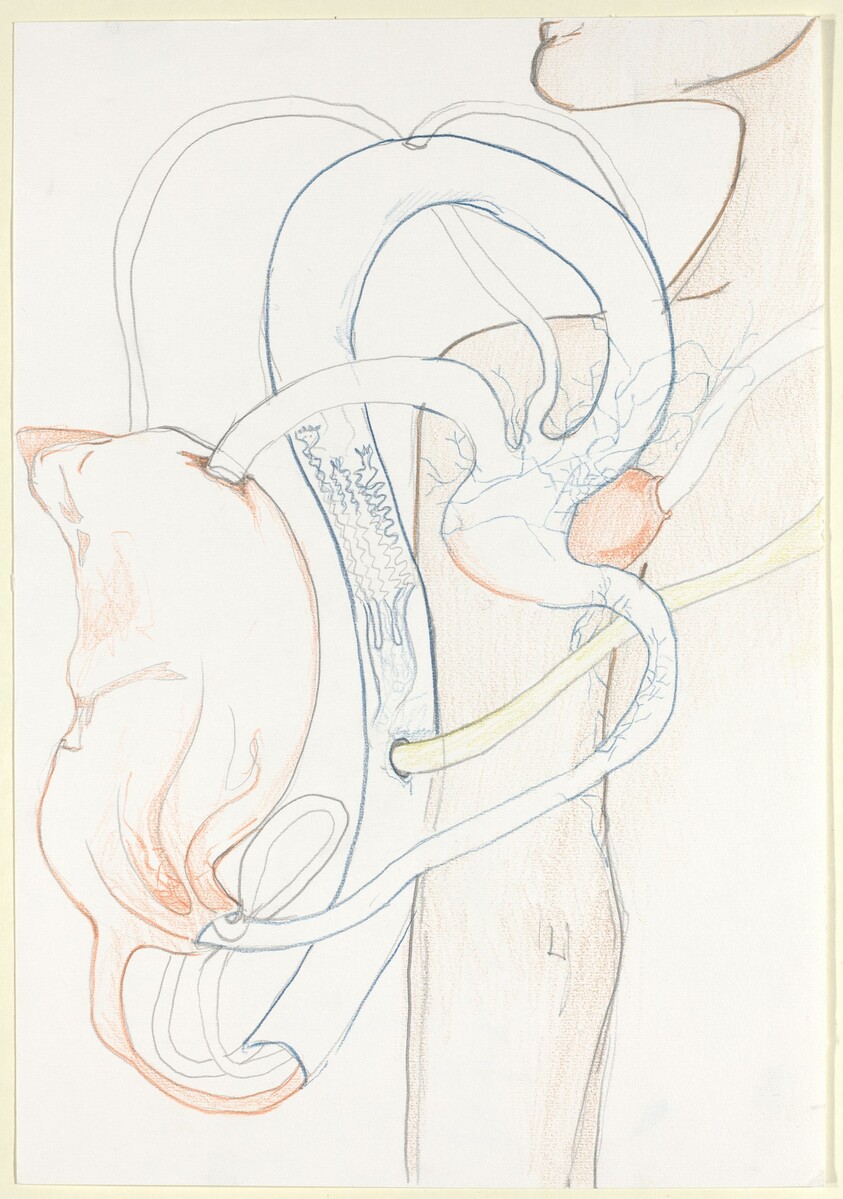
Undine
Janaína Tschäpe
2005
- Medium
- Lithograph
- Dimensions
- Paper: 70.5 x 57.2 cm (27 3/4 x 22 1/2 in.) Image: 41.6 x 30.5 cm (16 3/8 x 12 in.)
- Genre
About
As a native of Germany but spending much of her time in Brazil, Janaina Tschäpe's work has been influenced by both cultures. In Candomble, an Afro-Brazilian religion, the name Janania is a goddess, the Queen of the Ocean. The symbolic nature of water, one of unification and life, is evident in Tschäpe's work. She uses water and the female body to create magical spaces of play, where desire to transform oneself can be realized. Although the female body is a constant theme throughout her work, often because she uses friends as models, Tschäpe believes that art should transcend gender. Her playful scenes of watery landscapes are inhabited by women dressed in elaborate customs. She aims to create opportunities to play with desire and fear, to enter into a creative space that opens opportunities to unify the past and present and create the possibility of transformation. Naiad 1 and Undine are the first representations of Tschäpe's work in the Harvard Art Museum collection. They were done as part of a project at Graphicstudio at the University of South Florida. Tschäpe designed the customs, which were then worn by trained mermaids at the Florida attraction, Weeki Wachee Spring. At Graphicstudio, she experimented with different printing techniques. In the color lithograph, Undine, Tschäpe references the German mythological figure of a water nymph and harkens back to the series she did between 1997 and 2001, titled "One Hundred Little Deaths." The photogravure, Naiad 1, is a Greek mythological water nymph bound to her fresh water spring.