Sarah Morecock Boylston (Mrs. Thomas Boylston) (1696-1774)
- Medium
- Oil on canvas
- Dimensions
- 129.5 x 102 cm (51 x 40 3/16 in.) framed: 146.1 x 120 x 10.2 cm (57 1/2 x 47 1/4 x 4 in.)
- Genre
- Paintings
Tags
American
About
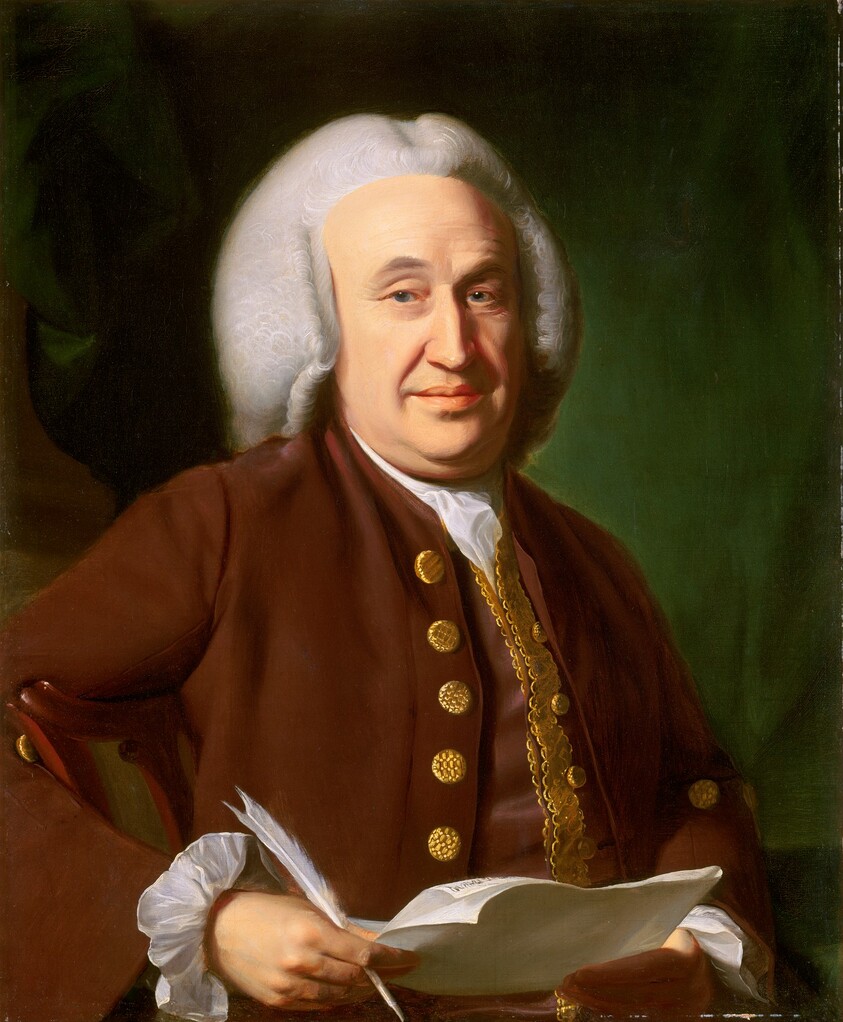
John Singleton Copley was among the most prominent portraitists in colonial Boston. In 1766, he was commissioned to paint three portraits of the Boylston family, which had amassed a fortune sending enslaved Africans and foreign goods to the Americas. Like many of his Boston portraits, Copley’s likenesses are a blend of fact and fiction. He combined detailed renderings of the sitters’ faces and garments with invented settings to convey the family’s wealth and status. Copley portrayed the Boylstons in extravagant imported clothing. Sarah (1696–1774), seen in the portrait nearby, wears a sumptuous satin dress, while her sons are draped in richly textured dressing gowns, or “banyans,” exotic attire that conveyed their cosmopolitan identity and global power. Other elements in the portraits, like the large ledgers and the ship in this portrait of Nicholas (1716–1771), suggest the family’s mercantile identity without showing what—or whom— they traded.