The Apparition
Gustave Moreau
1876–1877
- Medium
- Oil on canvas
- Dimensions
- 55.9 x 46.7 cm (22 x 18 3/8 in.) frame: 69.8 x 60.2 cm (27 1/2 x 23 11/16 in.)
- Genre
- Paintings
Tags
french
About
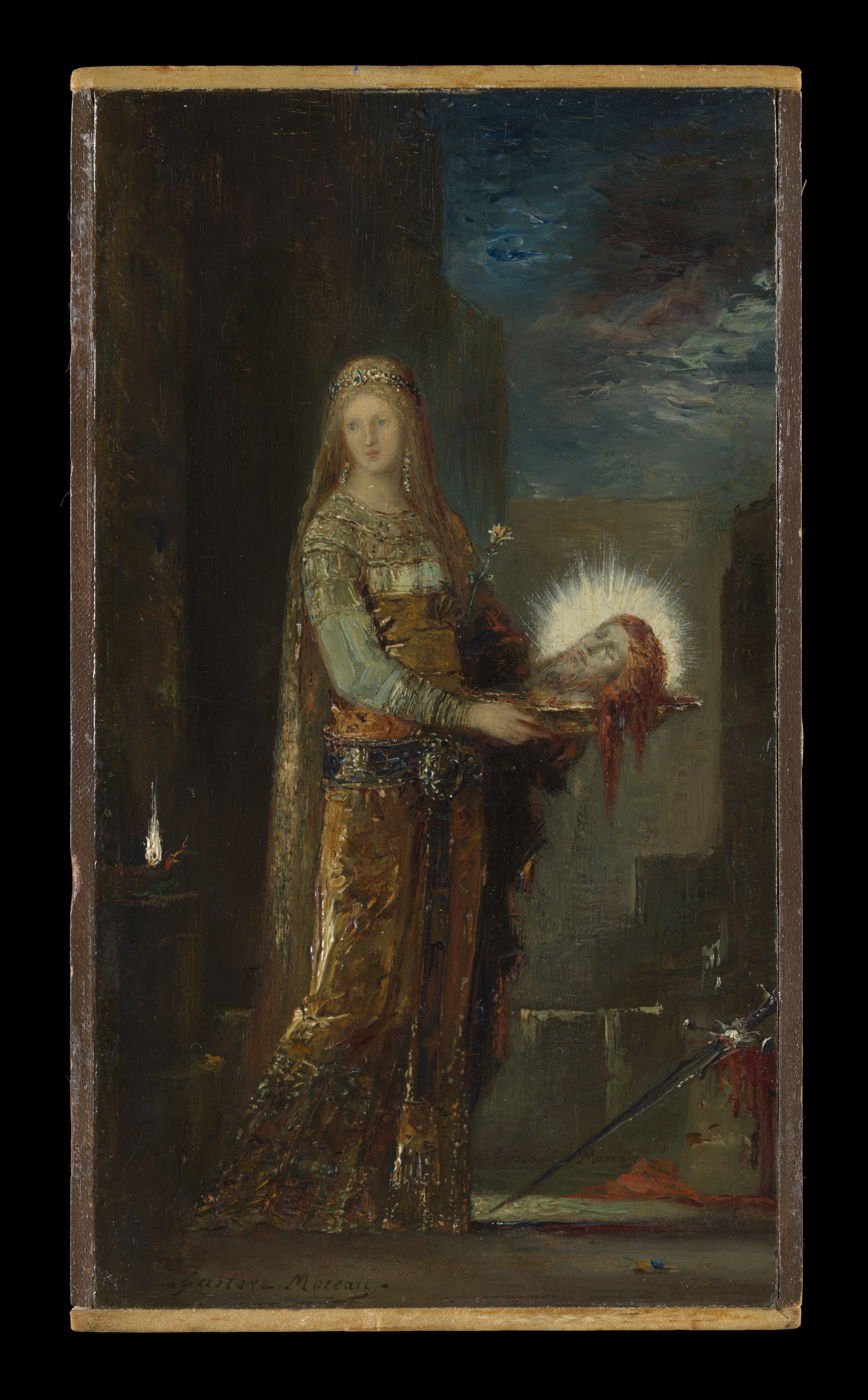
Seduced by the erotic dancing of his stepdaughter, Salome, the biblical ruler Herod promised to grant her a wish. Prompted by her mother, Herodias, whose marriage to Herod had been denounced by John the Baptist, Salome requested the saint’s head on a platter. In Moreau’s ornate vision, the dancer appears to have conjured the head of the ascetic prophet, whose radiance overshadows her richly dressed form. The psychologically and narratively ambiguous scene is enacted in front of the enthroned king and his wife as well as the executioner, his sword still wet with blood. A version of this painting was described by French writer Joris-Karl Huysmans in his decadent novel of 1884, À rebours (Against Nature). Huysmans, like many late 19th-century writers and artists, considered Salome the ultimate example of a femme fatale: "[S]he awakened more energetically the lethargic senses of man, she bewitched and tamed his will more confidently with her charm, that of a large venereal flower, grown in hotbeds of sacrilege, raised in impious greenhouses."



![The Amorous Lion [Le lion amoureux]](https://api.nga.gov/iiif/fc23bf94-966e-41bf-ac86-1abc788fd486/full/843,/0/default.jpg)