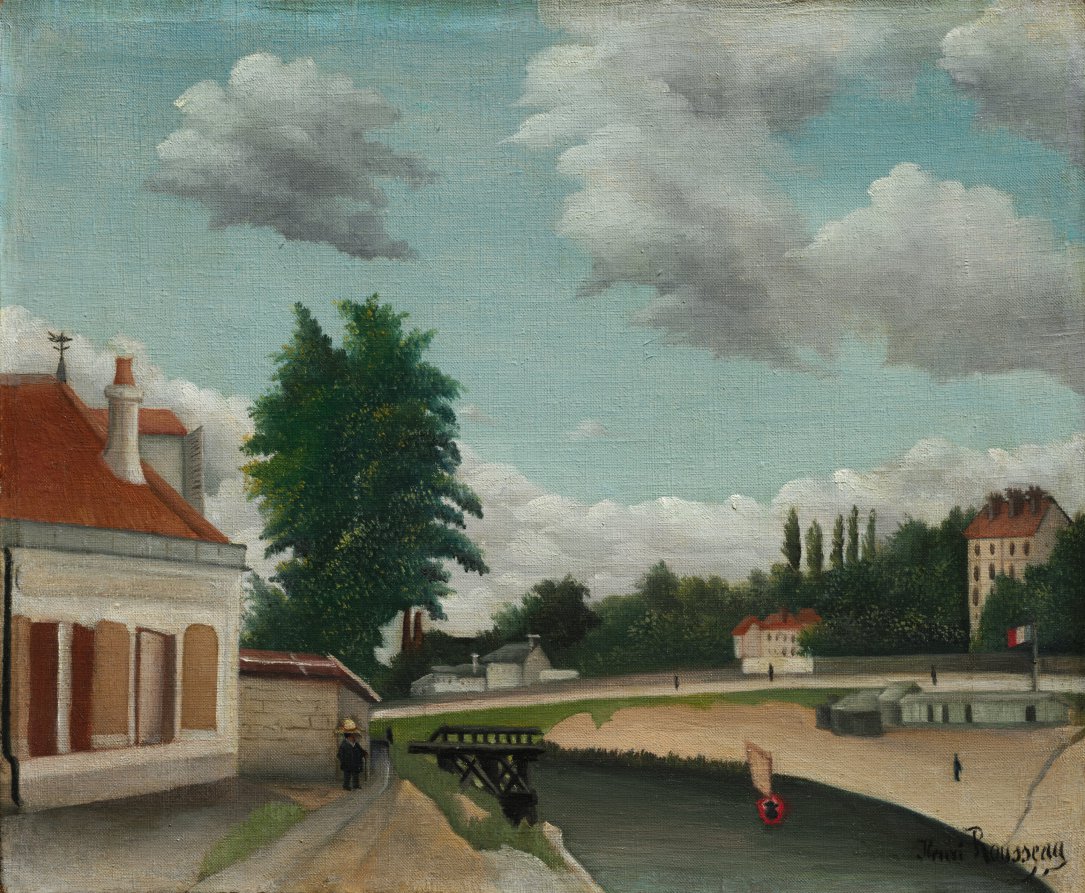
The Banks of the Oise
Henri Rousseau
1902–1912
- Medium
- Oil on canvas
- Dimensions
- 33 x 46 cm (13 x 18 1/8 in.) framed: 54.3 x 67 x 5.7 cm (21 3/8 x 26 3/8 x 2 1/4 in.)
- Genre
- Paintings
Tags
french
About
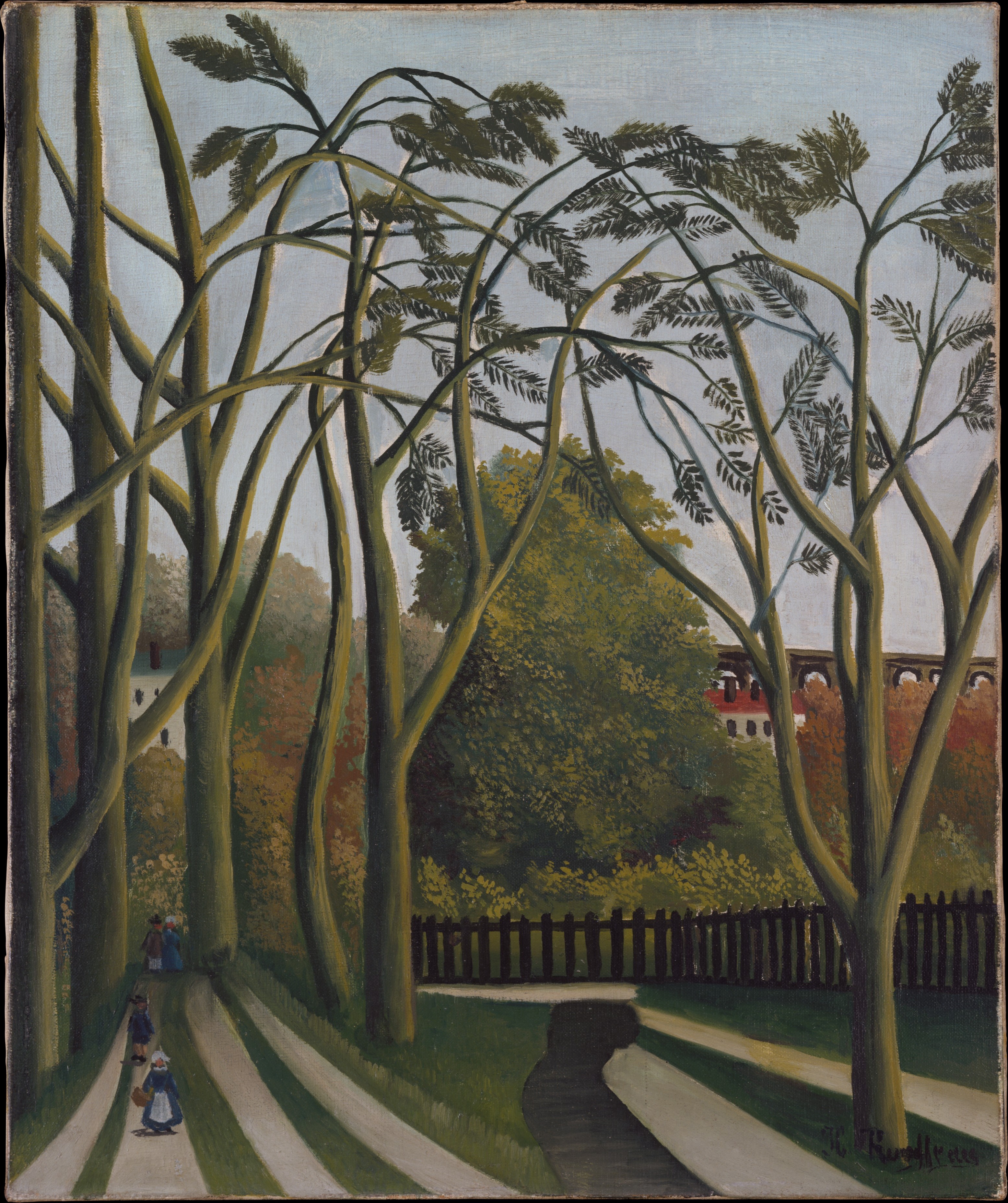
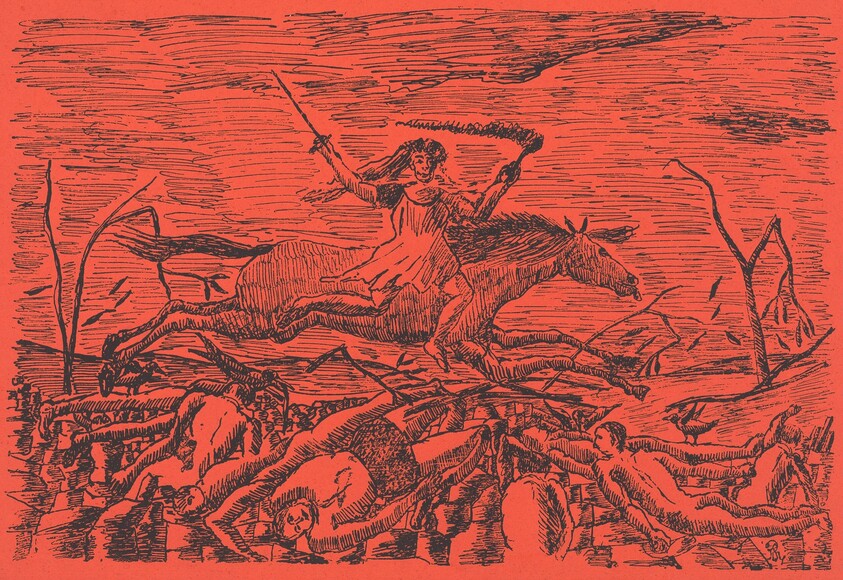
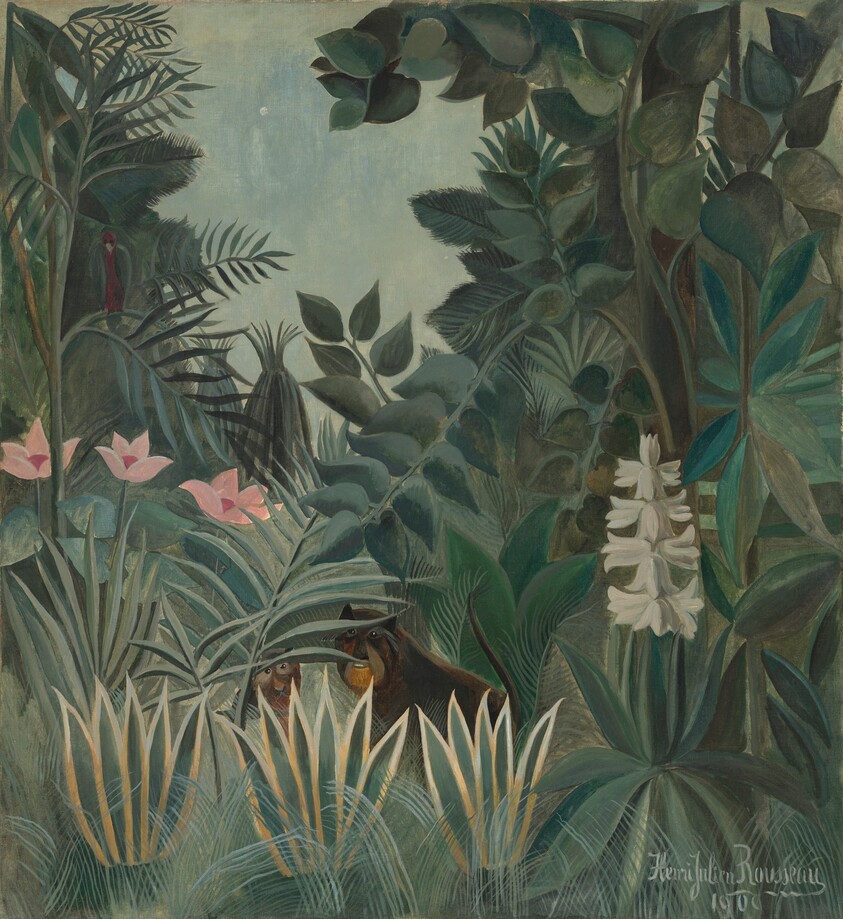
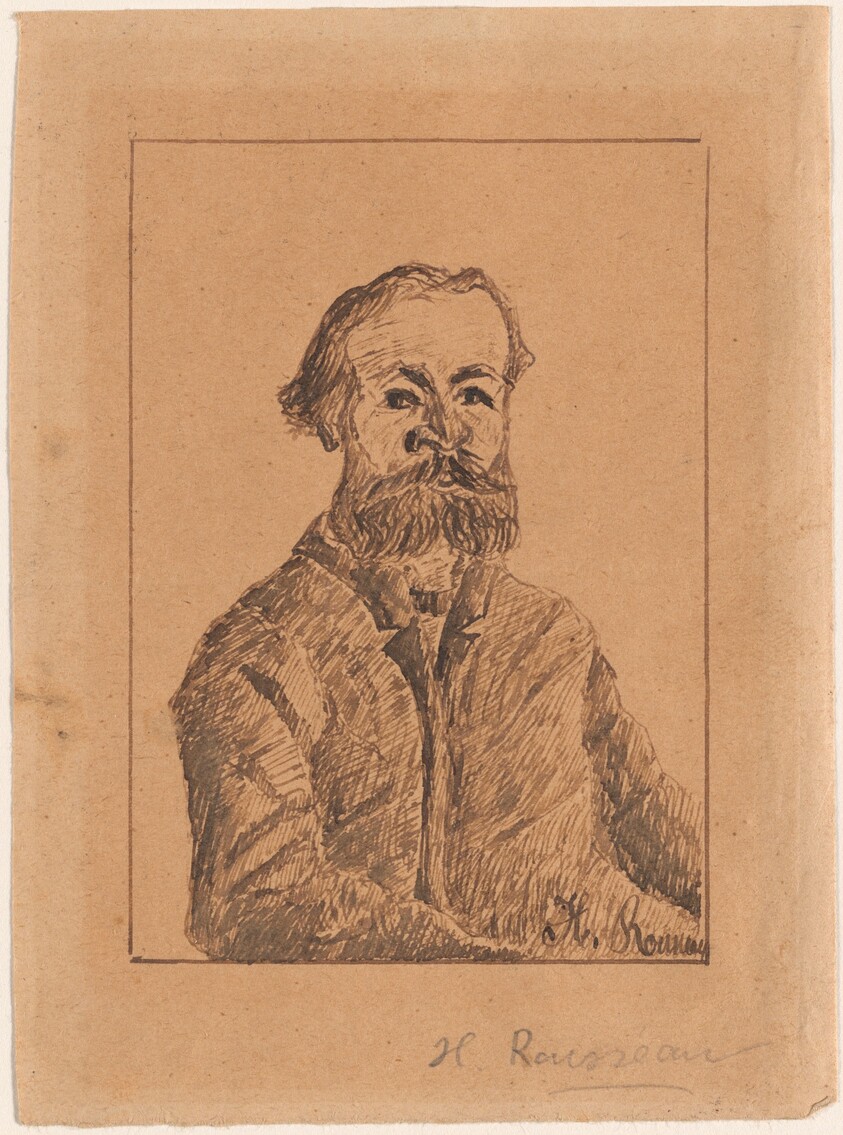
Though often derided by critics of the period as an amateurish “Sunday painter,” Rousseau was celebrated by younger avant-garde artists, including Pablo Picasso, who saw in his idiosyncratic works an evocation of modernity. In 1913, the critic Blaise Cendrars characterized Rousseau’s art as eluding easy classification: “Glorious and maladroit, awkward and elegant, [his] work . . . defies all domineering or dogmatic criticism.” This is one of a number of bucolic landscapes that Rousseau painted in the Île-de-France region around Paris. The larger trees closely resemble those in his other paintings, while the dappled brushwork in the background creates a subtle screen of autumnal foliage. The sturdy cattle dwarf their archaic-looking herdsman, who wears a Phrygian cap, a soft conical hat first worn by the ancient Greeks. This classical element was the kind of historical reference that Rousseau routinely inserted into his landscapes to lend them an air of fantasy and imagination.