Saint Anthony Abbot
Tilman Riemenschneider
1505–1515
- Medium
- Linden wood
- Dimensions
- 115.6 x 33 x 14 cm (45 1/2 x 13 x 5 1/2 in.)
- Genre
- Sculpture
Tags
german
About
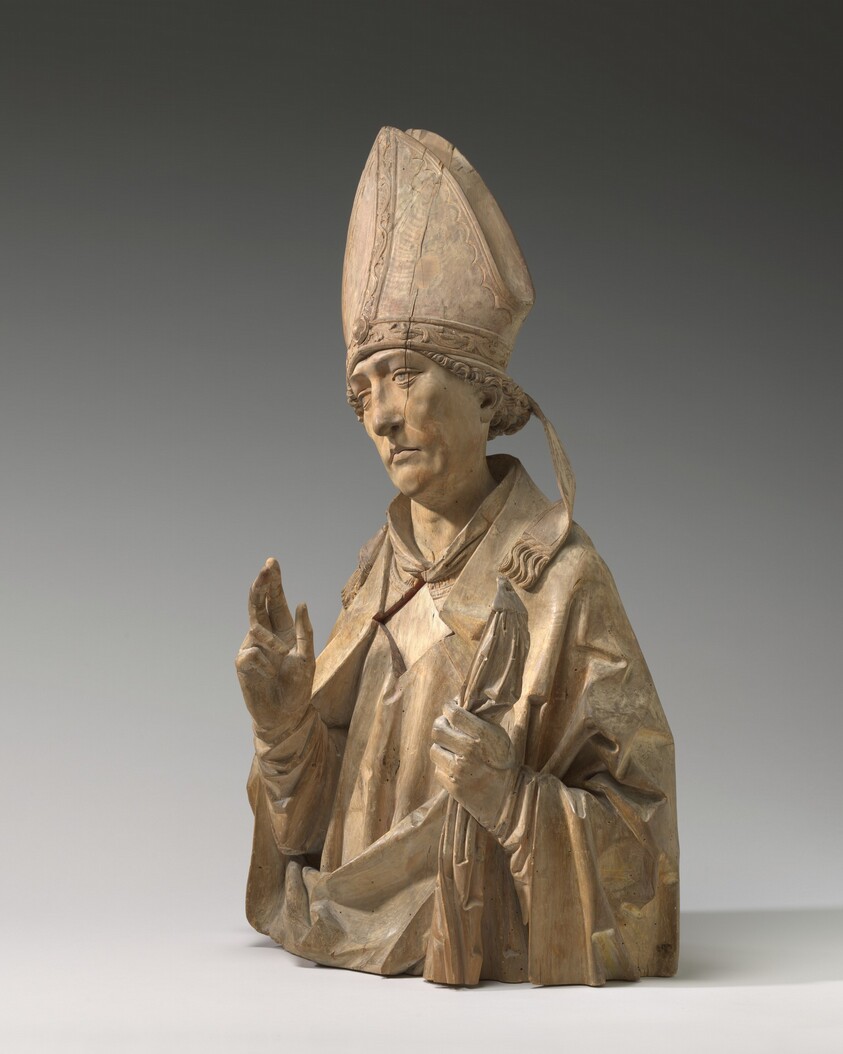
Riemenschneider is one of the best-documented masters of early Renaissance sculpture in southern Germany; he worked with an able workshop to provide monumental altarpieces in that region. The narrow depth of this statue (only six inches) and its hollowed-out back and straight right edge suggest that it was designed to fit into an architectural space as part of a multifigural carved altarpiece. In contrast to other sculptors whose works were painted, Riemenschneider made expressive use of linden wood’s natural grain and surface qualities. His deeply cut lines give rise to a remarkable play of light and shadow, as is apparent in the rich drapery folds and elaborately carved locks of hair of the emaciated hermit saint. Because the statue is so shallow, the hands (now missing) had to be made separately and set into the sleeves. They would have held Anthony’s attributes, a staff and a book.