Door Knocker with Neptune and Sea Horses
Alessandro Vittoria
1550–1580
- Medium
- Cast
- Dimensions
- 42 x 31.7 x 11.5 cm (16 9/16 x 12 1/2 x 4 1/2 in.)
- Genre
- Tools and equipment
Tags
Italian
About
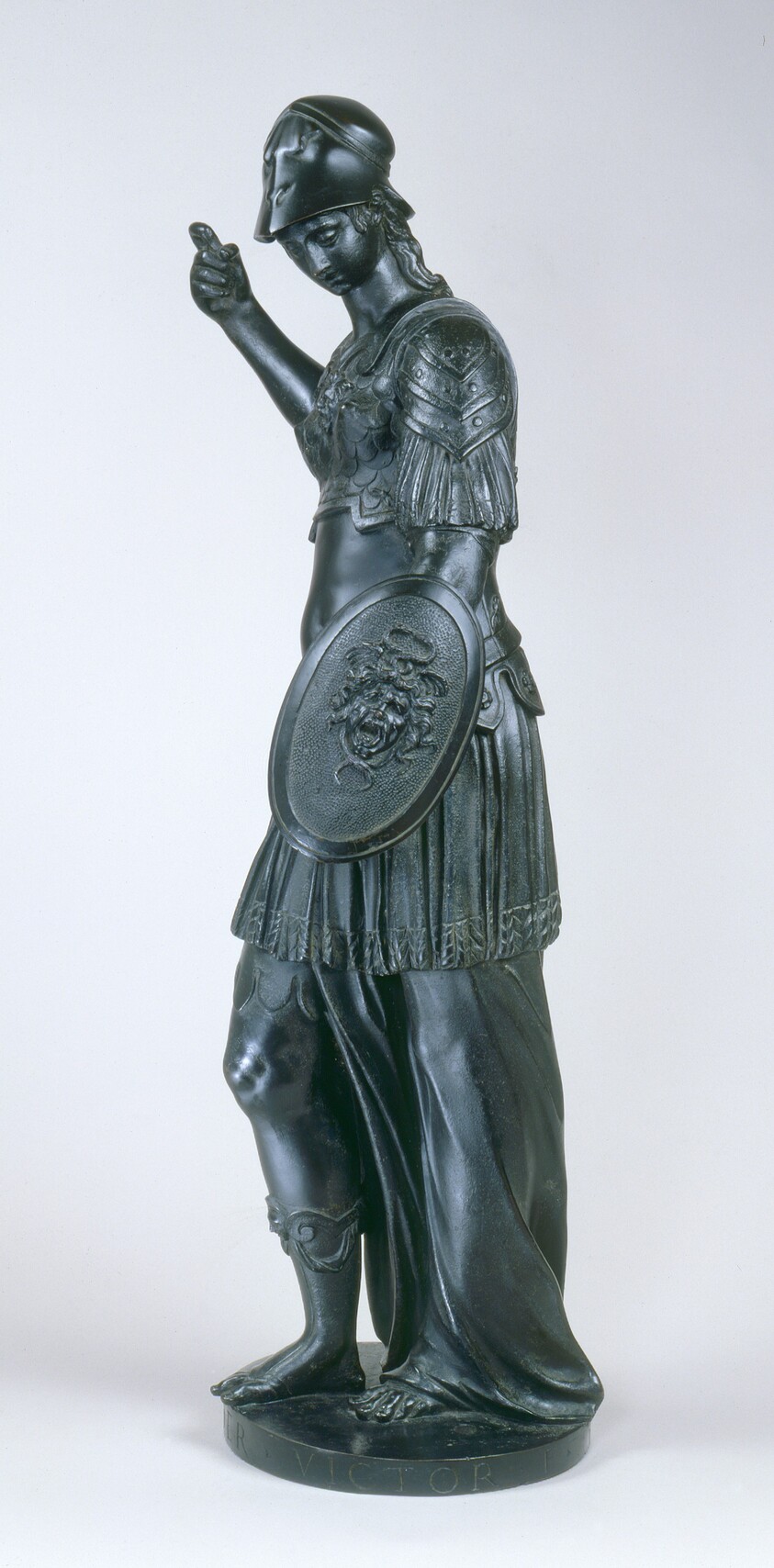
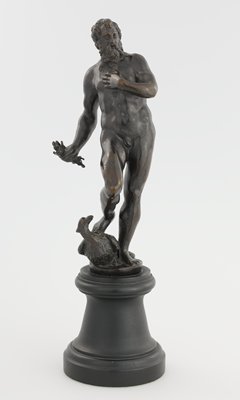
In the sixteenth century, elaborate knockers became a feature on palace doors in Venice. Made of the precious material of bronze, they were status symbols meant to impress both by their display of wealth and, as in this example, by their fine craftsmanship and sophisticated design. With remarkable invention, Alessandro Vittoria, Venice’s leading sculptor in the second half of the sixteenth century, used the graceful and flexible bodies of two sea horses to form the lyre-like handle of the knocker. Neptune, god of the sea, balances himself on their front legs. His presence would have appealed to learned visitors in this maritime center who would have recognized the reference to Virgil’s Quos ego, in which Neptune calms a tempest to speed Aeneas on his voyage to Italy. Such visitors would also have appreciated that this complex design was based on a drawing by Leonardo da Vinci that circulated in prints and medals.



![Apollo Placing a Wreath on a Lion [reverse]](https://api.nga.gov/iiif/ee0ac6a6-cf82-48b7-af2a-2c360e62249b/full/843,/0/default.jpg)

![Virtue Crowning an Ox [reverse]](https://api.nga.gov/iiif/bb8c03bc-c80b-4020-9aa9-0ad94ebc41f9/full/843,/0/default.jpg)