Emmanuel Joseph Sieyès (1748-1836)
- Medium
- Oil on canvas
- Dimensions
- 97.8 x 74 cm (38 1/2 x 29 1/8 in.) frame: 114.3 x 92.1 x 8.9 cm (45 x 36 1/4 x 3 1/2 in.)
- Genre
- Paintings
Tags
french
About
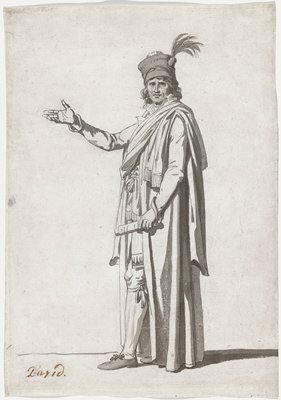
Following Napoleon’s defeat at Waterloo in 1815, David was banished from France. He settled in Brussels, where he painted this portrait of Sieyès (1748– 1836), a fellow exile. Sieyès had been an early proponent of the claims of the Third Estate, or the French commoners, at the outset of the Revolution in 1789. Though he lacked distinction as an orator, he remained a figure of great influence throughout the Revolution, and was instrumental in bringing Bonaparte to power in 1799. His subsequent relations with Napoleon were equivocal, though he remained in favor until he voted for the emperor’s deposition in 1814. This portrait is a restrained testament to an extraordinary depth of shared experience: both men were survivors of nearly thirty years of political turmoil in which they played considerable roles before facing the overthrow of their fortunes and the debasement of their ideals.