Saint Jerome
Jusepe de Ribera
1640
- Medium
- Oil on canvas
- Dimensions
- 128 x 101.3 cm (50 3/8 x 39 7/8 in.) framed: 165 x 139.5 x 8.2 cm (64 15/16 x 54 15/16 x 3 1/4 in.)
- Genre
- Paintings
Tags
spanish
About
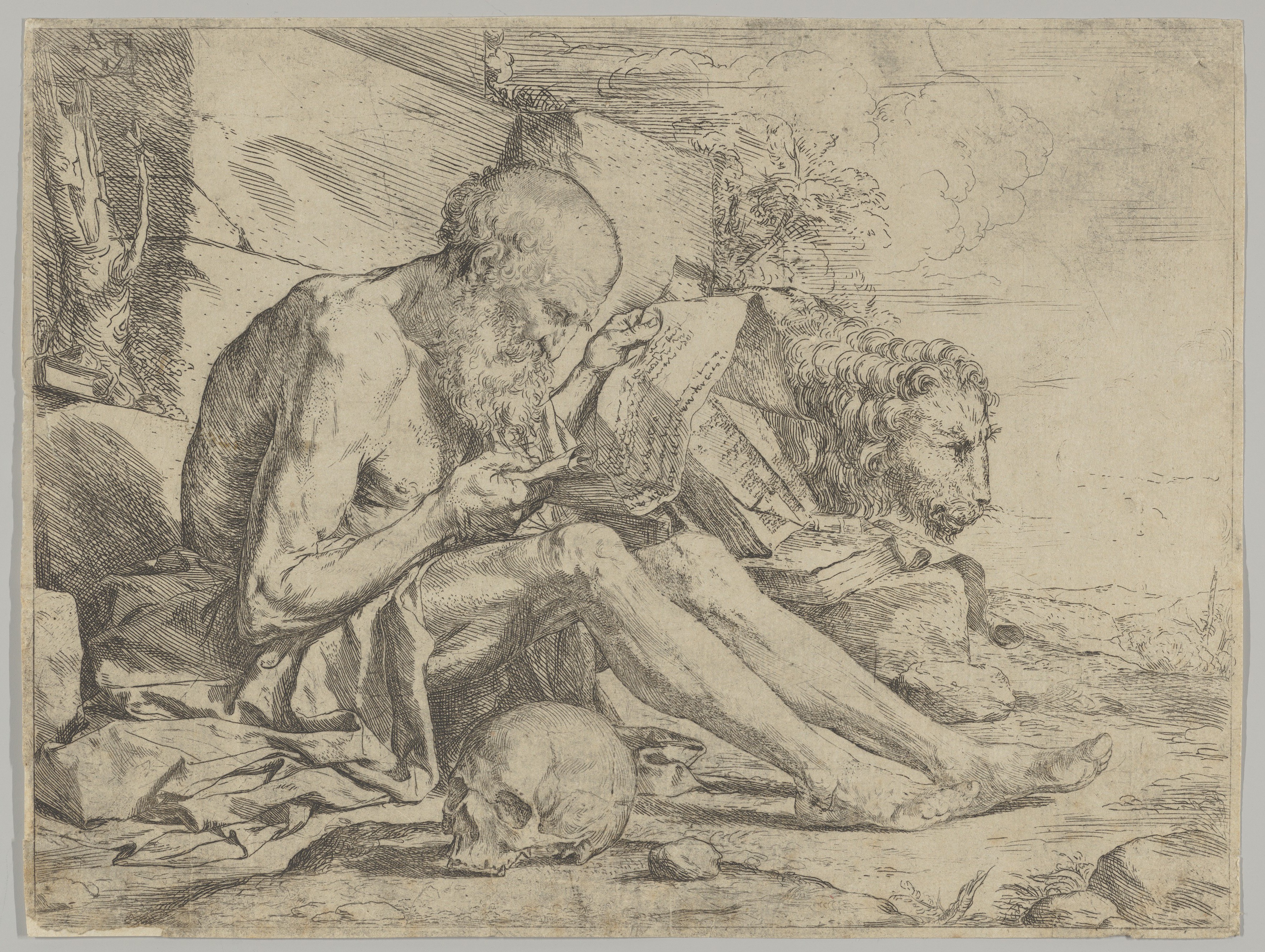
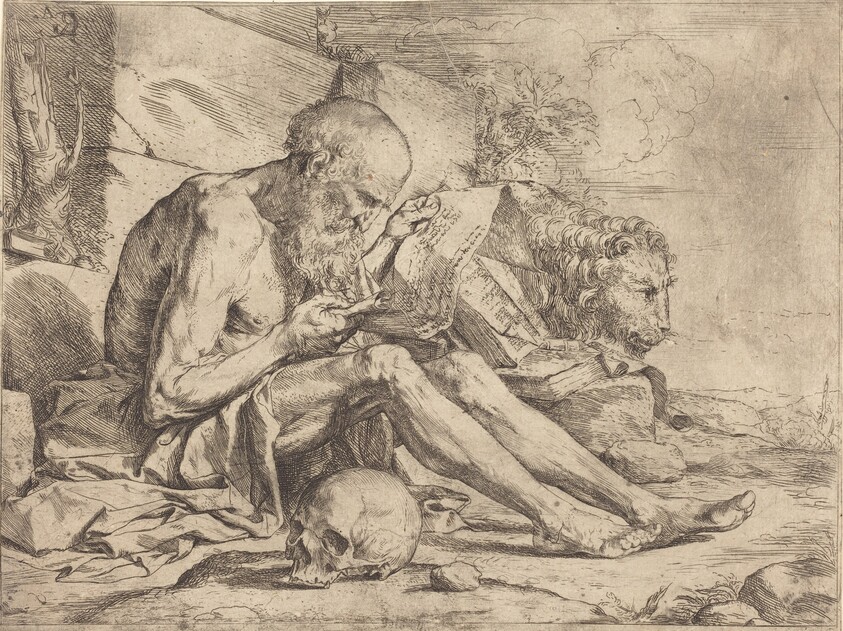
Ribera was a Spaniard who spent most of his career in Naples, which was then a Spanish possession. Known for expressing the corporeal sacrifices associated with faith, he depicted Saint Jerome, the early Christian ascetic, priest, and translator of the Bible, numerous times during his career. With harsh realism, Ribera stresses the saint’s role in propagating the sacrament of penance. Head uplifted, Saint Jerome grasps the stone with which he would violently beat his breast, while his left arm cradles a skull, representing the transience of human existence. Ribera highlights the act of self-abuse by contrasting the muscular tension in the saint’s right arm with the worn and wrinkled skin elsewhere on his aged body. The voluminous folds of his cardinal’s robe, rendered in deep chiaroscuro, and the crisp pages of the book to his right — a reference to his scholarly pursuits — further emphasize the frail state of his earthly body.