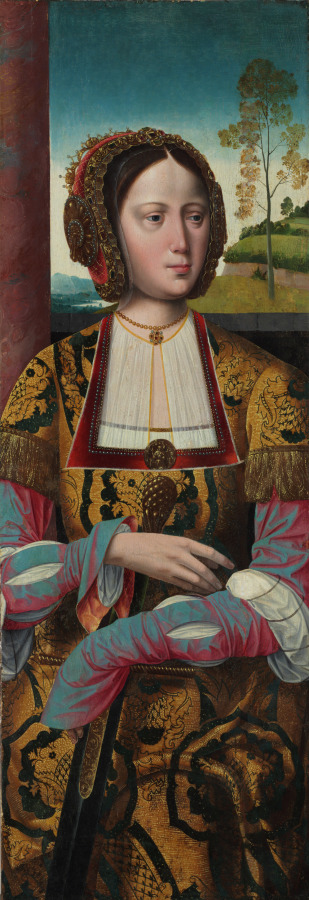
Saint Luke Painting the Virgin and Child
- Medium
- Oil on oak panel
- Dimensions
- 43.6 x 32.4 cm (17 3/16 x 12 3/4 in.)
- Genre
- Paintings
Tags
Netherlandish
About
The unidentified painter known as the Master of the Holy Blood takes his name from a triptych that belonged to the Brotherhood of the Holy Blood in Bruges. This panel belongs to a heterogeneous oeuvre of about thirty intact or fragmentary altarpieces and devotional pictures that have been attributed to the master’s Bruges workshop. Although not part of the canonical cycle of scenes from the Life of the Virgin, the apocryphal story of Saint Luke painting the Virgin and Child was a popular subject in fifteenth- and sixteenth-century Netherlandish art. Since Luke purportedly painted from life the image that became the prototype for later representations of the Virgin and Child, he was the patron saint of painters and painters’ guilds.