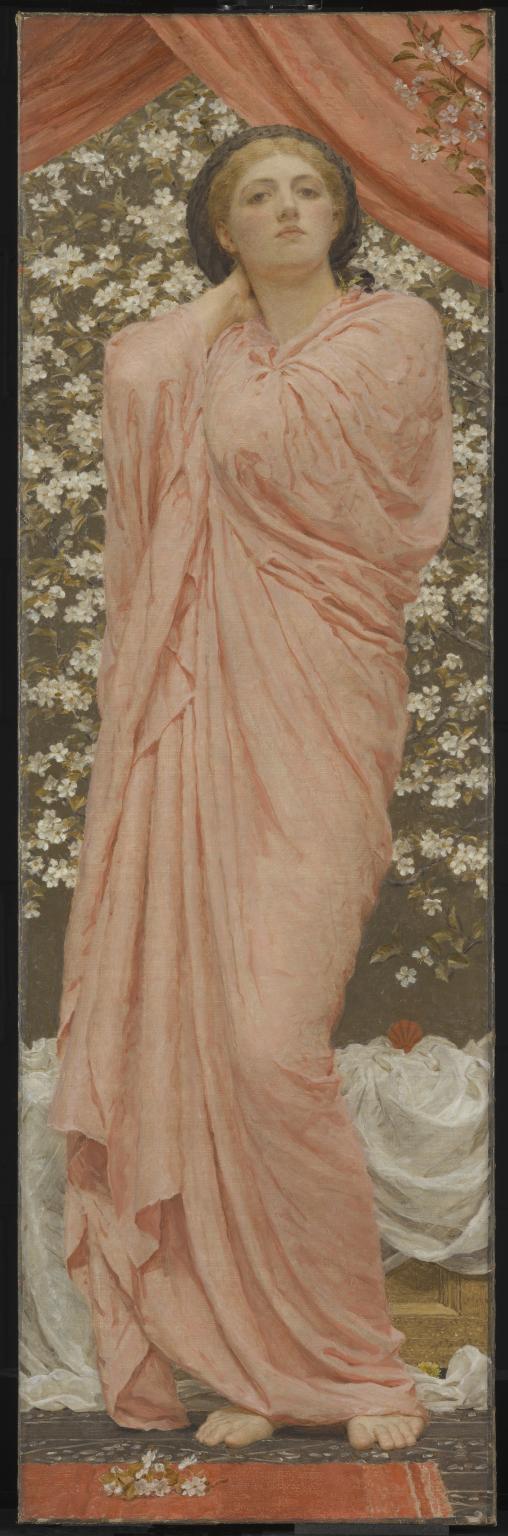
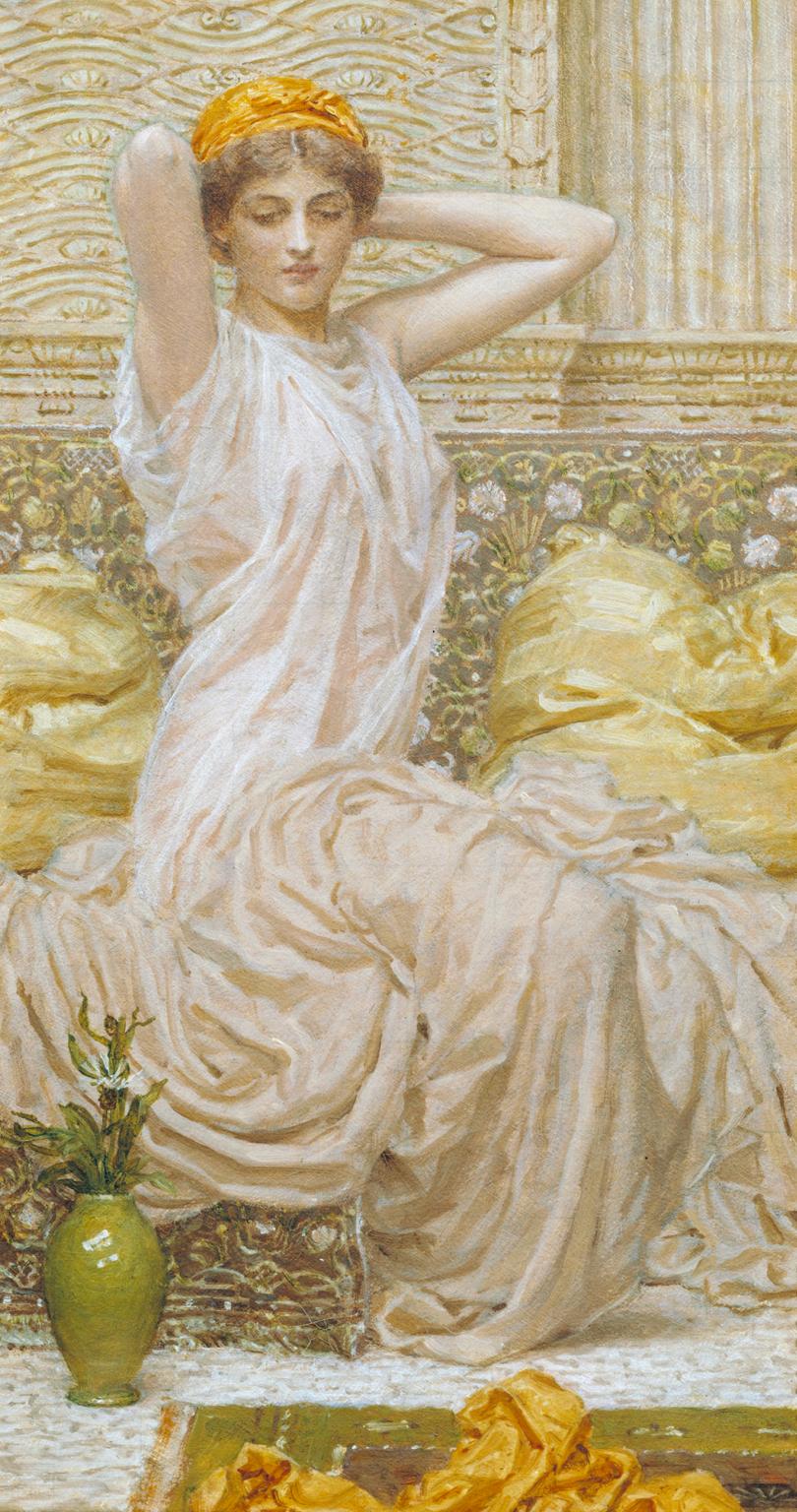
Study for "Blossoms"
Albert Joseph Moore
1876–1886
- Medium
- Oil on canvas
- Dimensions
- 77 × 25.1 cm (30 5/16 × 9 7/8 in.) framed: 102.6 × 50.5 × 3.5 cm (40 3/8 × 19 7/8 × 1 3/8 in.)
- Genre
- Paintings
Tags
british
About
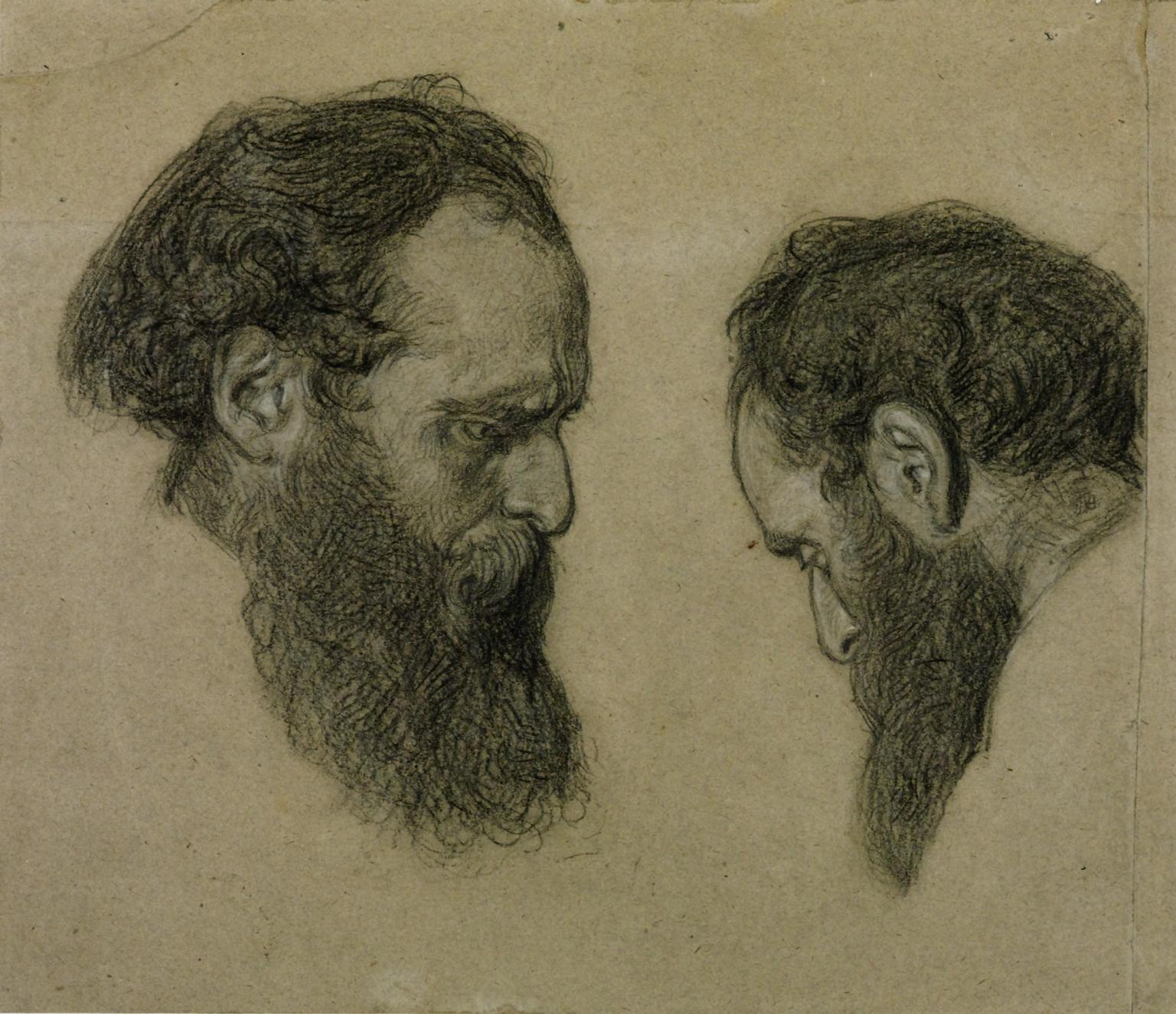
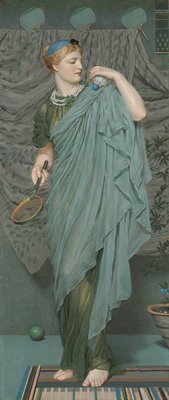
A leader of the Aesthetic movement, Moore rarely strayed from his preferred compositional arrangement. His canvases feature women draped in classicized garments and placed in decorative settings. This homogeneity is due to the artist’s systematic working methods. A recent treatment of this painting helped curators and conservators learn more about Moore’s artistic practice, most notably that it comprised 18 distinct stages. Some steps are perceptible to the naked eye: graphite gridlines are visible under the thin paint layer near the figure’s head and feet. Moore used these lines to finalize the composition before he set to work on a large-scale version of the painting. Moore was also attentive to geometric forms in his frames, which he designed himself. With shallow profiles decorated with linear ornament, his frames drew from ancient Greek and Roman architecture and accentuated his figure’s classically inspired costumes and poses. This frame is a historically accurate reproduction recently crafted by the Harvard Art Museums’ frame conservator after one of Moore’s own design.