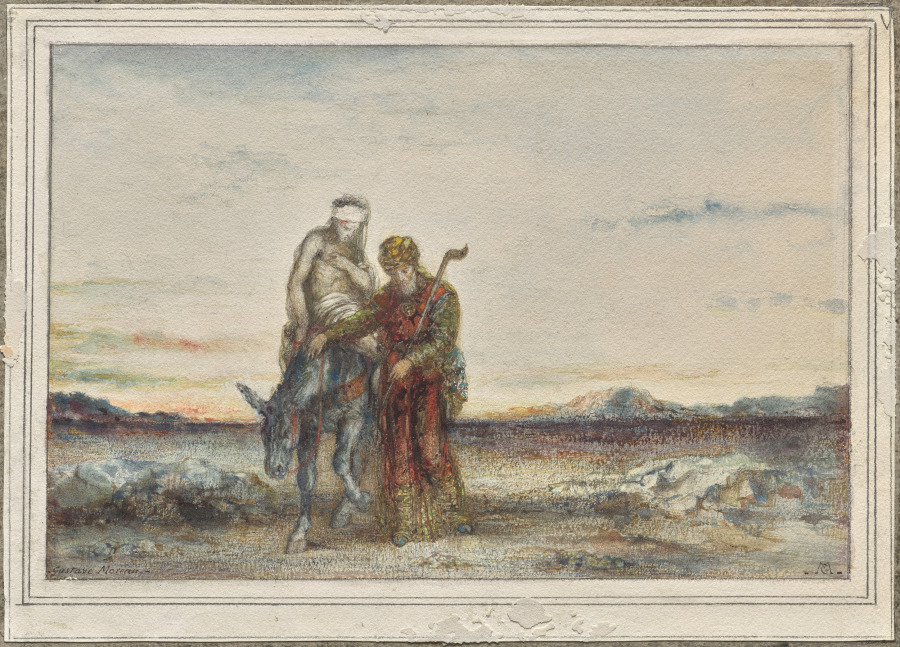
The Infant Moses
Gustave Moreau
1876–1878
- Medium
- Oil on canvas
- Dimensions
- 185 x 136.2 cm (72 13/16 x 53 5/8 in.) framed: 202.6 x 153 x 9.8 cm (79 3/4 x 60 1/4 x 3 7/8 in.)
- Genre
- Paintings
Tags
french
About
Paris hosted the 1878 Exposition universelle, or world’s fair, to celebrate France’s recovery after the Franco-Prussian War of 1870. For the event, Gustave Moreau submitted a cycle of biblically themed paintings to reflect on the nation’s renewal. The series, which included this work as well as Jacob and the Angel (1874–78; also in Harvard’s collection) and David (1878), marked three stages of human life. Here Moreau celebrates the anticipation and promise associated with childhood: Moses, recognized by the rays emanating from his forehead, floats in his basket on the Nile, surrounded by the ruins of ancient Egypt. In a written commentary Moreau suggested the prophet’s enlightenment, noting the contrast between “this people of mummies, sphinxes, and gods with staring eyes and unmoving gaze” and “this fine human fruit full of sap and life.”