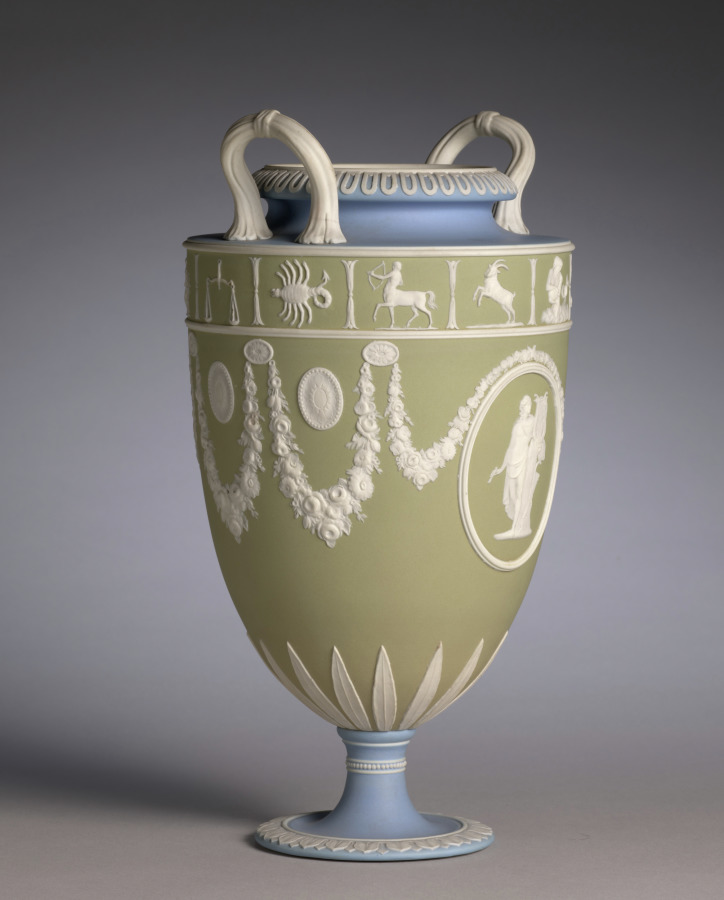
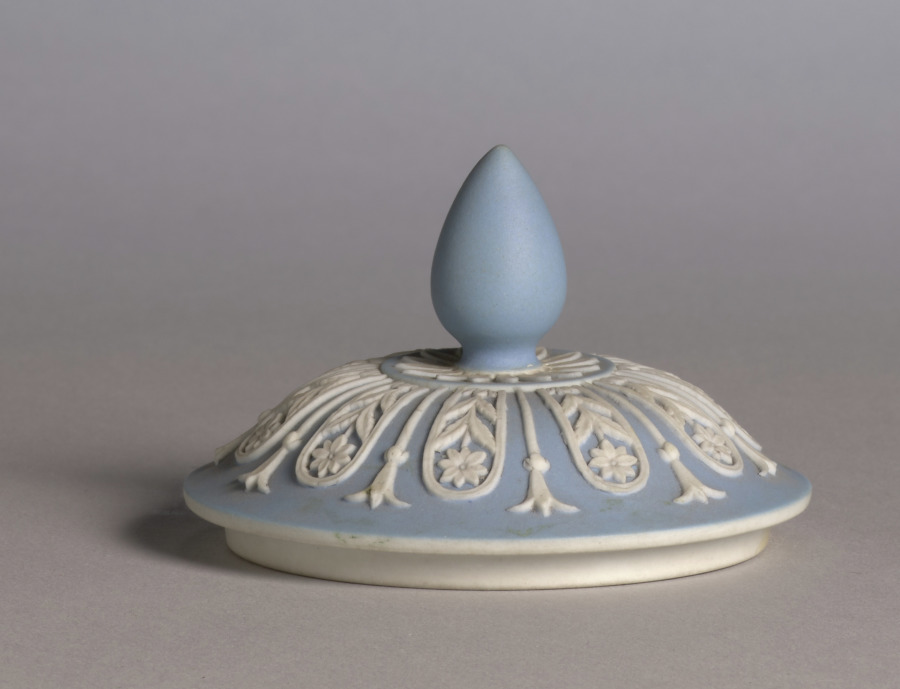
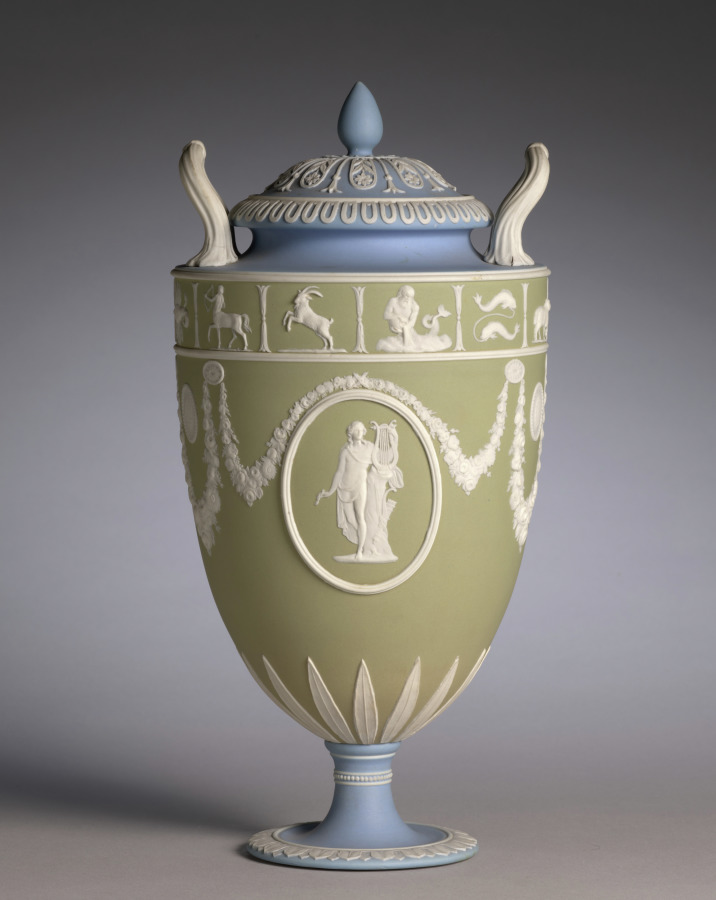
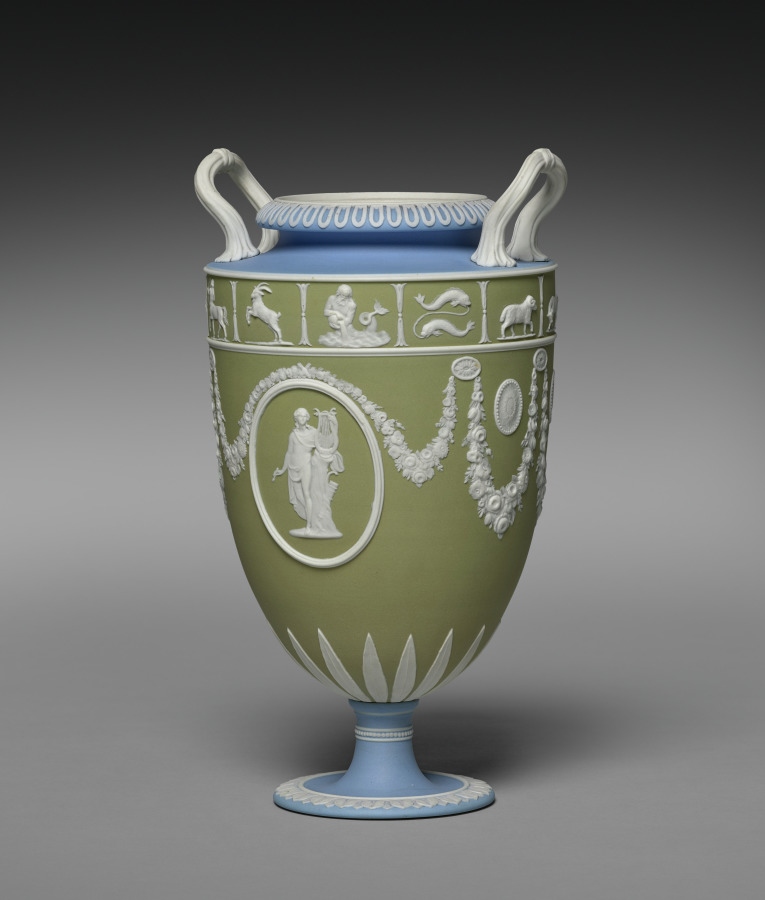
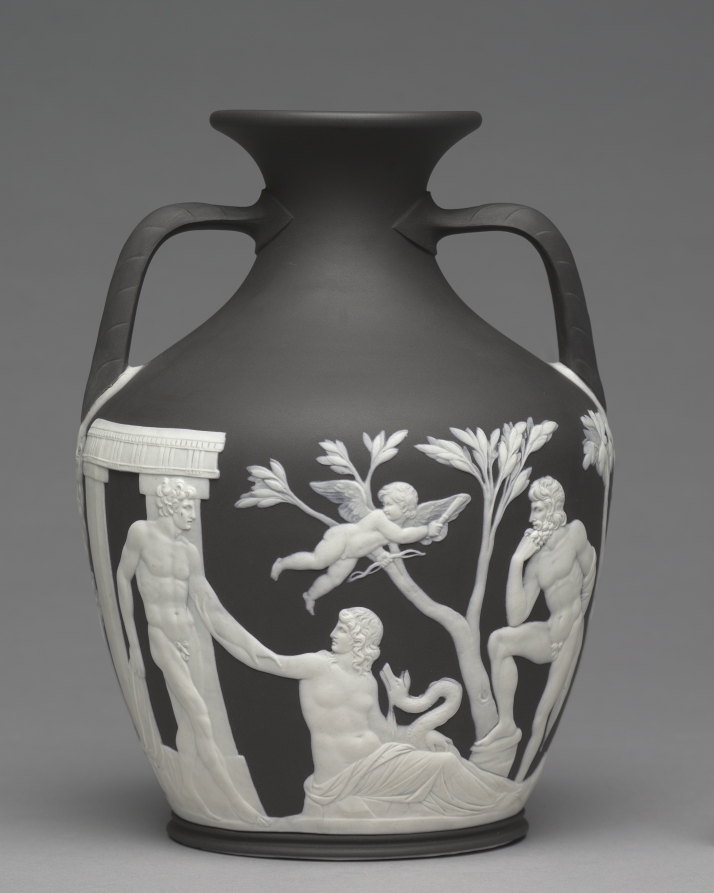
Portland Vase
Josiah Wedgwood
1790–1800
- Medium
- Jasperware
- Dimensions
- 25.8 x 18.5 cm diam. (10 3/16 x 7 5/16 in.)
- Genre
- Vessel
Tags
british
About
The original Greco-Roman Portland Vase was made from cameo glass in the first century CE. In 1786, the Duke of Portland lent it to Josiah Wedgwood, who promptly set his artists to copying it and manufacturing meticulous replicas. Early versions of the vase cracked in the firing process or failed to achieve the desired appearance. Wedgwood’s artisans struggled for four years to perfect their material and techniques, developing a blue-black clay to evoke the dark opaque glass of the original. Ultimately a limited edition — of which this is number nine — was sold, mostly through special viewings at the Wedgwood showroom. The name of John Trevor, who acquired this example from the manufacturer in 1797, is written inside the lip of the vase. One of Wedgwood’s most celebrated works, this was the first example from the subscription edition to enter an American collection. In the early twentieth century, this elaborate wooden stand was built to showcase the figure of Paris at the base of the vase.