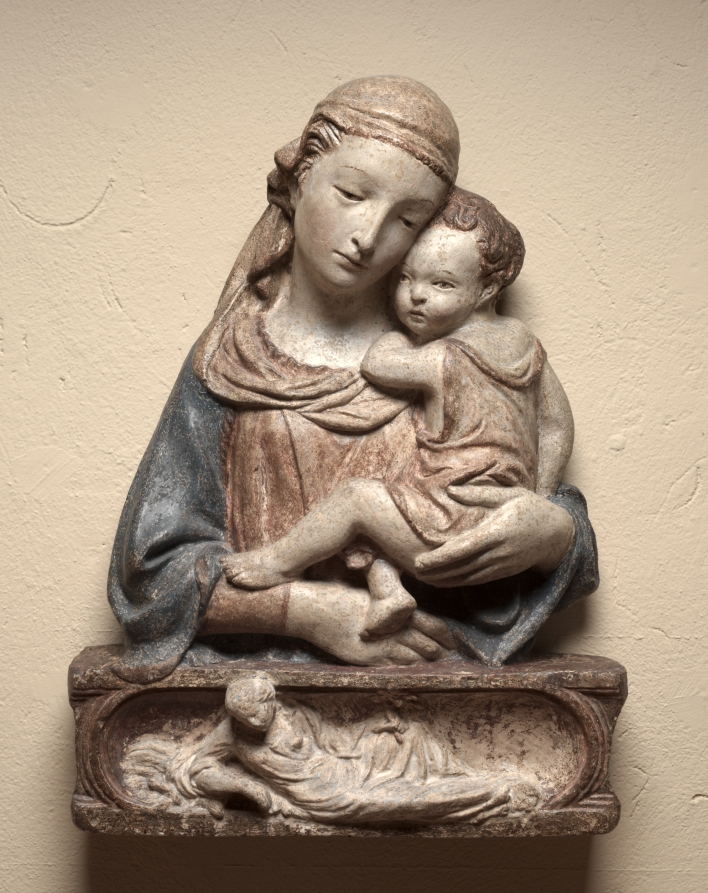
The Virgin and Child
- Medium
- Terracotta with traces of pigment
- Dimensions
- framed: 55.9 x 45.1 x 17.1 cm (22 x 17 3/4 x 6 3/4 in.)
- Genre
- Sculpture
Tags
Italian
About
In the first half of the fifteenth century, leading Florentine sculptors began to produce plaster and terracotta works, which could easily be cast from molds. Particularly popular were those depicting the Virgin and Child, which increased in both quantity of production and complexity of design during the period. Although none of these works is documented or signed, all were part of a sculptural production that, like prints in the later part of the century, assisted in the dissemination of the sculptural canon, making new artistic ideas available to a wider audience. In his Commentaries, Ghiberti claims to have “helped many painters, sculptors and masons by making them numerous models in wax and clay.” Around fifty examples of this relief, with minor variants, survive, suggesting that production may have lasted for several decades. Such works were used for private devotion in homes or set in exterior tabernacles around the city.