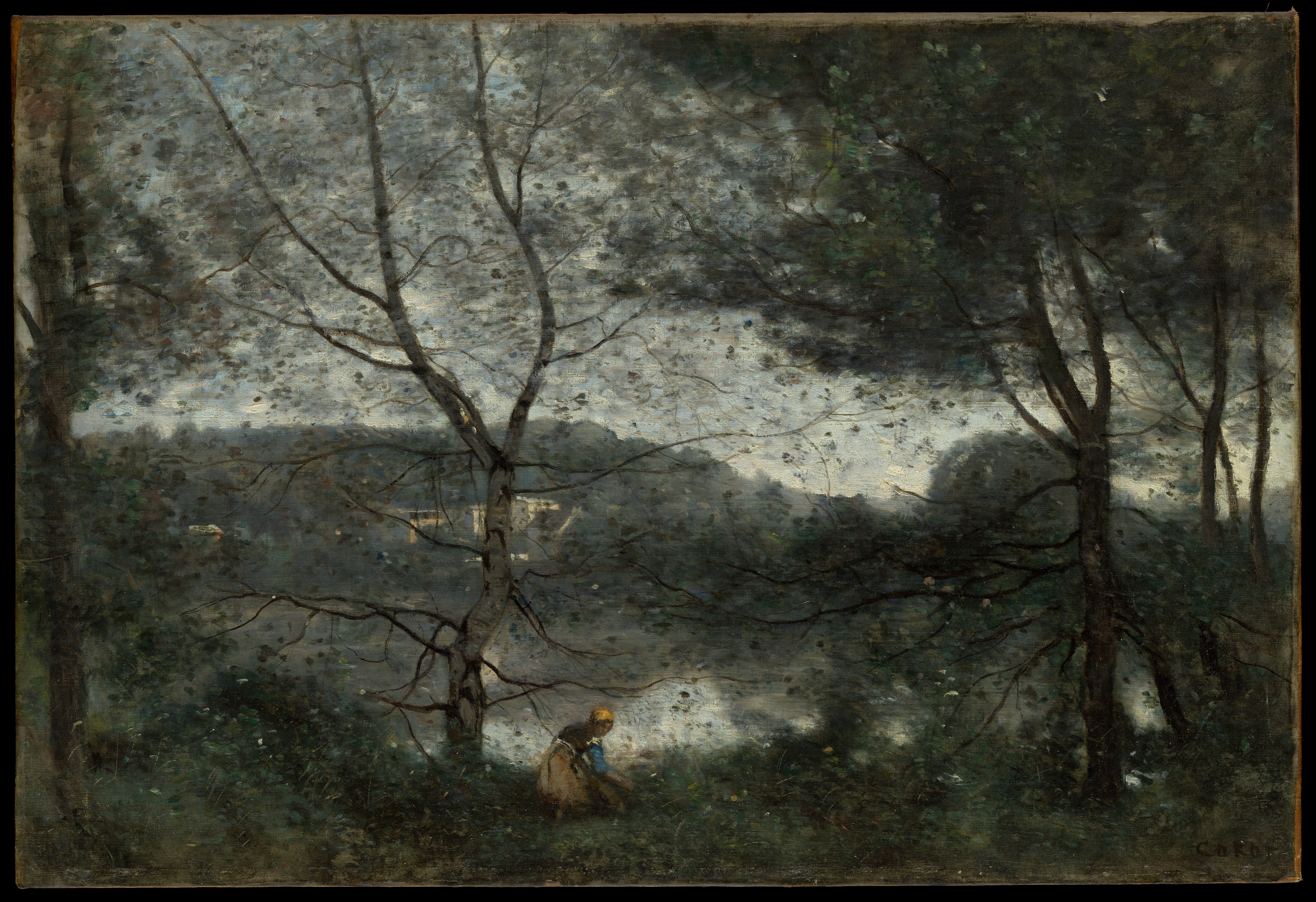
Cattle at Pasture in a Wooded Valley
Jean Baptiste Camille Corot
1865–1875
- Medium
- Oil on canvas
- Dimensions
- 40.4 x 61.1 cm (15 7/8 x 24 1/16 in.) framed: 75 x 96.5 cm (29 1/2 x 38 in.)
- Genre
- Paintings
Tags
french
About
Celebrated for his landscape paintings, Corot was the leading member of the Barbizon school, named for a village southeast of Paris where many artists gathered. Although their landscapes appear peaceful and serene, the collective sought to imbue them with sociopolitical significance in the wake of the revolutions of 1830 and 1848 and the constant upheaval that marked French culture and politics throughout the nineteenth century. When figures were included — as they are in this painting — they were often indistinct features secondary to the setting. Composed in the last decade of Corot’s life, this bucolic scene is enveloped in the soft, diffuse light for which his work was lauded, and framed on both sides by trees in his signature manner. Form and tone are characteristically privileged over detail, as Corot wrote in one of his sketchbooks: “I never hurry to arrive at details; the masses and character of a picture interest me before anything else.”