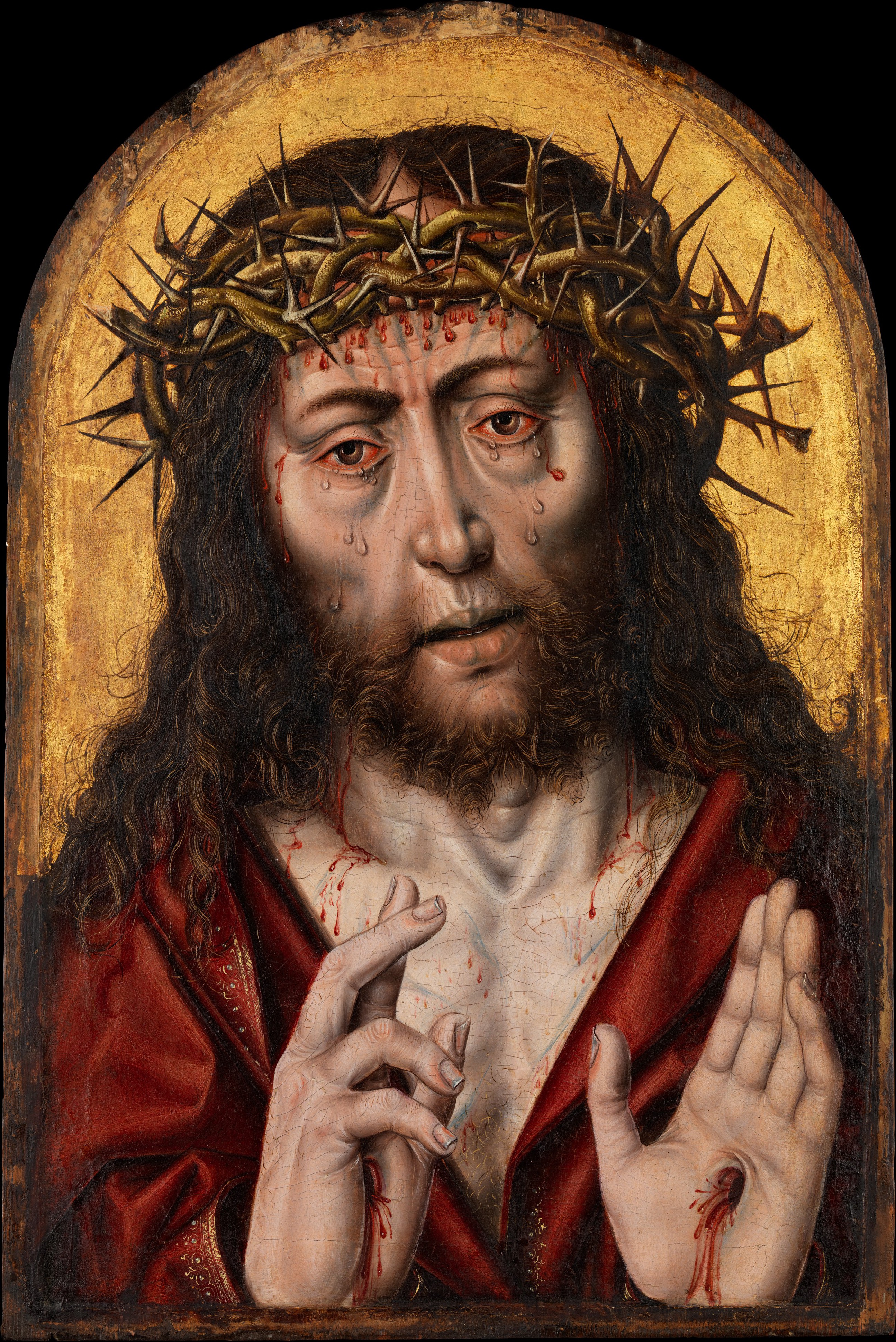
The Man of Sorrows
Aelbert Bouts
1490
- Medium
- Oil on oak panel
- Dimensions
- 37.9 x 26.5 cm (14 15/16 x 10 7/16 in.) frame: 46 x 36 cm (18 1/8 x 14 3/16 in.)
- Genre
- Paintings
Tags
Netherlandish
About
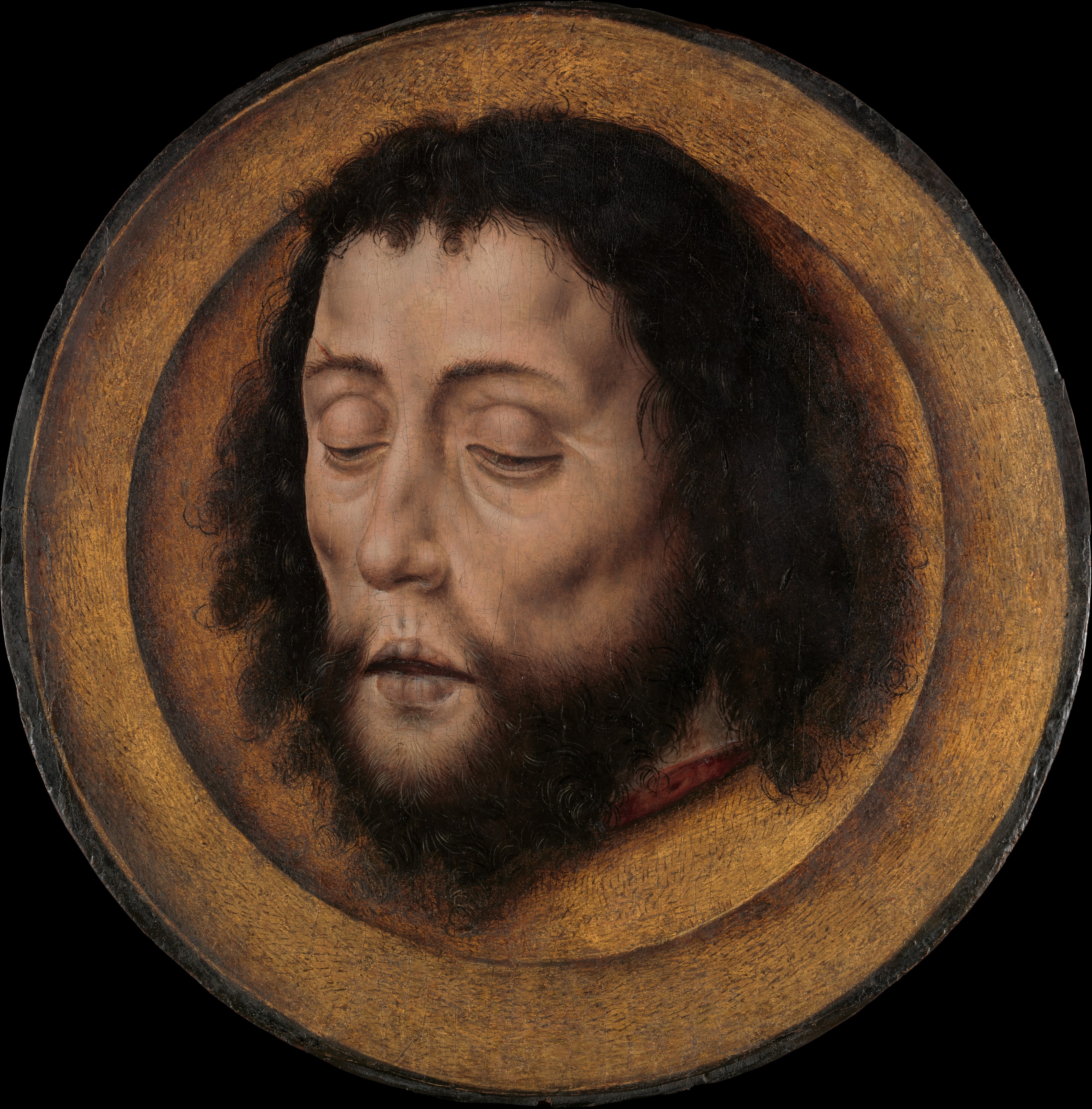
Paired icons, or images, of the Man of Sorrows and the Mater Dolorosa appeared as early as the Byzantine era. In the fifteenth century, this pairing, which encouraged the beholder to empathize with both the Passion of Christ and the human suffering of his mother, was popular north of the Alps, possibly because it responded to the religious reform movement known as the Devotio Moderna. Although these two panels most likely left the artist’s workshop together, technical evidence reveals differences in their preparation and execution. The image of Christ (2001.121), which could stand on its own, may have been made independently of its companion (2001.171), which could have been painted to form this pair at the behest of a particular patron. None of the surviving pairings of this kind from the Bouts workshop have original hinging or painted backs, indicating that the panels were meant to be hung on a wall and not joined together as a folding diptych.