The Funeral of the Burin (Frontispiece)
Felix Buhot
1877
- Medium
- Etching, drypoint and aquatint
- Dimensions
- plate: 34.6 × 27.5 cm (13 5/8 × 10 13/16 in.) sheet: 49.4 × 32.5 cm (19 7/16 × 12 13/16 in.)
- Genre
Tags
french
About
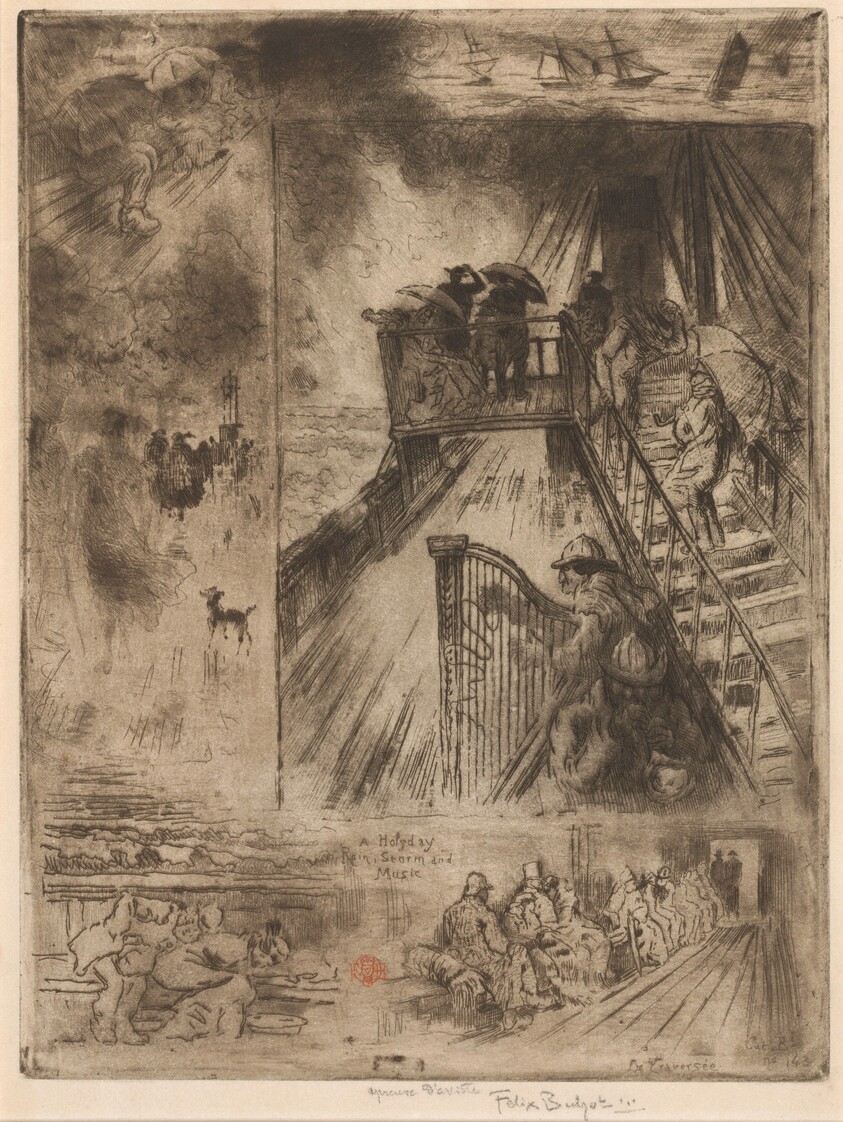
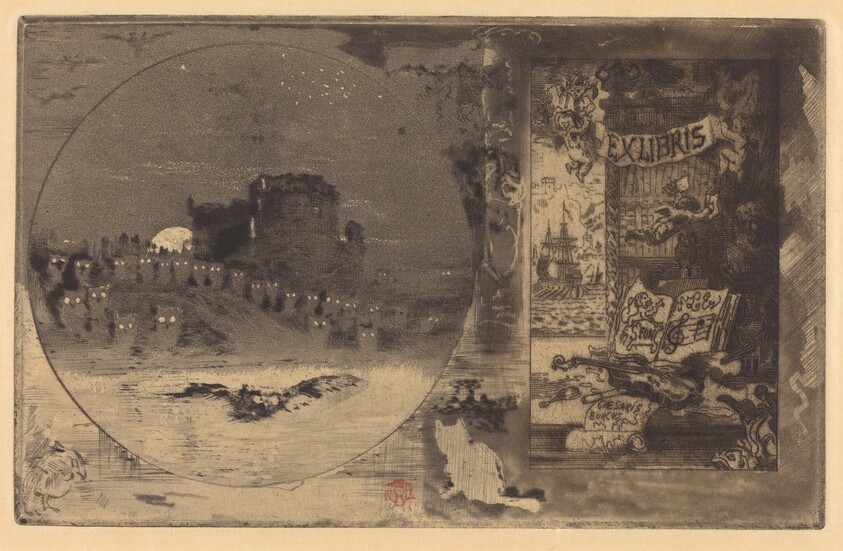
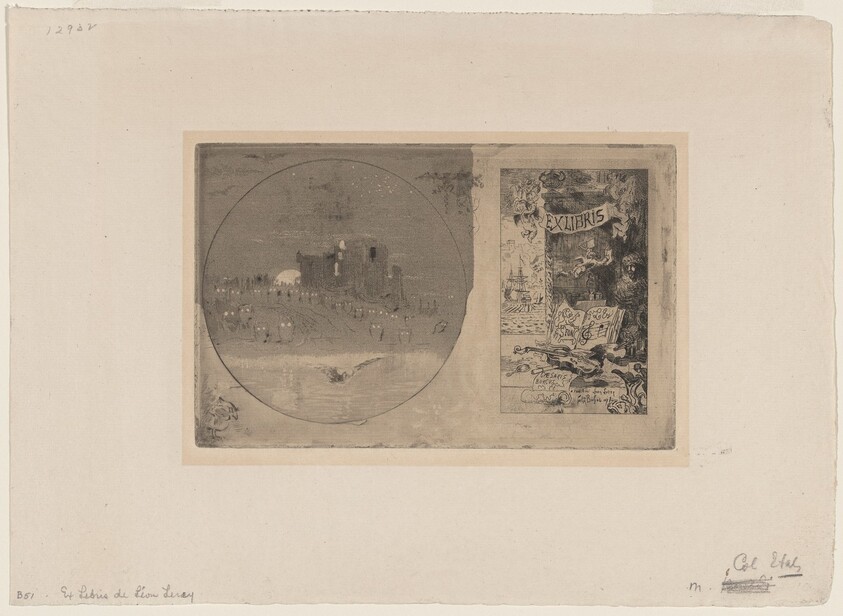
This is the commercially published state of one of Buhot's less well-known etchings. Now he is more famous for his whimsical compositions, uniquely wiped with colored inks and printed on exotic papers. This composition is indeed whimsical, but the content, the triumph of etching over engraving, is a distinctly late-19th-century theme that has little resonance today. In 1877 Buhot and "L'Illustration nouvelle" were celebrating the artistic dominance of the Etching Revival, which had relegated all other graphic processes to the limbo of commercialism. By this date, both metal and wood engraving were not "original" print processes, and woodcut and lithography had yet to be revived as artistic means of expression, as they would be in the 1890, when etching came to seem too fluent a medium. Nine years earlier, however, in 1868, it commissioned its frontispiece from Félix Bracquemond, another leading artist of the French Etching Revival. This composition was selected by Frederick Keppel, the leading American dealer in etchings in the late 19th century, for a presentation before The Union Club of New York in 1890 or 1891.