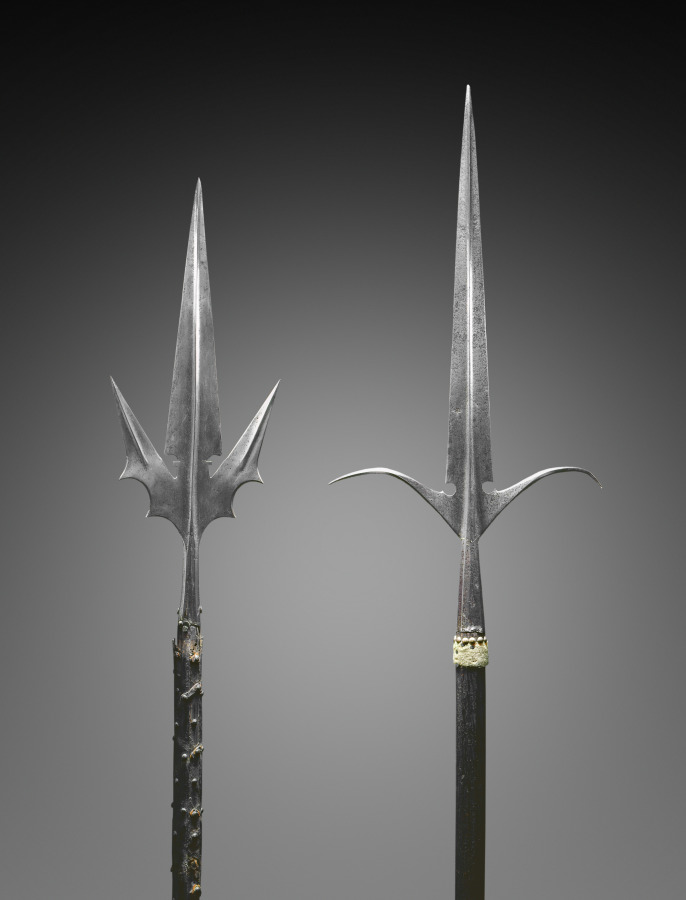
Corsèque
1515–1525
- Medium
- steel; round wood haft; tassel
- Dimensions
- Overall: 269.2 cm (106 in.); Blade: 36.5 cm (14 3/8 in.)
- Genre
- Arms and armor
- Museum
- Cleveland Museum of Art
Tags
Italy, Venice
About
The corsèque is a pole arm with a symmetrical three-pronged head consisting of a central double-edged blade and two sharp, upturned wings. The side blades served several functions: as guard to protect the soldier's hand when a thrust was delivered with the central blade; as a hook for unseating a mounted opponent; and to trip the opponent's horse. The corsèque was used mostly in Italy and France from the 1400s to the early 1600s. The version here is sometimes called a chauve-souris after the French word for "bat," since the side blades are thought to resemble a bat's wings.