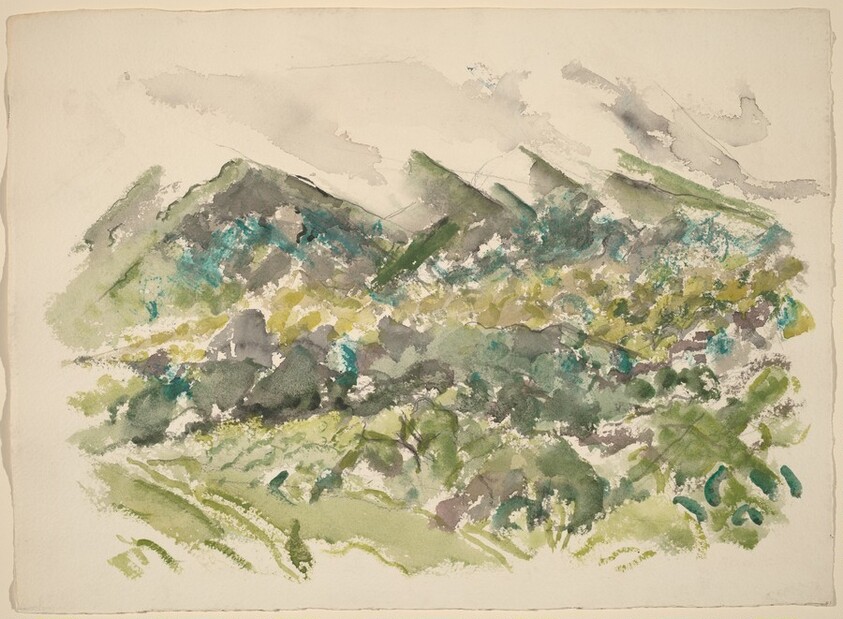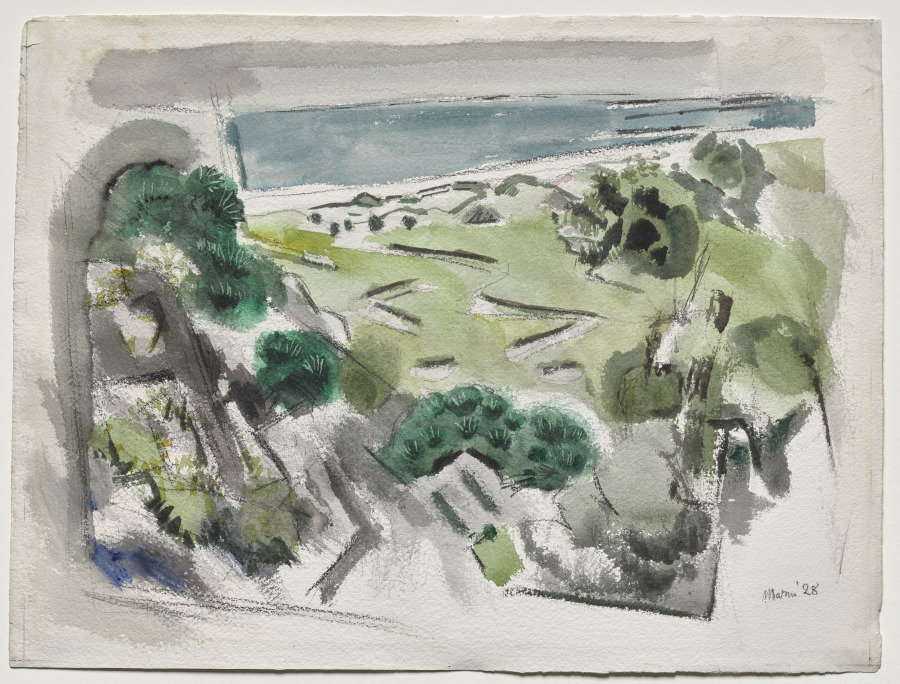
On Morse Mountain, No. 6, Maine
John Marin
1928
- Medium
- Watercolor and black crayon and reductive work with the end of paint brush on thick, moderately rough-textured wove paper
- Dimensions
- Image and Sheet: 42.3 x 56.5 cm (16 5/8 x 22 1/4 in.)
- Genre
- Drawings
- Museum
- Cleveland Museum of Art
Styles
Tags
America
About
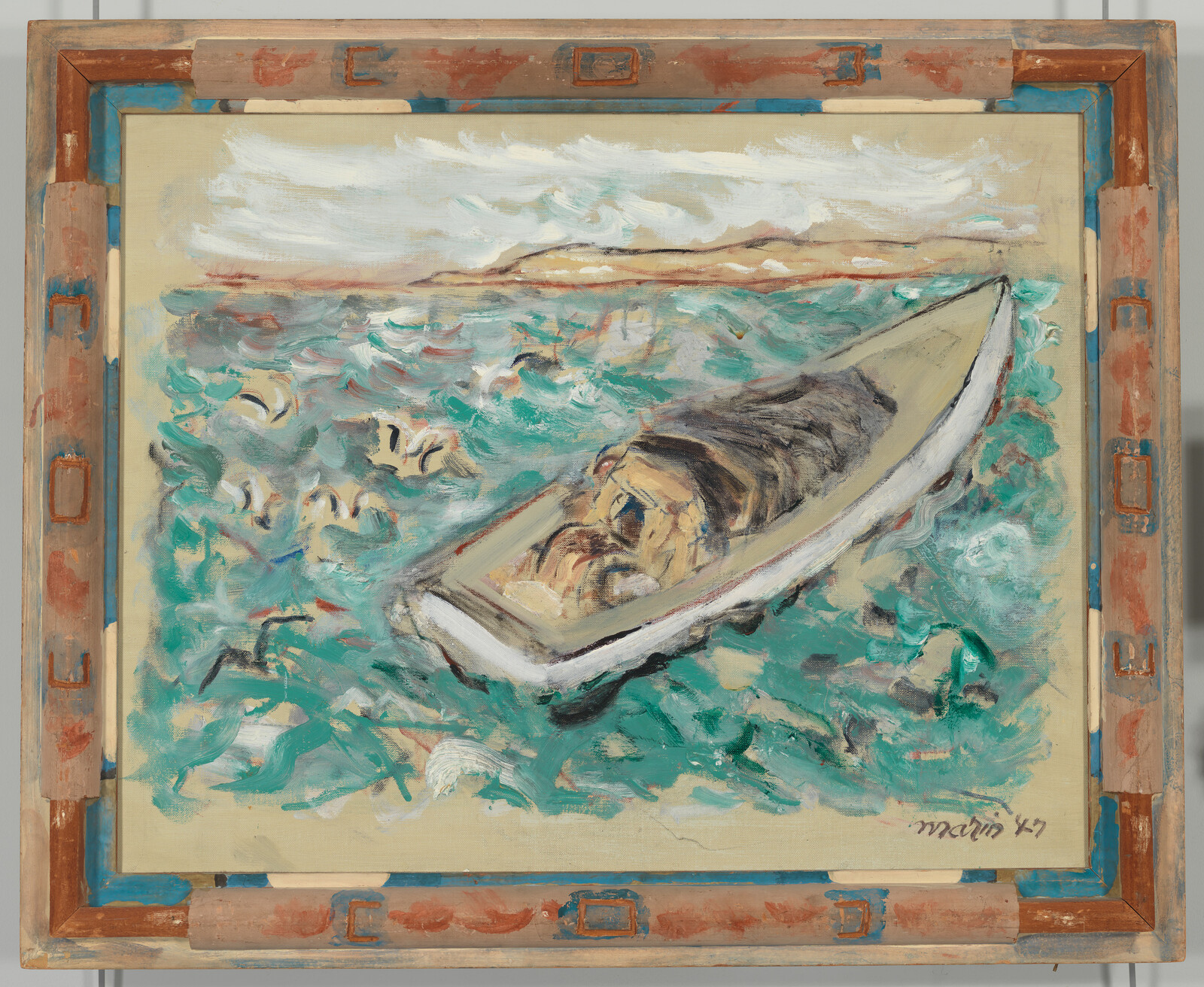
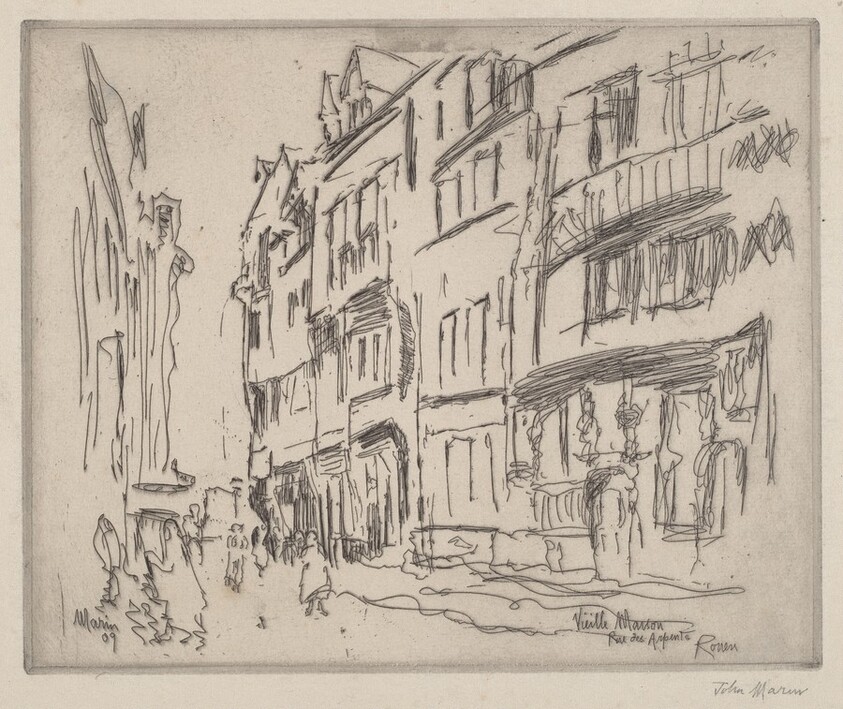
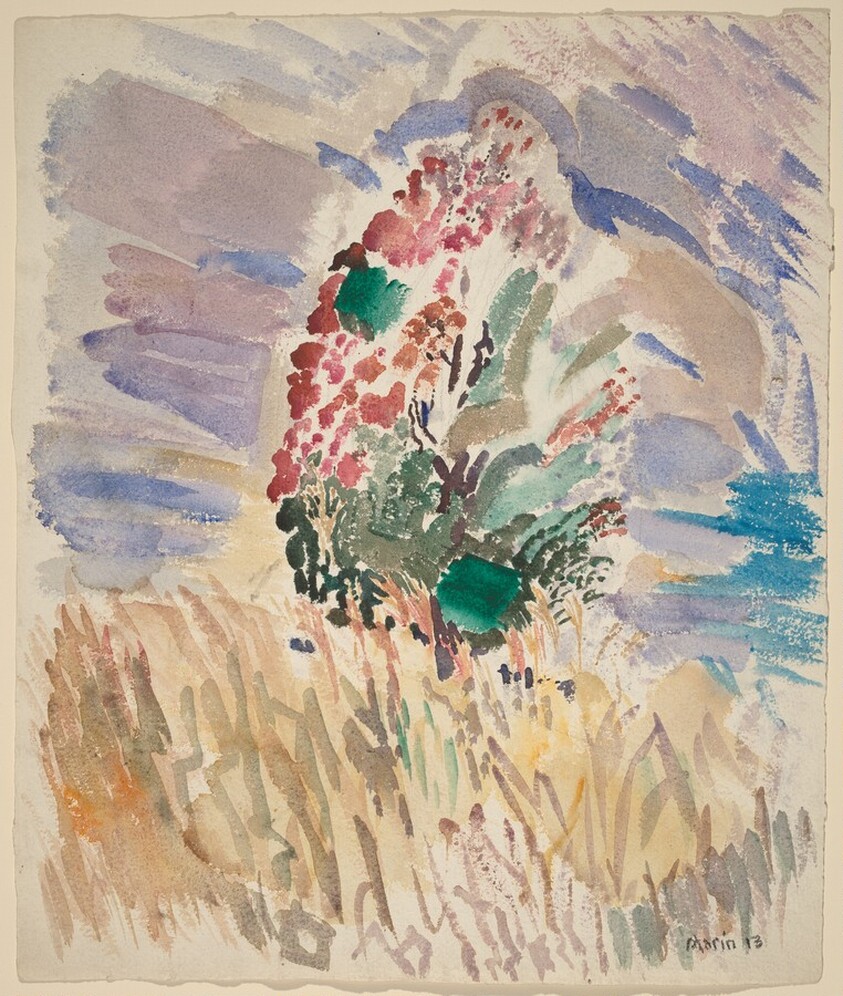
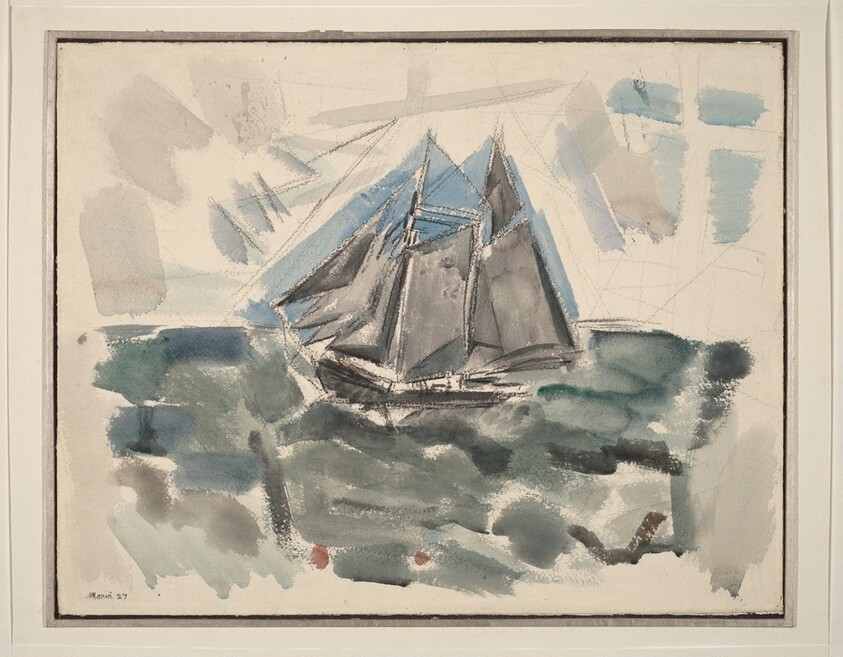
One of America's most important watercolor practitioners, John Marin spent every summer in Maine from 1914 through 1928, and the state's coastline became a central focus of his work. By the late 1920s, when this work was made, he was experimenting with bold black elements in his compositions and painted frames or borders. On Morse Mountain, No. 6, Maine shows Marin using dry charcoal to create areas of shocking black over which he layered inky black wash. The technique has the effect of framing the image and leading the eye toward the center. With its strikingly different character from other works made in Maine in 1914 (see 2020.134, 2020.136, 2020.137, 2020.138, 2020.139), the work shows how John Marin repeatedly challenged himself as well as the medium of watercolor with improvisations in color, paint handling, perspective, and movement.