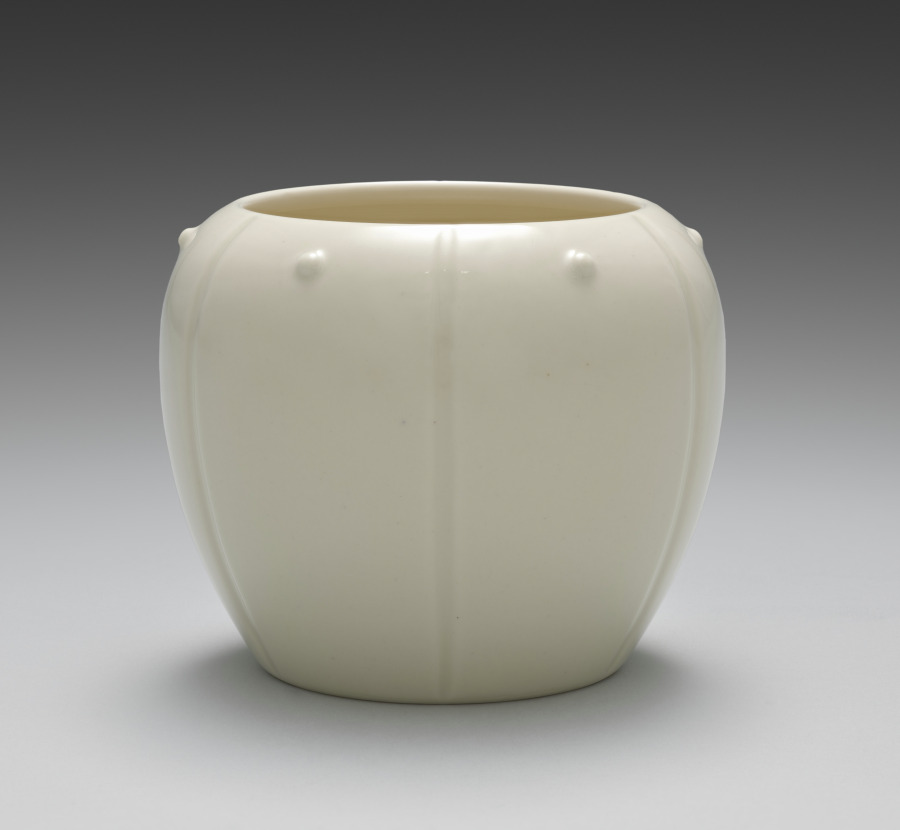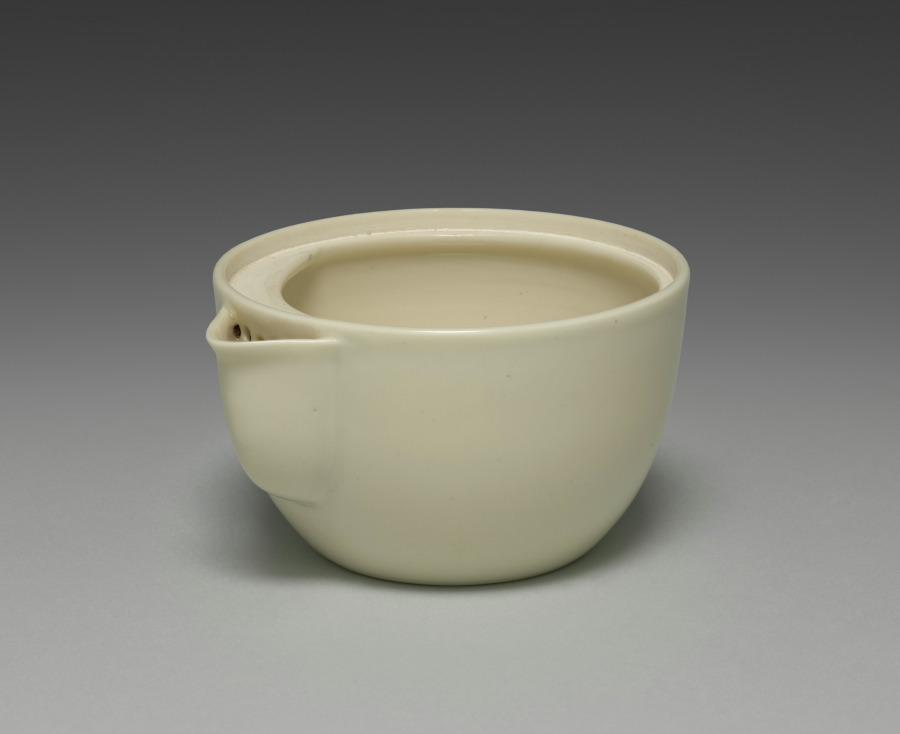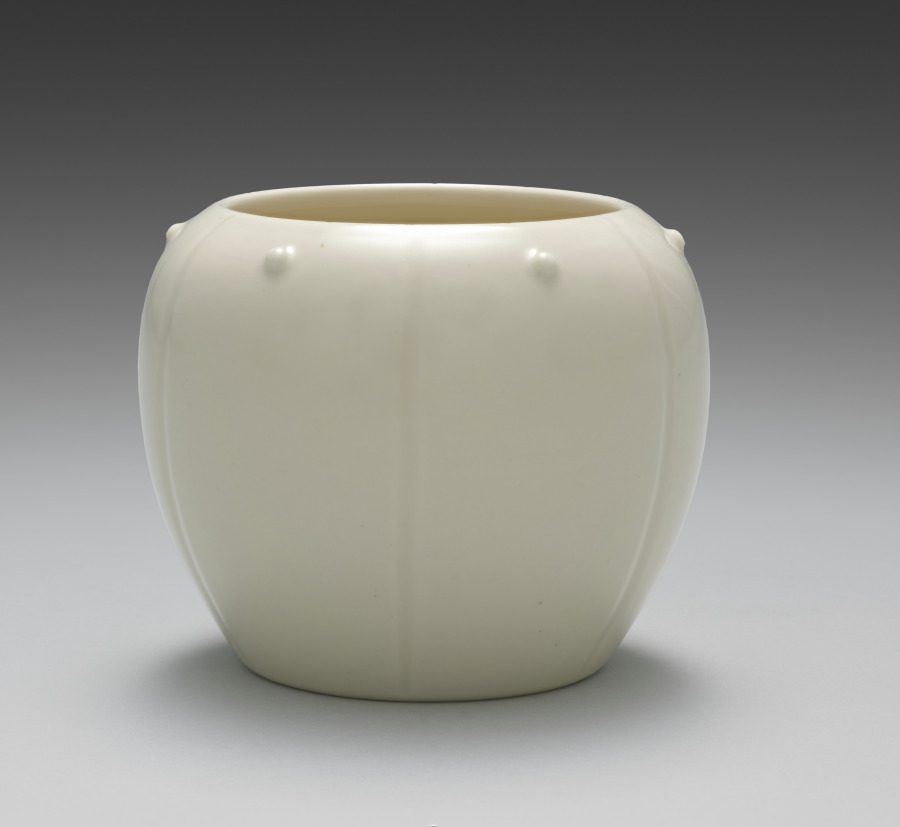
Container from Lit Charcoal and Ash Containers
Seifu Yohei III
1893–1914
- Medium
- One from a set of four containers; porcelain with molded design
- Dimensions
- Overall: 10 x 12 cm (3 15/16 x 4 3/4 in.)
- Genre
- Ceramics
- Museum
- Cleveland Museum of Art
Styles
Tags
Japan, Meiji period (1868–1912)
About
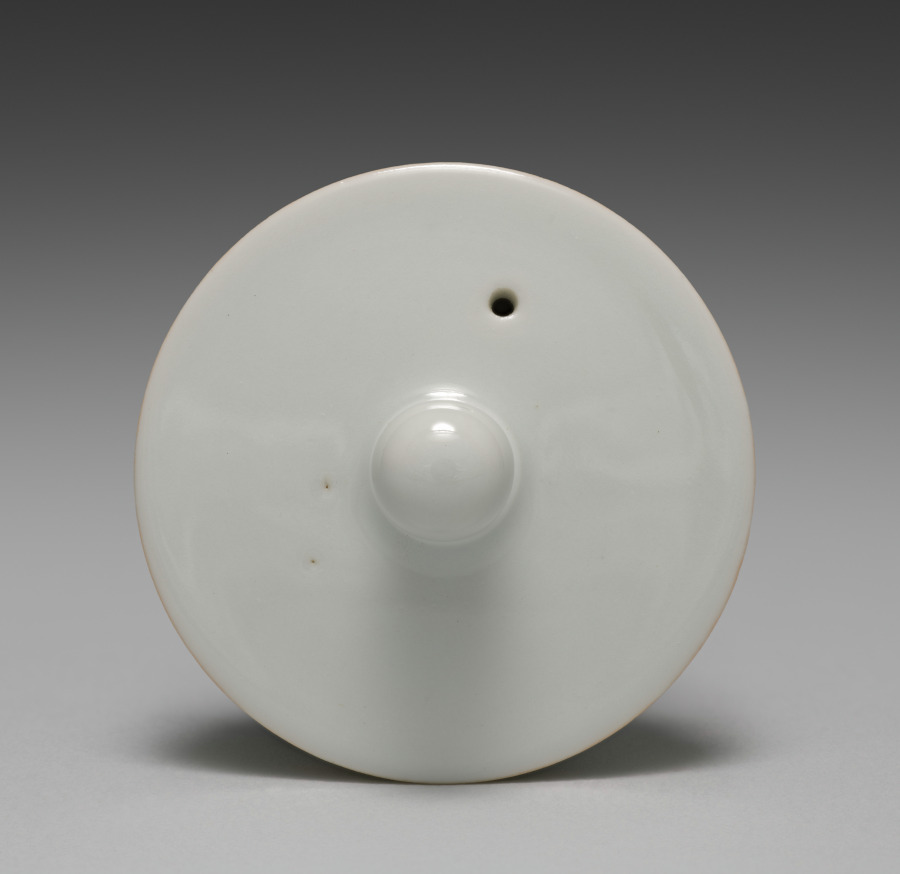
The box lid for these six-lobed lit charcoal and ash containers, or hiire, identifies them as kōhakuji, another of Yohei III’s translucent cream colors over ivory clay bodies. One might translate the name as “lustrous pearl[–glazed ivory] porcelain.” A hiire was filled with ash with burnt coals at the center so that embers and tobacco ash could be discarded safely during a gathering. Each of the lobes on the containers has a round protrusion set below the rim. The studlike pattern is called ruiza. The term is also used to describe the pattern that rings the shoulder of some flower vases or metal kettles used in chanoyu.