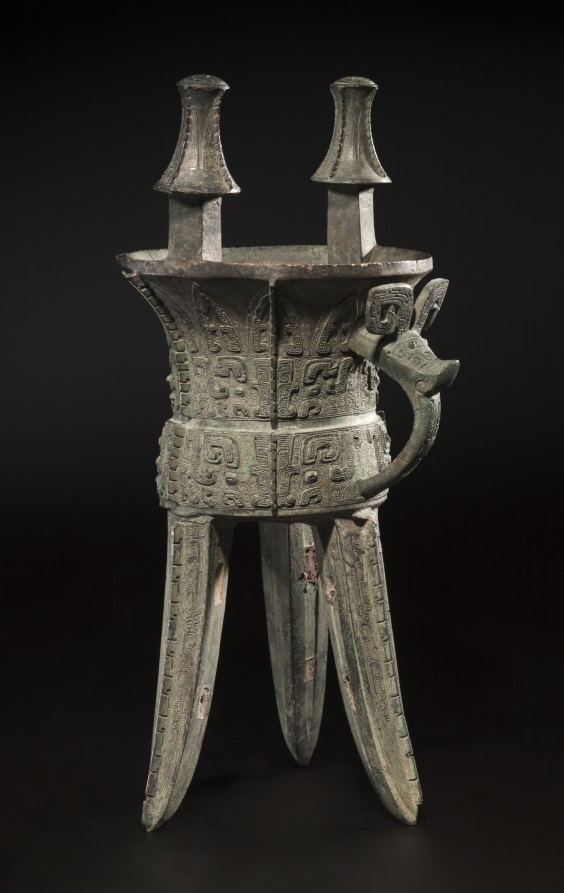
Wine Vessel (Jia)
-1260–-1036
- Medium
- bronze
- Dimensions
- Overall: 50.8 cm (20 in.)
- Genre
- Metalwork
- Museum
- Cleveland Museum of Art
Styles
Tags
China, Shang dynasty (c. 1600–c. 1046 BCE), Anyang phase (c. 1250–1046 BCE)
About
This large wine vessel (or jia) is among those very rare, monumental pieces uncovered from Anyang, the last royal capital of the Shang dynasty (c.1700–c.1100 BCE). Probably very few monumental bronze vessels were ever made; each of them must have cost a fortune and was used to designate high-ranking (often royal) status. Even fewer have survived. This wine vessel was used for the ancestral rites of the Shang. Its three splayed legs supported the cup over a fire, suggesting that the wine might be heated. Offering wine and food to their departed ancestors was an essential ritual practice performed by the Shang royalty and aristocracy. The Shang people believed that their ancestors were able to intercede with the high god to confer fruitful harvests and victories in battles. Their ritual actions involved communication with the supernatural realm (and this was further supported by the practice of divination with the use of a tortoise shell or a cattle shoulder blade). Here, the animal mask on the bronze vessel stares frontally at the viewer and serves symbolically as a messenger of communication with the ancestors. It conjures up the potency of mystery, whereas the static monumentality of the bronze vessel lends an air of dignified solemnity to the ritual ceremony.