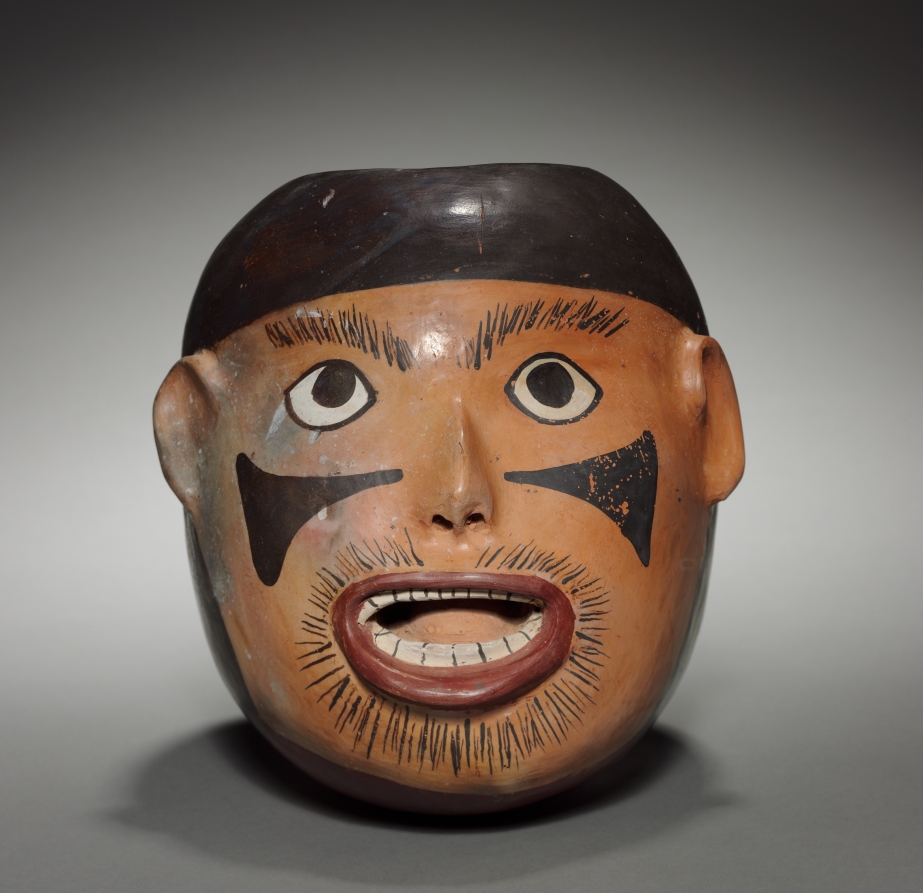
Severed Head Effigy Vessel
100–350
- Medium
- earthenware with colored slips
- Dimensions
- Overall: 22 x 20.5 x 24.5 cm (8 11/16 x 8 1/16 x 9 5/8 in.)
- Genre
- Ceramics
- Museum
- Cleveland Museum of Art
Styles
Tags
Peru, South Coast, Nasca
About
The Nasca people were organized politically into small, competing chiefdoms, and warfare was common. This vessel represents a freshly severed human head (probably that of a captured and sacrificed prisoner) with staring eyes, gaping mouth, and blood-red underside. Modeling of the mouth cavity, tongue, and teeth lends the image a startling realism. Human sacrifice by decapitation was a central element of Nasca religion, essential to agricultural fertility. Severed heads were emptied and dried, then pierced through the forehead and suspended from a thick cord. Such preserved heads have been recovered from offering deposits and from tombs, where they were buried with their captors.