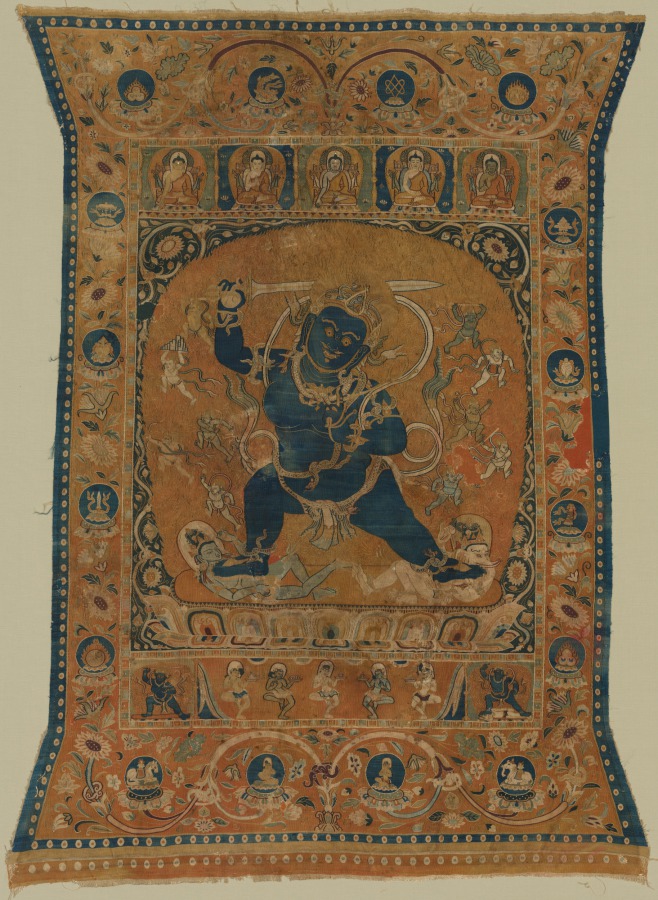
Achala, King of the Wrathful Ones
1200–1225
- Medium
- Thangka, silk tapestry with pearls
- Dimensions
- Overall: 100.6 x 74.3 cm (39 5/8 x 29 1/4 in.); Mounted: 111.1 x 83.8 x 7 cm (43 3/4 x 33 x 2 3/4 in.)
- Genre
- Textiles
- Museum
- Cleveland Museum of Art
Styles
About
The powerful blue body of Achala, meaning “immovable,” dominates the composition. He holds a sword to cut through ignorance and a noose for catching illusions that plague the path to enlightenment. Small personifications of furious destroyers of illusion (maya) emanate from him on either side, each with his own weapon. This image expresses what advanced practitioners would visualize in meditation rituals, as explained in Buddhist texts called tantras. Woven with a sophistication matched only by products of the Hangzhou looms, this devotional tapestry made its way to Khara-Khoto, capital of the Tangut Empire located in present-day Mongolia and Central Asia, where tantric Buddhism was prevalent.