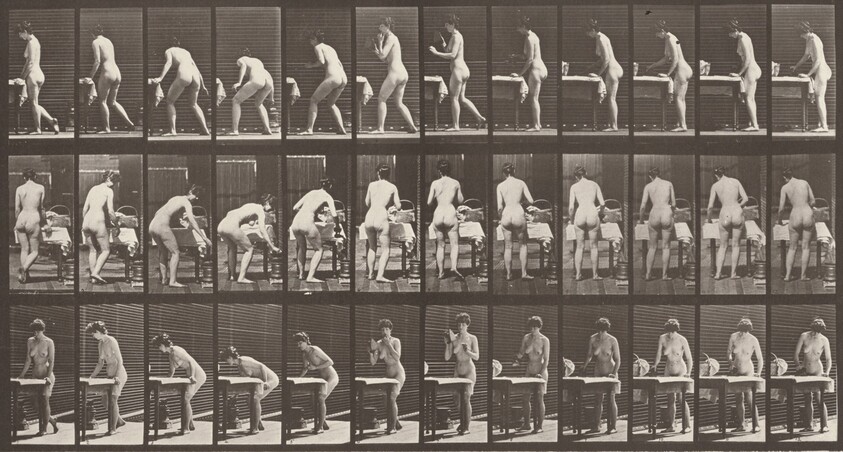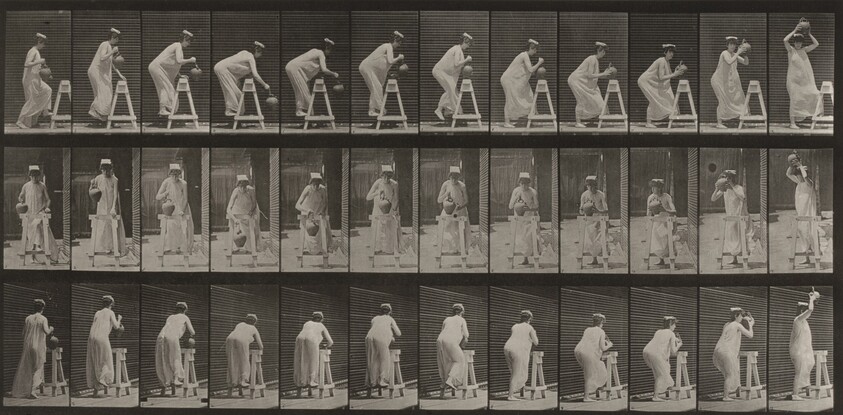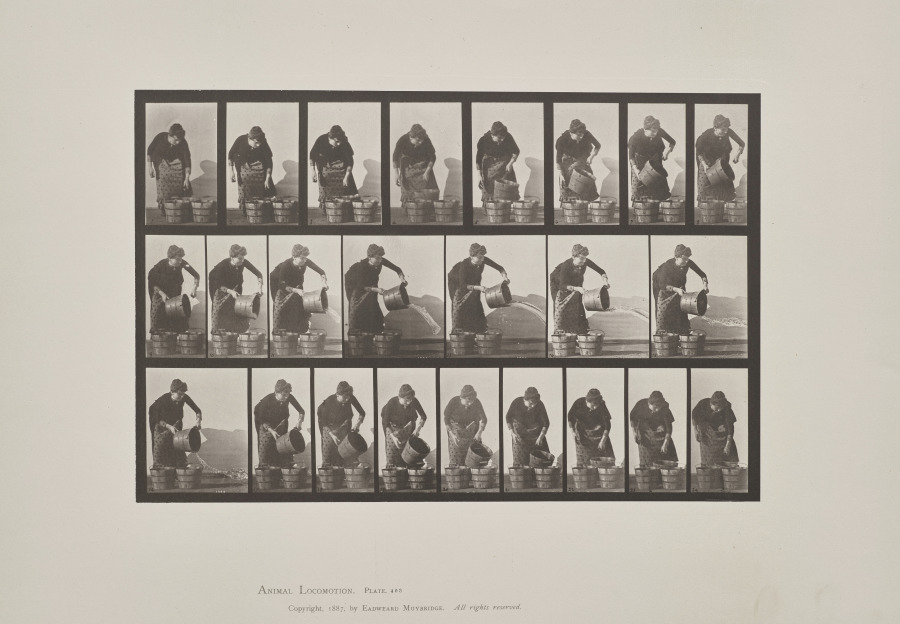
Emptying a Bucket of Water
- Medium
- collotype
- Dimensions
- Image: 22.5 x 34 cm (8 7/8 x 13 3/8 in.); Paper: 47.4 x 60.4 cm (18 11/16 x 23 3/4 in.); Matted: 50.8 x 61 cm (20 x 24 in.)
- Genre
- Photographs
- Museum
- Cleveland Museum of Art
Tags
America
About
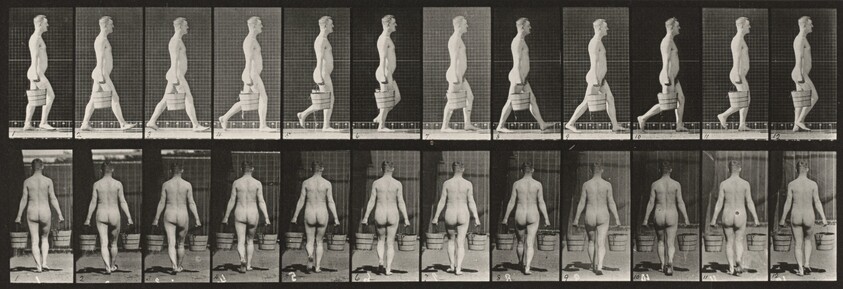
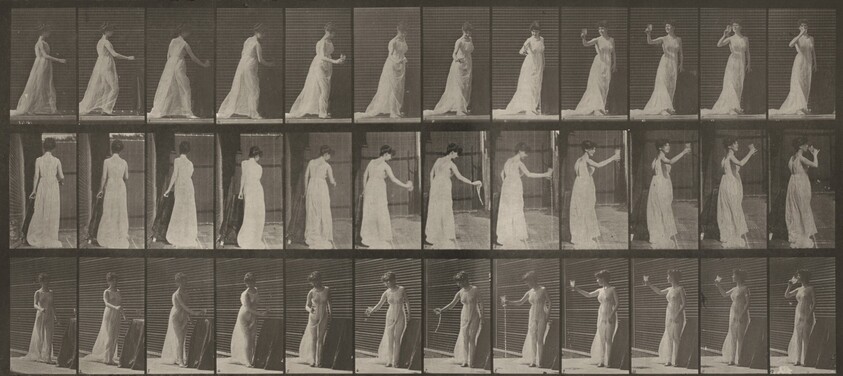
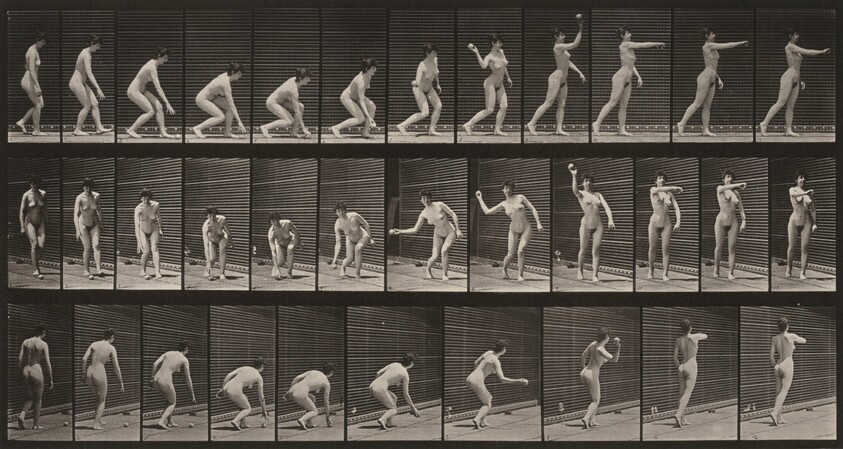
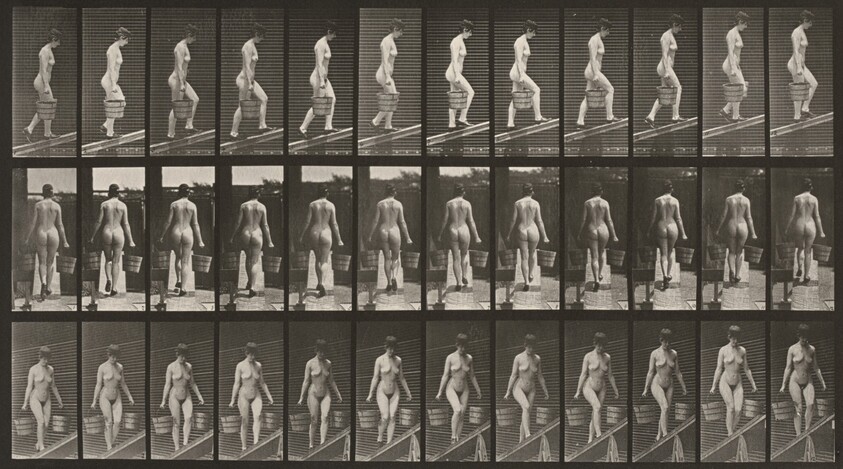
Eadweard J. Muybridge initially used horses to capture motion as separate slices of time faster than the human eye could perceive them, then moved on to study other animal and human movements. Everyday activities, like emptying a bucket of water, were broken down and sequenced back-to-back. This series was commissioned by the University of Pennsylvania and intended to diagnose dysfunction in human movement by allowing each consecutive action to be studied in isolation. The university’s desire for distribution called for the use of collotype. The process had been recently improved to the point where editions of up to 1,000 were possible, making it an attractive option for publishers.