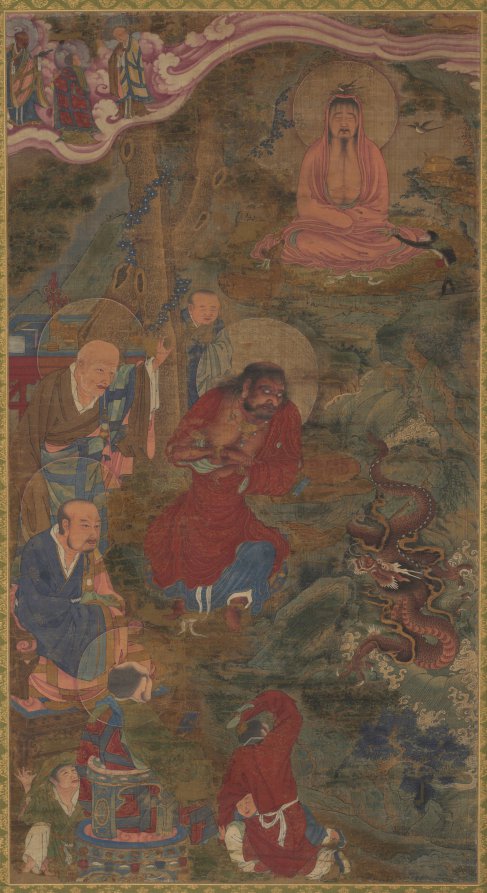
Miracle of the Dragon
1600–1699
- Medium
- Hanging scroll; ink, color, and gold on silk
- Dimensions
- Image: 109.2 x 58.5 cm (43 x 23 1/16 in.); Overall: 205.4 x 76.4 cm (80 7/8 x 30 1/16 in.)
- Genre
- Paintings
- Museum
- Cleveland Museum of Art
Styles
Tags
China, Ming dynasty (1368–1644)
About
Buddhist disciples are grouped around a dragon in the lower right part of the scroll. The figures' varying levels of composure at the miraculous appearance of the dragon indicates how far removed each figure is from worldly affairs. The lay people's body language expresses their surprise. In contrast, the historical Buddha, Shakyamuni, in the upper right has been seated in meditation for such a long time that birds have begun assembling twigs for a nest atop his head. His eyes remain closed, and his body still, unmoved by either the sudden materialization of the dragon or the proximity of the monkey, deer, and birds. Dragons have been part of Buddhist culture since antiquity; in Chinese Buddhism the dragon is often interpreted as a symbol of enlightenment.