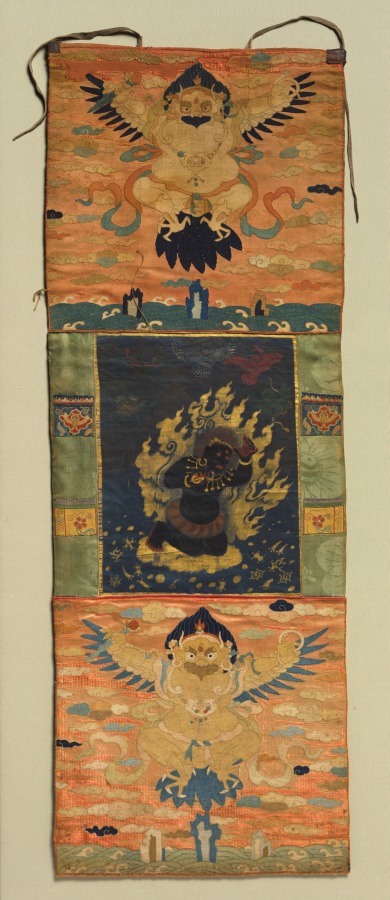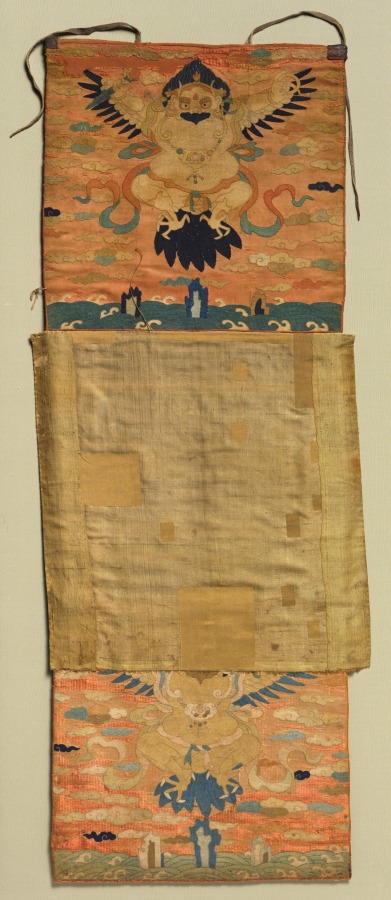
Vajrapani Embroidered Mount with Garuda
- Medium
- Opaque watercolor, gold, and silver on silk
- Dimensions
- Overall: 114.6 x 44.5 cm (45 1/8 x 17 1/2 in.)
- Genre
- Embroidery
- Museum
- Cleveland Museum of Art
Styles
Tags
China and Tibet, Embroidery: China, Yuan dynasty (1279–1368); painting: Tibet
About
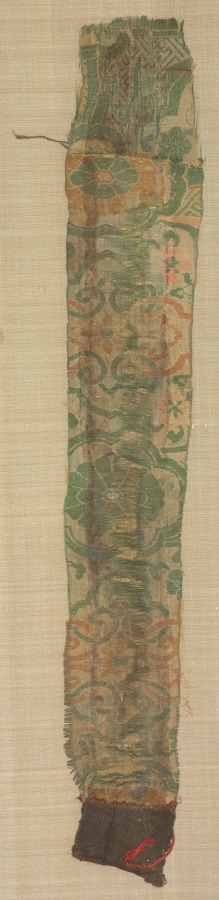
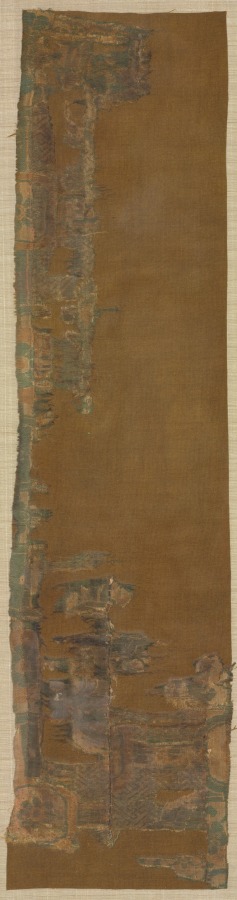
The painting depicts the Buddhist protector who holds (pani) the thunder bolt (vajra) in his right hand. He kneels in reverence and holds his left hand in a gesture of salute. This unusual image appears to have been the vision of a Tibetan monastic patriarch known for creating his own inventive paintings and sculptures. Sewn to the painting are Chinese damask borders and rare embroideries dating to the Chinese Yuan dynasty (1279–1368). They depict man-eagle figures known as Garuda, a form occasionally assumed by Vajrapani.