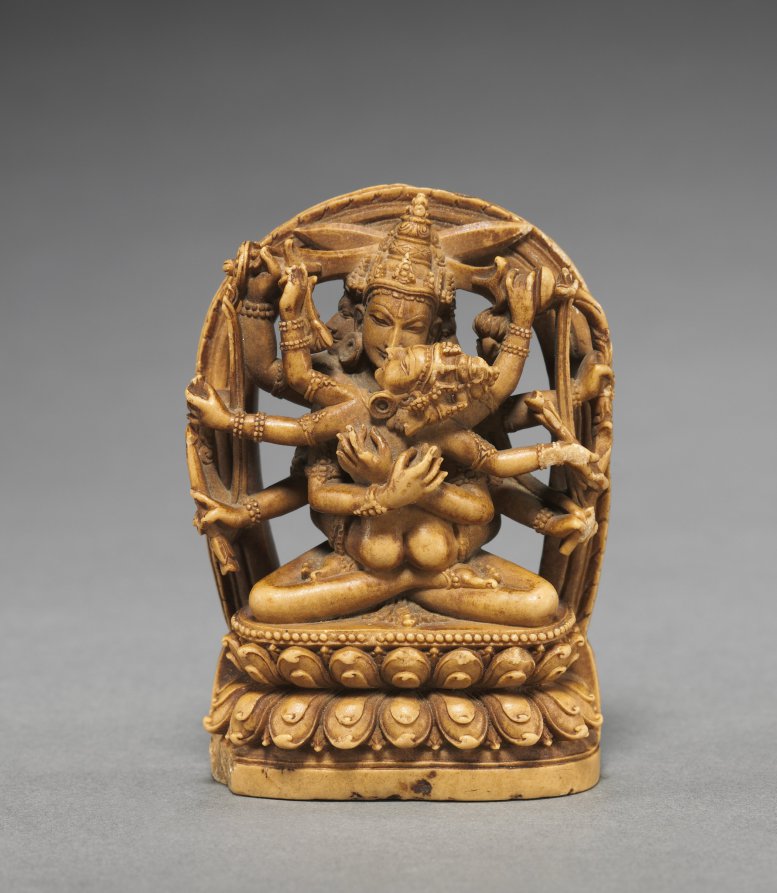
Manjuvara with consort (yab-yum)
1100–1199
- Medium
- Kaolin
- Dimensions
- Overall: 7.3 x 4.7 x 2.5 cm (2 7/8 x 1 7/8 x 1 in.)
- Genre
- Sculpture
- Museum
- Cleveland Museum of Art
Tags
Tibet
About
This miniature stele shows Manjuvara, a form of the the Bodhisattva of Wisdom Manjushri, in union (yab yum) with his consort (sakti). The intimacy between the deities, in accordance with Vajrayana Buddhism, is symbolic of the union between wisdom and compassion that leads to the bliss of enlightenment. Both figures have three heads and six arms holding their attributes: a sword (khadga), a bow (dhanus), an arrow (bana), and a lotus (padma). The sculpture is made in kaolinite, a clay-based stone frequently used in the northern regions of India and Burma. The exceptionally fine carving, executed with great precision and attention to detail, reflects the Pala style instrumental in the development of the Himalayan schools of sculpture.